Supplements
Reviewed by Dr. Nathan ColeUpdated March 2026UK market focus
The Science of Sleep and Recovery
Before we jump into products, let's quickly understand *why* sleep is such a non-negotiable for recovery. It's not just about lying down; it's an incredibly active and complex process.
Our sleep cycles through distinct stages: four non-REM (NREM) stages and one REM (Rapid Eye Movement) stage. The deeper NREM stages, particularly Stage 3 (often called "deep sleep" or "slow-wave sleep"), are crucial for physical repair. During this phase, your body releases human growth hormone (HGH), which is vital for muscle repair, growth, and tissue regeneration. It's also when cellular repair mechanisms kick into high gear, clearing out metabolic waste products that accumulate during waking hours.
REM sleep, on the other hand, is more associated with cognitive and emotional recovery. It's when your brain consolidates memories, processes emotions, and essentially "defrags" itself. If you're learning new skills or dealing with stress, sufficient REM sleep is essential.
Poor sleep impacts recovery in several ways:
* **Muscle Repair:** Reduced HGH secretion means slower muscle repair and growth, potentially hindering athletic performance and making you more susceptible to injury.
* **Immune Function:** Sleep deprivation weakens your immune system, making you more vulnerable to colds, flu, and other infections, which certainly doesn't help recovery from anything.
* **Cognitive Function:** Lack of sleep impairs focus, decision-making, reaction time, and mood regulation. This isn't just about feeling groggy; it impacts your ability to perform at work, drive safely, and even enjoy your hobbies.
* **Hormonal Balance:** Sleep disruption can throw off other vital hormones, including cortisol (the stress hormone) and ghrelin/leptin (hunger hormones), leading to increased stress, weight gain, and cravings.
So, when we talk about sleep aids for recovery, we're not just aiming for more hours in bed. We're aiming for *quality* sleep that allows your body and mind to perform all these essential restorative processes.
Sleep Supplements for Recovery
The supplement aisle can be a minefield, full of bold claims and confusing labels. I've sifted through the research and tried many myself to bring you the most effective and commonly available options in the UK. Remember, supplements are meant to *supplement* a healthy lifestyle, not replace it.
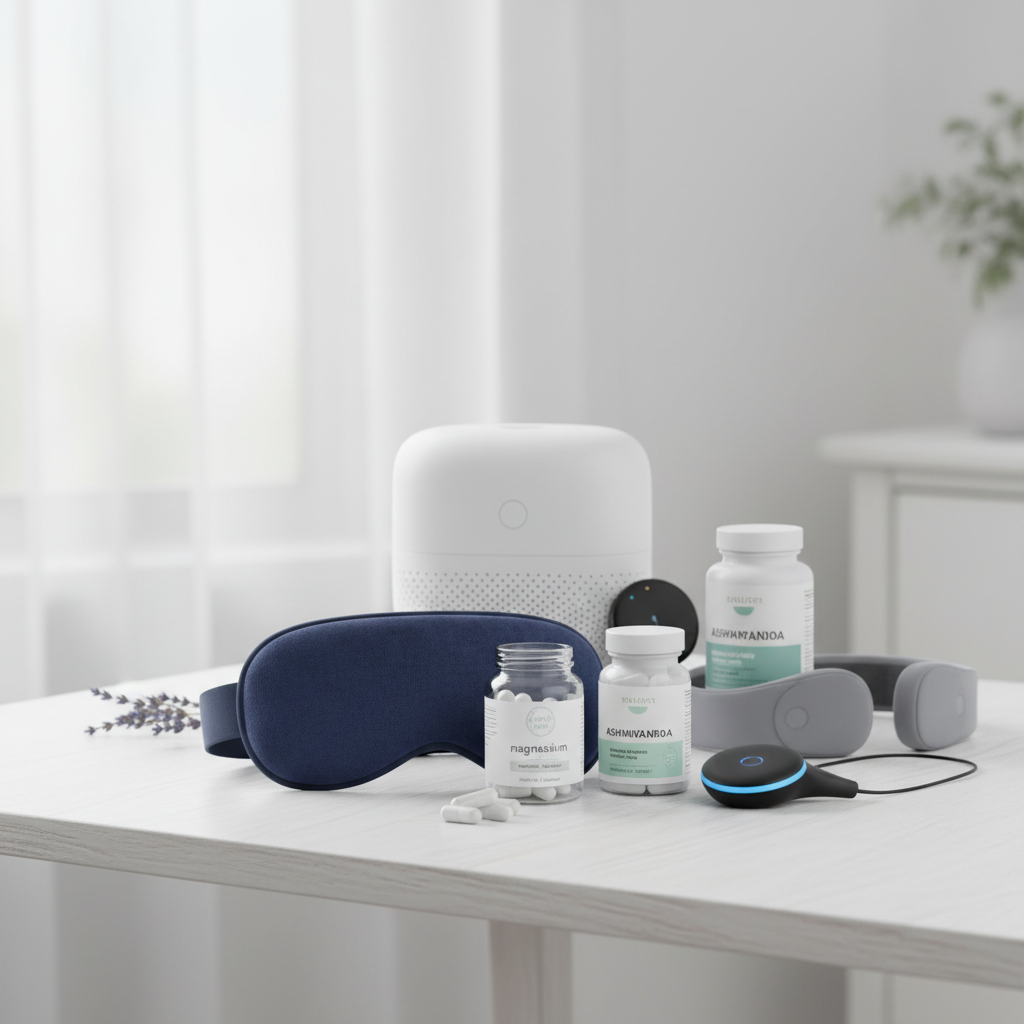
Magnesium
Magnesium is a true powerhouse mineral, involved in over 300 biochemical reactions in the body, many of which are directly related to sleep and relaxation. It plays a key role in the regulation of neurotransmitters like GABA (gamma-aminobutyric acid), which calms nerve activity and promotes relaxation. It also helps relax muscles and can alleviate restless leg syndrome, which often disrupts sleep.
* **Dosage:** Typically 200-400mg per day, taken about 30-60 minutes before bed. For sleep, magnesium bisglycinate or L-threonate are often recommended due to their high bioavailability and ability to cross the blood-brain barrier more effectively than cheaper forms like magnesium oxide.
* **Typical UK Price:** A month's supply (e.g., 90 capsules of 200mg magnesium bisglycinate) usually costs between £10-£25.
* **Scientific Reference:** Research published in the *Journal of Research in Medical Sciences* has shown that magnesium supplementation can improve subjective measures of insomnia severity, sleep time, and sleep efficiency in elderly individuals.
* **Pros:**
* Helps relax muscles and nerves.
* Can improve sleep quality and duration.
* Generally well-tolerated.
* Also beneficial for muscle cramps and overall health.
* **Cons:**
* High doses can cause diarrhoea (especially magnesium citrate or oxide).
* May interact with certain medications (e.g., antibiotics, diuretics).
* Some forms are poorly absorbed.
L-Theanine
Found naturally in green tea, L-Theanine is an amino acid known for promoting relaxation without causing drowsiness. It works by increasing levels of GABA, serotonin, and dopamine in the brain, and by promoting alpha brain wave activity, which is associated with a state of "wakeful relaxation" – perfect for winding down before bed. It doesn't directly induce sleep but helps calm the mind, making it easier to drift off.
* **Dosage:** 100-200mg, taken 30-60 minutes before bed. Some people find benefit from higher doses, up to 400mg.
* **Typical UK Price:** A bottle of 60-120 capsules (100-200mg each) usually ranges from £12-£25.
* **Scientific Reference:** A study in *Biological Psychology* found that L-theanine intake increased alpha brain wave activity, indicating a state of relaxed alertness and reduced stress. Other studies have shown it can improve sleep quality and reduce sleep latency.
* **Pros:**
* Promotes relaxation without sedation.
* Can improve sleep quality and ease of falling asleep.
* Non-habit forming.
* Often used in combination with other sleep aids.
* **Cons:**
* May not be strong enough for severe insomnia.
* Some individuals report no noticeable effect.
Ashwagandha
An ancient adaptogenic herb from Ayurvedic medicine, Ashwagandha (specifically *Withania somnifera*) is gaining immense popularity for its stress-reducing properties. It works by helping the body manage stress responses, particularly by modulating cortisol levels. By reducing anxiety and promoting a calm state, it indirectly supports better sleep and, consequently, better recovery.
* **Dosage:** Typically 300-600mg of a high-quality extract (like KSM-66 or Sensoril) per day, often split into two doses or taken entirely before bed. It can take a few weeks to notice the full effects.
* **Typical UK Price:** A month's supply of a good quality extract (e.g., KSM-66 300mg) usually costs between £15-£30.
* **Scientific Reference:** A review published in the *Journal of Ethnopharmacology* highlighted Ashwagandha's anxiolytic (anti-anxiety) and stress-reducing properties, with several studies showing improvements in sleep quality and a reduction in sleep-onset latency.
* **Pros:**
* Reduces stress and anxiety, which are common sleep disruptors.
* Improves sleep quality and duration over time.
* Supports overall well-being and energy levels.
* Non-habit forming.
* **Cons:**
* Not an immediate sleep inducer; effects build up over weeks.
* Can cause mild digestive upset in some individuals.
* Not suitable for pregnant or breastfeeding women.
5-HTP (5-Hydroxytryptophan)
5-HTP is a naturally occurring amino acid that is a direct precursor to serotonin, a neurotransmitter that regulates mood, appetite, and sleep. Serotonin is then converted into melatonin, the hormone that controls your sleep-wake cycle. By boosting serotonin levels, 5-HTP can potentially improve mood and promote better sleep.
* **Dosage:** 50-200mg, taken 30-60 minutes before bed. Start with a lower dose to assess tolerance.
* **Typical UK Price:** A bottle of 60 capsules (100mg each) generally costs £15-£25.
* **Scientific Reference:** Studies have indicated that 5-HTP can reduce the time it takes to fall asleep and increase REM sleep, though more large-scale human trials are needed.
* **Pros:**
* Directly supports the production of serotonin and melatonin.
* May improve mood in addition to sleep.
* Can be effective for some individuals struggling to fall asleep.
* **Cons:**
* Can cause side effects like nausea, vomiting, and stomach upset, especially at higher doses.
* Should not be taken with antidepressant medications (SSRIs) due to the risk of serotonin syndrome.
* Long-term safety needs more research.
Melatonin (Prescription Only in UK)
Melatonin is the hormone your brain produces in response to darkness, signalling to your body that it's time to sleep. Whilst readily available over-the-counter in many countries (like the US), in the UK, melatonin is classified as a medicine and requires a prescription from a doctor. It's typically prescribed for short-term use for insomnia, especially in elderly individuals, or to help with jet lag.
* **Dosage:** If prescribed, typically 1-3mg, taken 30-60 minutes before bed.
* **Typical UK Price:** Varies significantly based on prescription and brand, but expect to pay for a private prescription if not covered by NHS.
* **Pros:**
* Directly influences the sleep-wake cycle.
* Can be effective for circadian rhythm disorders (e.g., jet lag, shift work).
* Generally well-tolerated for short-term use.
* **Cons:**
* Requires a prescription in the UK, making it less accessible.
* Not effective for all types of insomnia.
* Can cause drowsiness, dizziness, and mild headaches.
* The long-term effects of exogenous melatonin supplementation are not fully understood.
ZMA (Zinc, Magnesium, Vitamin B6)
ZMA is a popular supplement blend, particularly amongst athletes and bodybuilders, marketed for its potential to support muscle recovery, immune function, and sleep quality. The theory is that intense exercise can deplete zinc and magnesium, and supplementing with these, along with B6 (which aids in their absorption and utilisation), can counteract these deficiencies.
* **Dosage:** Typically 30mg Zinc Monomethionine Aspartate, 450mg Magnesium Aspartate, and 10.5mg Vitamin B6, taken 30-60 minutes before bed on an empty stomach.
* **Typical UK Price:** A month's supply usually costs between £10-£20.
* **Scientific Reference:** Whilst individual components like magnesium are well-researched for sleep, specific studies on ZMA's direct impact on sleep quality for non-deficient individuals are mixed. Some studies show improved sleep and anabolic hormone levels in athletes, whilst others show no significant difference.
* **Pros:**
* Addresses potential deficiencies in zinc and magnesium common in athletes.
* May improve sleep quality and muscle recovery.
* Convenient all-in-one supplement.
* **Cons:**
* Efficacy for sleep in individuals without deficiencies is less clear.
* Magnesium aspartate can cause digestive upset in some.
* Best taken on an empty stomach, which can be inconvenient.
Valerian Root & Chamomile
These are the grand old dames of herbal sleep aids, often found in 'sleepy tea' blends. Valerian root has been used for centuries as a sedative and anxiolytic. It's thought to increase GABA levels in the brain. Chamomile, similarly, is a mild tranquiliser and sleep inducer, largely due to an antioxidant called apigenin, which binds to specific receptors in the brain.
* **Dosage:** Valerian root: 300-600mg extract, 30 minutes to 2 hours before bed. Chamomile: typically consumed as a tea (1-2 cups before bed) or 200-500mg extract.
* **Typical UK Price:** Valerian root supplements: £8-£15 for a month's supply. Chamomile tea: £2-£5 for a box.
* **Pros:**
* Natural, traditional remedies.
* Can promote relaxation and reduce anxiety.
* Generally considered safe for short-term use.
* **Cons:**
* Effects can be mild and inconsistent for some.
* Valerian root can have an unpleasant smell.
* May cause morning grogginess in some individuals.
* Not as much solid scientific evidence for direct recovery benefits compared to other options.
Sleep Masks for Optimal Darkness
One of the simplest yet most effective sleep aids is often overlooked: total darkness. Light, especially blue light from screens, signals to your brain that it's daytime, suppressing melatonin production. Even a tiny sliver of light from a digital alarm clock or a street lamp can disrupt your sleep architecture. A good sleep mask can create that essential cave-like darkness, no matter your environment.
Contoured Sleep Masks
These masks are designed with raised eye cups, meaning they don't put any pressure on your eyelids or eyelashes. This makes them incredibly comfortable, especially for side sleepers or those who find traditional flat masks irritating. They effectively block out light by conforming to the contours of your face.
* **Typical UK Price:** £8-£20. Popular brands include Mavogel (Amazon) or Manta Sleep (higher end).
* **Pros:**
* Blocks out light completely without eye pressure.
* Comfortable for all sleep positions.
* Often made from breathable materials.
* **Cons:**
* Can sometimes feel bulky on the face.
* Fit can vary between individuals, potentially letting in light around the nose.
Silk Sleep Masks
If luxury and skin health are a priority, a silk sleep mask is your go-to. Made from 100% mulberry silk, these masks are incredibly soft, gentle on the delicate skin around your eyes, and won't tug at your hair. Silk is also naturally hypoallergenic and breathable, helping to regulate temperature.
* **Typical UK Price:** £15-£40. Look for brands like Slip or cheaper alternatives on Amazon.
* **Pros:**
* Luxuriously soft and gentle on skin and hair.
* Hypoallergenic and breathable.
* Excellent light-blocking when fitted well.
* **Cons:**
* More expensive than other types.
* Can slip off easily if the elastic isn't snug.
* Requires gentle hand washing.
Weighted Sleep Masks
Inspired by weighted blankets, these masks apply gentle, even pressure to the face and eyes, providing a sensation known as Deep Pressure Touch (DPT). DPT is thought to activate the parasympathetic nervous system, promoting relaxation and reducing anxiety, which can be incredibly helpful for falling asleep.
* **Typical UK Price:** £20-£50. Brands like Nodpod are popular.
* **Pros:**
* Provides calming Deep Pressure Touch.
* Can reduce anxiety and promote relaxation.
* Excellent light-blocking.
* **Cons:**
* Some people find the weight uncomfortable.
* Can feel warm on the face.
* May not be suitable for all sleeping positions.
Sleep Gadgets and Tech for Enhanced Recovery
Technology isn't always the enemy of sleep. When used smartly, certain gadgets can significantly enhance your sleep environment and provide valuable insights into your recovery.
White Noise / Pink Noise Machines
If you live in a noisy area, or have a partner who snores like a freight train, a sound machine can be a a practical choice. White noise is a consistent sound that masks sudden noises, whilst pink noise (a deeper, more balanced frequency) has been shown in some studies to improve deep sleep. These machines create a consistent soundscape that helps your brain ignore disruptive noises, allowing for a more continuous sleep.
* **Typical UK Price:** £20-£60. Brands like LectroFan, Hatch Rest (for kids, but great for adults too), or even just a simple app on your phone.
* **Scientific Reference:** Research in *Frontiers in Neurology* has suggested that pink noise stimulation can enhance slow-wave sleep and improve memory consolidation.
* **Pros:**
* Masks disruptive sounds (traffic, neighbours, snoring).
* Creates a consistent, calming sleep environment.
* Portable options available for travel.
* **Cons:**
* Some people find continuous noise irritating.
* May not be effective against very loud, sudden noises.
* Can become a "crutch" for some individuals.
Smart Sleep Trackers (Wearables & Under-mattress)
These gadgets provide data on your sleep patterns, helping you understand your sleep quality and how it relates to your recovery. They monitor metrics like heart rate, heart rate variability (HRV), sleep stages (light, deep, REM), movement, and body temperature. Popular options include wearable rings (Oura Ring), wristbands (Whoop), or under-mattress sensors (Withings Sleep Analyser).
* **Typical UK Price:**
* Oura Ring: £300-£400 + optional subscription (£5.99/month).
* Whoop: £30/month subscription (device included).
* Withings Sleep Analyser: £100-£150 (one-off purchase).
* **Pros:**
* Provides data-driven insights into sleep quality and recovery.
* Helps identify patterns and areas for improvement.
* Can track the impact of lifestyle changes on sleep.
* **Cons:**
* Accuracy of sleep stage tracking can vary between devices.
* Can create anxiety ("orthosomnia") if too focused on data.
* Expensive, often with ongoing subscription costs.
* Requires commitment to review and act on data.
Smart Lighting Systems (e.g., Philips Hue)
Our circadian rhythm, our internal body clock, is heavily influenced by light. Smart lighting systems allow you to control the colour temperature and brightness of your bedroom lights. You can programme them to gradually dim and shift to warmer, amber tones in the evening (reducing blue light exposure) and then slowly brighten with a cool, natural light in the morning, mimicking a sunrise.
* **Typical UK Price:** Philips Hue starter kits range from £80-£200, with individual bulbs costing £15-£50.
* **Pros:**
* Supports natural melatonin production by reducing blue light.
* Gentle "sunrise" alarms promote a natural wake-up.
* Can create a calming pre-sleep environment.
* **Cons:**
* Initial setup can be an investment.
* Requires a smartphone or smart home hub.
* Requires discipline to use the settings consistently.
Cooling Mattresses / Mattress Toppers / Bedding
Body temperature plays a significant role in sleep onset and quality. Your core body temperature needs to drop slightly for you to fall and stay asleep. If you're a hot sleeper, or your bedroom gets too warm, cooling solutions can make a huge difference to your comfort and sleep quality. This can range from cooling mattress toppers to specialised bedding made from temperature-regulating materials like Tencel, bamboo, or phase-change materials.
* **Typical UK Price:**
* Cooling mattress toppers: £50-£200+.
* Cooling pillows: £30-£80.
* Specialised cooling bedding: £50-£150 for a duvet cover set.
* High-tech cooling mattresses/pads (e.g., Eight Sleep): £1000+.
* **Pros:**
* Maintains optimal sleeping temperature.
* Reduces night sweats and discomfort.
* Improves overall sleep comfort and duration.
* **Cons:**
* Can be a significant investment, especially for mattresses or pads.
* Effectiveness varies based on individual heat sensitivity and room temperature.
* Some toppers can shift or lose their cooling properties over time.
Meditation & Mindfulness Apps
Whilst not a physical gadget, these apps use technology to guide you through meditation, mindfulness exercises, and calming stories, helping to quiet a busy mind before bed. Stress and racing thoughts are huge barriers to sleep, and these apps can provide structured techniques to help you relax and disengage from daily worries. Popular examples include Calm and Headspace.
* **Typical UK Price:** Free basic versions; premium subscriptions typically £50-£70 per year.
* **Pros:**
* Reduces stress and anxiety.
* Teaches valuable relaxation techniques.
* Can improve sleep onset and quality.
* Accessible anytime, anywhere via your phone.
* **Cons:**
* Requires consistent practice to see full benefits.
* Some people find guided meditation distracting.
* Subscription costs can add up.
Practical Tips for Better Sleep and Recovery (Beyond Products)
No matter how many supplements you take or gadgets you buy, foundational sleep hygiene remains the bedrock of quality rest. These are the non-negotiables:
1. **Stick to a Consistent Sleep Schedule:** Go to bed and wake up at roughly the same time every day, even on weekends. This helps regulate your body's natural circadian rhythm.
2. **Optimise Your Sleep Environment:** Make your bedroom a true sanctuary.
* **Dark:** As dark as possible (a good mask helps!).
* **Quiet:** Use earplugs or a white noise machine if needed.
* **Cool:** Aim for 18-20 degrees Celsius.
3. **Limit Caffeine and Alcohol:** Cut out caffeine at least 6-8 hours before bed. Whilst alcohol might make you feel drowsy, it fragments sleep and reduces REM sleep quality.
4. **Avoid Heavy Meals Before Bed:** Give your body at least 2-3 hours to digest before lying down. A light, sleep-friendly snack (like a banana or a small bowl of oats) is fine.
5. **Regular Exercise (But Not Too Close to Bedtime):** Physical activity improves sleep quality, but intense workouts too close to bedtime can be stimulating. Aim to finish strenuous exercise at least 3-4 hours before you plan to sleep.
6. **Establish a Wind-Down Routine:** Signal to your body that it's time to relax. This could involve a warm bath, reading a physical book, gentle stretching, or listening to calming music.
7. **Limit Blue Light Exposure:** The blue light emitted from phones, tablets, and computer screens can suppress melatonin production. Put devices away at least an hour before bed, or use blue light filtering glasses/settings.
Verdict: My Top Picks for UK Recovery Seekers
Alright, after digging into the science and countless products, what's my
verdict? It's important to remember that sleep is incredibly individual, and what works wonders for one person might do nothing for another. However, based on effectiveness, accessibility in the UK, and overall value, here are my top recommendations:
* **Best All-Rounder Supplement:** Strong>Magnesium Bisglycinate. It's safe, effective for muscle relaxation and nerve calming, and widely available. Most people are deficient in magnesium, so it's a great starting point.
* **Best for Stress & Anxiety:** Strong>Ashwagandha. If a racing mind or daily stress is your primary sleep disruptor, this adaptogen can be transformative over time.
* **Best for Immediate Relaxation:** Strong>L-Theanine. If you struggle to switch off but don't want a sedative effect, L-Theanine provides that gentle nudge towards calm.
* **Best Budget-Friendly & Highly Effective Aid:** Strong>A High-Quality Contoured Sleep Mask. Seriously, don't underestimate the power of total darkness. It's cheap, non-invasive, and universally beneficial. The Mavogel from Amazon is a personal favourite.
* **Best for Noisy Environments:** Strong>A White Noise Machine. Simple, effective, and a saviour if you're battling external noise pollution.
* **Best for Data-Driven Optimisation:** Strong>Oura Ring or Whoop. If you're serious about tracking recovery and performance, and are willing to invest, these provide invaluable insights to truly dial in your sleep.
* **Best for Hot Sleepers:** Strong>A Cooling Mattress Topper or Bamboo Bedding. Temperature regulation is key, and these can significantly improve comfort and reduce night waking.