Supplements
Reviewed by Dr. Nathan ColeUpdated March 2026UK market focus
What Exactly Is Creatine and How Does It Work?
Before we get stuck into loading, let's quickly recap what creatine is. Creatine is a naturally occurring compound found in small amounts in certain foods, like red meat and fish, and it's also produced by our bodies, primarily in the liver, kidneys, and pancreas. It's made from three amino acids: L-arginine, glycine, and L-methionine. Its main role in the body is pretty crucial for anyone looking to build strength and power: it helps to regenerate adenosine triphosphate (ATP), which is essentially your body's primary energy currency.
Think of it like this: when you're doing short, intense bursts of activity – like lifting a heavy weight, sprinting, or jumping – your muscles use ATP for energy. However, your stores of ATP are pretty limited and quickly run out. This is where creatine comes in. It's stored in your muscles as phosphocreatine (PCr). When ATP is used, it loses a phosphate molecule and becomes ADP (adenosine diphosphate). PCr then donates its phosphate molecule to ADP, turning it back into ATP, ready to be used again. This rapid regeneration of ATP means your muscles can perform at a high intensity for longer before fatiguing.
So, in a nutshell, supplementing with creatine helps increase your muscle's phosphocreatine stores, which in turn means more readily available ATP for those explosive movements. More ATP means more reps, heavier lifts, and ultimately, better gains over time. Simple, eh?
Why the Fuss About Creatine Loading?
Now, onto the main event: creatine loading. You might be wondering why you can't just take a standard dose every day and call it a day. And the truth is, you *can*. However, creatine loading is a strategy designed to saturate your muscle creatine stores much more quickly than a standard daily dose would.
Imagine your muscles are like sponges. If you just dribble a bit of water on them each day, they'll eventually get fully saturated. But if you dunk them in a bucket of water, they'll be saturated much faster. That's essentially what creatine loading aims to do. By taking a higher dose for a short period, you rapidly increase the concentration of creatine in your muscles, allowing you to experience the benefits – like increased strength and power – much sooner.
The main benefit of loading is speed. Without loading, it can take around 3-4 weeks of consistent daily supplementation (typically 3-5g per day) to fully saturate your muscle creatine stores. With a loading phase, you can achieve that saturation in just 5-7 days. For athletes or individuals who want to see results quickly, this can be a significant advantage. It means you can start feeling stronger and performing better in the gym within a week, rather than having to wait nearly a month.
The International Society of Sports Nutrition (ISSN), a highly respected authority on sports supplements, has extensively reviewed creatine and its efficacy. Their position stand confirms that creatine loading is a safe and effective way to rapidly increase muscle creatine stores, leading to faster performance improvements.
The Creatine Loading Protocol: Dosage, Timing, and Duration
Alright, let's get down to brass tacks. How do you actually *do* a creatine loading phase? It's pretty simple, but consistency is key.
Dosage: How Much Creatine Do You Need to Load?
The most common and scientifically supported loading protocol involves taking approximately **20 grams of creatine per day**. This isn't a single 20g gulp, mind you. That would likely lead to some serious stomach upset. Instead, you'll want to split this into smaller, manageable doses throughout the day.
A typical breakdown looks like this:
* **4 doses of 5 grams each per day.**
For example, you could take 5g with your breakfast, another 5g around lunchtime, 5g in the late afternoon, and the final 5g with your evening meal. Spreading it out helps your body absorb it more efficiently and significantly reduces the risk of gastrointestinal discomfort.
While 20g is the standard, some research suggests a slightly different approach based on body weight, which can be even more precise. This involves taking **0.3 grams of creatine per kilogram of body weight per day**. So, if you weigh 70kg, you'd aim for 70kg * 0.3g/kg = 21g per day. If you weigh 90kg, it would be 90kg * 0.3g/kg = 27g per day. However, for most people, sticking to the easier 20g daily split is perfectly effective and less faff.
Duration: How Long Does the Loading Phase Last?
The loading phase typically lasts for **5 to 7 days**. Within this timeframe, your muscle creatine stores should be fully saturated. After this initial week, you transition into a maintenance phase.
Some people might extend the loading phase slightly if they feel they haven't reached full saturation, but generally, 5-7 days is ample. Going beyond 7 days with high doses isn't necessary and won't lead to further benefits, as your muscles can only hold so much creatine.
Timing: When's the Best Time to Take Creatine During Loading?
During the loading phase, because you're taking multiple doses throughout the day, the exact timing isn't as critical as ensuring you get all your doses in. However, there are a few tips to maximise absorption and minimise potential side effects:
1. **With Meals:** Taking creatine with meals, especially those containing carbohydrates and protein, can enhance its absorption. Insulin, which is released in response to carbohydrate and protein intake, helps to shuttle creatine into your muscle cells. So, having a dose with your breakfast, lunch, and dinner is a smart move.
2. **Around Workouts:** While not strictly necessary for loading, many people like to include one of their 5g doses either before or immediately after their workout. Taking it post-workout, when muscles are more receptive to nutrient uptake, can be particularly effective.
3. **Spread Evenly:** The most important thing is to spread your doses out as evenly as possible throughout the day. This prevents a huge bolus dose hitting your system at once, which could lead to an upset stomach.
How to Take It: Mixing and Hydration
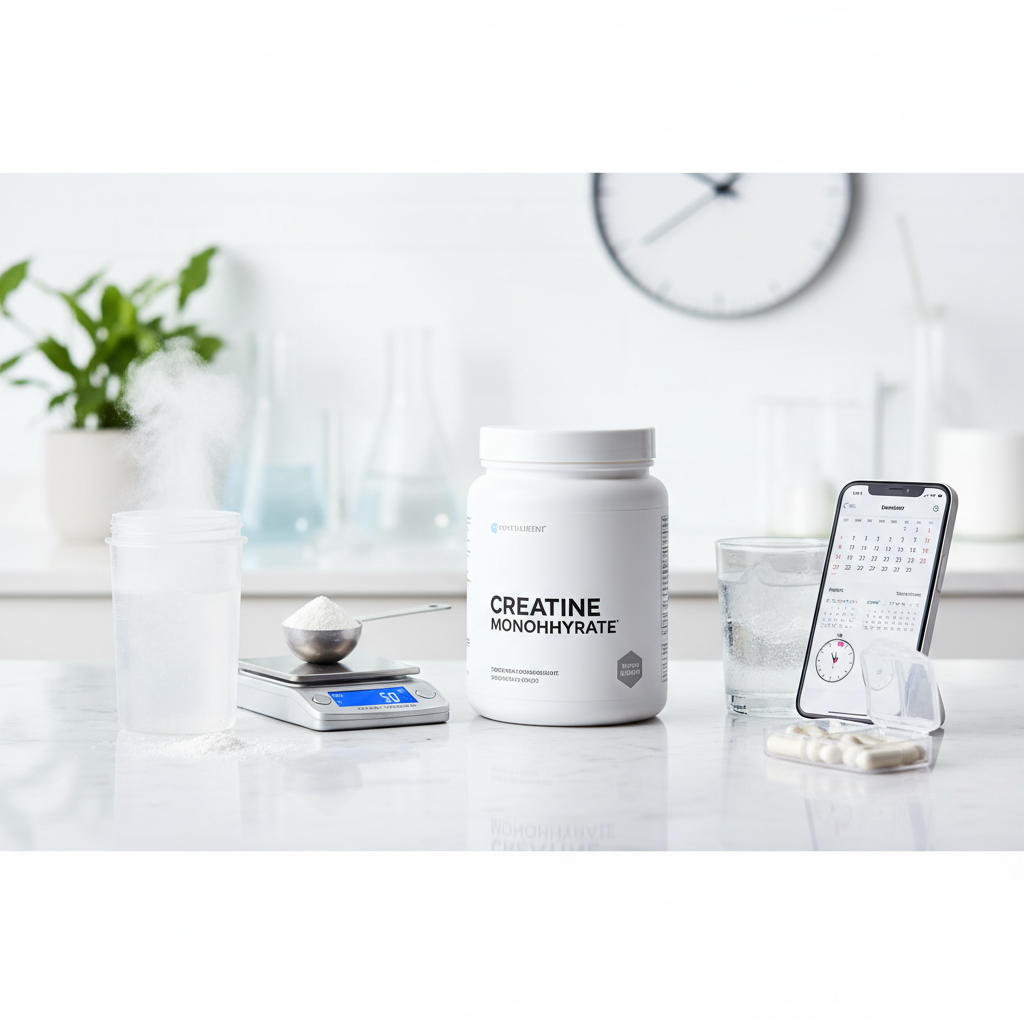
Creatine monohydrate usually comes as an unflavoured powder. It's pretty fine and dissolves reasonably well in liquids, though you might find a bit of grit at the bottom of your glass.
* **Mixing:** You can mix 5g (usually one scoop, but always check your product's specific instructions) with water, juice, or even your protein shake. Fruit juice, like grape juice or apple juice, is often recommended because the simple sugars can help spike insulin, aiding absorption. However, plain water works perfectly fine too.
* **Hydration is KEY:** Creatine draws water into your muscle cells. This is part of how it works and contributes to that "fuller" muscle look. Because of this, it's absolutely crucial to drink plenty of water throughout the day, especially during the loading phase. Aim for at least 3-4 litres of water daily. Dehydration can lead to headaches, cramps, and other unpleasantness, so don't skimp on the H2O!
The Maintenance Phase: What Happens After Loading?
Once you've completed your 5-7 day loading phase, your muscle creatine stores should be fully topped up. At this point, you don't need to continue with the high doses. Instead, you'll transition into a maintenance phase.
The standard maintenance dose is typically **3 to 5 grams of creatine per day**. This daily dose is sufficient to keep your muscle creatine stores saturated. Taking more than this won't offer any additional benefits; your body will simply excrete the excess.
During the maintenance phase, the timing of your dose becomes even less critical. You can take your 3-5g whenever suits you best – with breakfast, before your workout, after your workout, or before bed. The most important thing is consistency: take it every single day to keep those stores topped up.
Types of Creatine: Why Monohydrate is King
You might have noticed there are various types of creatine on the market: creatine ethyl ester, creatine hydrochloride (HCl), buffered creatine (Kre-Alkalyn), liquid creatine, and so on. While these often come with fancy marketing claims about superior absorption, less bloating, or needing smaller doses, the vast majority of scientific research, and indeed the ISSN's position, points to one undisputed champion: **Creatine Monohydrate.**
* **Creatine Monohydrate:** This is the most studied, most effective, and most cost-effective form of creatine. It's been shown time and time again to be safe and highly effective at increasing muscle creatine stores and improving performance. Don't be swayed by fancy new forms unless there's compelling, independent scientific evidence to back them up (which, for most, there isn't). Stick with what works.
When buying creatine, look for "creatine monohydrate." Micronized creatine monohydrate is a good choice as it's ground into a finer powder, which can improve mixability and reduce the chances of it settling at the bottom of your glass.
The Cracking Benefits of Creatine Loading
So, you've gone through the loading phase, you're on your maintenance dose, and your muscles are fully saturated. What can you actually expect to gain from all this? The benefits of creatine are well-documented and pretty impressive for anyone serious about their fitness goals.
1. Increased Strength and Power
This is perhaps the most well-known benefit. By increasing ATP availability, creatine allows you to perform more reps with a given weight, or lift heavier weights for the same number of reps. Studies consistently show that creatine supplementation can improve maximal strength (1-RM) and power output in short-duration, high-intensity activities. For lifters, this translates to bigger numbers on your squats, deadlifts, and bench press. For athletes, it means more explosive jumps and sprints.
2. Enhanced Muscle Growth (Hypertrophy)
While creatine doesn't directly build muscle tissue itself, it creates an environment that's highly conducive to muscle growth.
* **Increased Training Volume:** Being able to perform more reps and sets thanks to increased strength means you're providing a greater stimulus for muscle growth. More effective training sessions over time lead to greater gains.
* **Cell Volumisation:** Creatine draws water into muscle cells, making them appear fuller. This "cell volumisation" might also play a role in signalling pathways for muscle protein synthesis, potentially contributing to growth.
* **Reduced Muscle Breakdown:** Some research suggests creatine may help reduce muscle protein breakdown, further tipping the scales towards muscle gain.
3. Improved Exercise Performance
Beyond just strength, creatine can improve overall performance in various high-intensity activities. This includes things like interval training, team sports with repeated sprints, and even endurance activities that involve bursts of speed. It helps you recover faster between sets and efforts, allowing for a higher quality of work throughout your training session.
4. Faster Recovery
By helping to replenish ATP stores more quickly, creatine can aid in recovery between bouts of intense exercise. Some studies also suggest it might help reduce muscle cell damage and inflammation following strenuous workouts, leading to quicker bounce-back times.
5. Potential Cognitive Benefits
While primarily known for its physical benefits, there's a growing body of research looking into creatine's effects on brain health and cognitive function. The brain also uses ATP for energy, and creatine supplementation has been shown to increase creatine levels in the brain. This might lead to improvements in short-term memory, reasoning, and even reduce mental fatigue, especially in situations of sleep deprivation or stress. While these effects are less pronounced than the physical ones, they're definitely an interesting area of ongoing research.