Supplements
Reviewed by Dr. Nathan ColeUpdated March 2026UK market focus
Therabody SmartGoggles Review: Do They Actually Help You Sleep?
Ah, sleep. That elusive, precious commodity we all crave, yet so many of us struggle to get enough of. In our hyper-connected, always-on world, a good night's rest often feels less like a natural human function and more like an achievement to be celebrated. From scrolling through social media before bed to the relentless hum of daily stress, there are countless culprits conspiring against our slumber.
Enter Therabody. You might know them best for their percussive therapy devices, the Theraguns, which have become a staple in recovery routines for athletes and desk-jockeys alike. They've built a reputation for innovation in the wellness tech space, consistently pushing boundaries to help us feel better, move better, and recover faster. So, when they announced their foray into the sleep market with the SmartGoggles, my ears – or rather, my tired eyes – perked right up.
Like many, my relationship with sleep has been a bit... complicated. I've had periods of blissful slumber, but also stretches where falling asleep felt like an Olympic sport, and staying asleep was an even greater challenge. Stress, too much screen time, and an inconsistent schedule often leave me feeling groggy and far from my best. So, when the opportunity arose to try out a device specifically designed to tackle these very issues, I was genuinely intrigued. Could a pair of smart goggles really be the answer to my sleep woes?
In this comprehensive review, I'm going to take you through the key details about the Therabody SmartGoggles. We'll look into their design, the clever science behind them, my personal experience using them for several weeks, and ultimately, whether they live up to the hype and help you drift off to dreamland.
What Are Therabody SmartGoggles? First Impressions & Design
Upon unboxing the Therabody SmartGoggles, the first thing that strikes you is their premium feel. This isn't some flimsy gadget; it's a solid, well-constructed piece of kit. The packaging itself is sleek and minimalist, typical of Therabody's aesthetic. Inside, you find the goggles, a soft carrying pouch, a USB-C charging cable, and a quick-start guide.
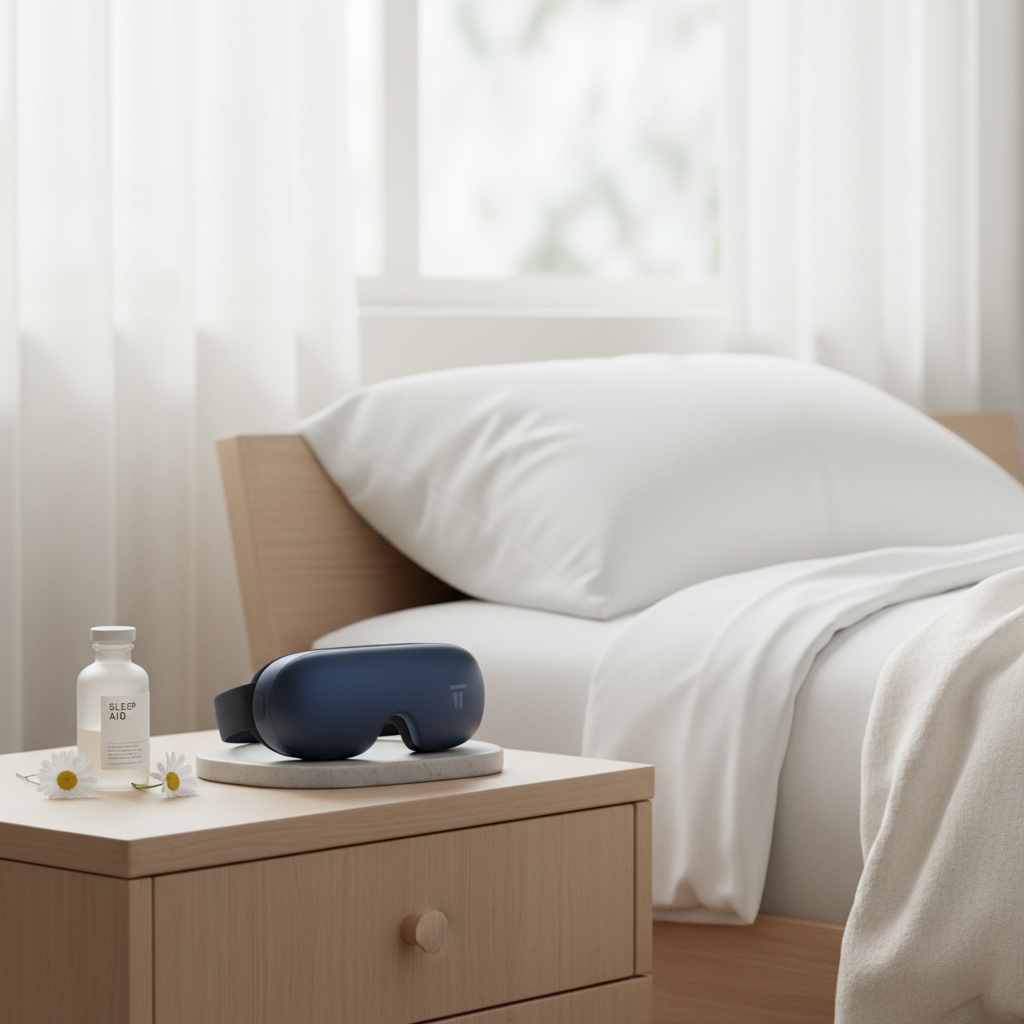
The goggles themselves are designed to cover your eyes and temples, secured with an adjustable elastic strap. The exterior has a smooth, matte finish, while the interior, which comes into contact with your face, is lined with a soft, plush material. This is crucial for comfort, especially when you're meant to be relaxing or even falling asleep while wearing them.
At first glance, they look a bit like a futuristic VR headset, but without the bulk. They're certainly not discreet, but then again, they're not meant for public transport. They're for your personal relaxation zone. There are a few subtle buttons on the side for power, mode selection, and intensity, which are easy enough to locate by touch once you're familiar with them.
The core idea behind the SmartGoggles is to combine multiple sensory therapies – vibration, heat, and massage – with biometric data to create a personalised relaxation and sleep experience. They connect via Bluetooth to the Therabody app, which acts as your control centre, offering guided routines and allowing you to track your sessions.
The Science Behind the SmartGoggles: How They *Claim* to Work
This is where the Therabody SmartGoggles get really interesting. They're not just a fancy eye mask; they incorporate what Therabody calls "SmartSense Technology." This isn't just marketing jargon; it refers to a biometric sensor that measures your heart rate and, more importantly, your heart rate variability (HRV).
Understanding Heart Rate Variability (HRV)
HRV is a fascinating metric. It's the variation in time between your heartbeats, and it's a key indicator of your autonomic nervous system activity. A higher HRV generally indicates a more relaxed state, where your parasympathetic nervous system (responsible for 'rest and digest') is dominant. A lower HRV often signals stress or fatigue, where your sympathetic nervous system ('fight or flight') is in charge.
The SmartGoggles use this HRV data to guide your experience. For example, in the 'SmartRelax' mode, the device will adapt the vibration patterns based on your real-time heart rate and HRV, aiming to guide you into a more relaxed state. It's a form of biofeedback, where your body's own signals are used to help you regulate your physiological state.
Multi-Modal Therapy: Vibration, Heat, and Massage
Beyond the HRV tracking, the SmartGoggles employ a combination of established therapeutic techniques:
* **Vibration Therapy:** The goggles deliver gentle, rhythmic vibrations around your temples and forehead. The idea here is that low-frequency vibrations can have a calming effect on the nervous system. Some studies on vibroacoustic therapy suggest that specific frequencies can induce relaxation, reduce muscle tension, and even improve mood by stimulating mechanoreceptors in the skin and underlying tissues. Think of it like a gentle hum that lulls your body into a state of calm.
* **Heat Therapy:** Localised heat is applied around the temples and eye area. Heat is a well-known muscle relaxant. It increases blood flow to the area, which can help soothe tired eyes, reduce tension headaches, and promote a general feeling of comfort. A warm compress over the eyes is a classic relaxation technique, and the SmartGoggles integrate this simply. Research supports the idea that thermal therapy can promote relaxation and aid sleep onset by signaling to the body that it's time to wind down.
* **Gentle Massage/Compression:** The goggles also incorporate a subtle compression massage. This gentle pressure around the eyes and temples can feel incredibly soothing. It's not a deep tissue massage, but rather a soft, rhythmic squeeze that can help release tension in the orbital muscles and promote a sense of security and calm, similar to the effect of a weighted blanket or gentle touch. This tactile stimulation can activate the parasympathetic nervous system, shifting your body into a more relaxed state.
* **Sound Therapy (via App):** While the goggles themselves don't emit sound (which is a good thing for personal preference), they integrate naturally with the Therabody app's guided meditations and soundscapes. These auditory cues, when combined with the physical sensations, create an immersive environment designed to block out distractions and focus your mind on relaxation.
By combining these elements, the SmartGoggles aim to create an optimal environment for relaxation and sleep. The theory is that by stimulating the senses in a coordinated way and using biofeedback, the device can help downregulate the sympathetic nervous system and encourage your body to enter a state conducive to rest.
My Experience: Putting the SmartGoggles to the Test
I used the Therabody SmartGoggles consistently over a period of several weeks, primarily in the evenings before bed, but also occasionally during the day for a quick refresh.
Setup and App Experience
Pairing the SmartGoggles with the Therabody app was simple. Once connected, the app is intuitive and well-designed. It offers three distinct modes:
1. **SmartRelax:** Designed for stress reduction and winding down.
2. **SmartSleep:** Specifically for helping you fall asleep.
3. **SmartFocus:** For moments when you need a quick mental reset or to alleviate eye strain.
Each mode has different pre-set combinations of vibration, heat, and massage patterns, and you can also adjust the intensity of each element. The app also features a library of guided meditations and soundscapes, which are neatly integrated into the experience.
SmartRelax Mode: My Favourite Wind-Down Ritual
I started with the SmartRelax mode, often after a long day staring at screens. The sessions typically last between 10-20 minutes, though you can adjust this. As the gentle vibrations began around my temples, accompanied by a subtle warmth, I immediately felt a sense of calm. The compression massage was light but noticeable, a soft squeeze that wasn't at all uncomfortable.
What truly impressed me was the adaptive element. I could feel the vibrations subtly change intensity based on my perceived state of relaxation. It was like the goggles were gently coaxing my nervous system into a calmer rhythm. I often combined this with one of the app's guided breathing exercises or a tranquil soundscape.
I found SmartRelax incredibly effective for de-stressing. It forced me to put my phone down, close my eyes, and just *be*. Within minutes, my shoulders would drop, my jaw would unclench, and the mental chatter would quieten. It became a cherished part of my evening routine, a clear signal to my brain that the day was over and it was time to unwind.
SmartSleep Mode: Did I Drift Off Faster?
This was the big test. The SmartSleep mode aims to actively help you fall asleep. I used this mode almost every night, usually for a 15-minute session just as I got into bed.
The patterns in SmartSleep mode are even gentler and more sustained than SmartRelax, with a focus on deep relaxation. The heat felt particularly comforting, and the vibrations were subtle enough not to be distracting.
Did I fall asleep faster? In most cases, yes, I believe I did. While it's hard to quantify precisely without laboratory-grade sleep tracking, I noticed that my mind didn't race as much. The combination of sensory input provided a focal point, preventing my thoughts from spiralling into the usual pre-sleep anxieties. Many nights, I found myself drifting off even before the 15-minute session was complete.
One evening, I was particularly restless, and after about 10 minutes in SmartSleep mode, I felt my eyes growing heavy, and the next thing I knew, my alarm was going off the next morning. Of course, the SmartGoggles aren't a magic bullet for severe insomnia, but for those nights when your brain just won't switch off, they certainly offered a helping hand.
SmartFocus Mode: A Mid-Day Refresh
I used SmartFocus less frequently, typically during the afternoon slump after a few hours of intense screen work. This mode is designed to refresh your eyes and mind. The vibrations and heat settings felt a bit more invigorating, providing a gentle wake-up call for tired eyes. It's like a mini-power nap for your brain. While I didn't track my focus levels rigorously, I did feel more alert and less strained after a 5-10 minute session. It's a nice bonus, but the primary benefit for me remained in the relaxation and sleep categories.
Overall Comfort and Usability
* **Comfort:** The soft material against the skin is genuinely comfortable. The adjustable strap means you can get a snug fit without it feeling too tight. My only minor gripe is that for side sleepers, wearing them while actively trying to sleep can be a bit awkward due to their bulk. They're best used when lying on your back.
* **Battery Life:** I found the battery life to be excellent. A full charge lasted me for several days of consistent use (1-2 sessions per day). Charging via USB-C was quick and convenient.
* **Portability:** The included soft pouch makes them easy to toss into a bag for travel. They're not tiny, but certainly portable enough for weekends away or business trips.
* **Noise:** The internal mechanisms for vibration and compression produce a faint hum, but it's very low and quickly fades into the background, becoming part of the therapeutic experience rather than a distraction.
Dosage, Frequency, and Practical Application
Therabody recommends using the SmartGoggles for 15-20 minute sessions, ideally once or twice daily.
* **For Relaxation (SmartRelax/SmartFocus):** Use as needed throughout the day to de-stress, take a mental break, or alleviate eye strain. A 10-15 minute session can be incredibly rejuvenating.
* **For Sleep (SmartSleep):** Integrate a 15-20 minute session into your pre-bed routine, ideally 30-60 minutes before your desired sleep time, or once you're already in bed. Consistency is key here.
I found the most benefit by making them a non-negotiable part of my evening wind-down. For example:
1. **7:00 PM:** Dinner, start dimming lights.
2. **8:00 PM:** Put away screens, gentle stretching or reading.
3. **9:00 PM:** Put on SmartGoggles for a 15-minute SmartSleep session in bed.
4. **9:15 PM onwards:** Continue relaxing, ideally drifting off to sleep.
This routine helped reinforce the message to my body that it was time to switch off.
The Price Tag: Is It Worth the Investment?
Now, let's talk about the elephant in the room: the price. In the UK, the Therabody SmartGoggles retail for **£174.00**. This is definitely a premium price point for a sleep aid.
To put this into perspective, let's consider alternatives:
* **High-quality weighted blankets:** £50 - £150
* **Premium white noise machines:** £30 - £100
* **A course of cognitive behavioural therapy for insomnia (CBT-I):** Can run into hundreds, if not thousands, of pounds.
* **High-end eye masks:** £20 - £50
The SmartGoggles sit at the higher end of the consumer sleep aid market. However, they offer a unique combination of technologies that most individual products don't. You're getting biometric feedback, vibration, heat, and massage, all integrated into one device with app-guided programmes.
Is it worth it? If you're someone who consistently struggles with winding down, suffers from tension headaches, or finds it hard to switch off your brain at night, and you've tried other, less sophisticated methods without success, then the investment might be justifiable. It's certainly cheaper than ongoing therapy sessions, and a more active solution than simply taking supplements. For me, the consistent, tangible improvement in my ability to relax and drift off made the price feel more palatable. It's an investment in your well-being.