Supplements
Reviewed by Dr. Nathan ColeUpdated March 2026UK market focus
Bowflex SelectTech 552 Dumbbells Review UK
Home strength setups often run into the same two constraints: space and cost. Adjustable dumbbells remain one of the more practical ways to train across multiple weight ranges without filling a room with fixed pairs.
Bowflex SelectTech 552 adjustable dumbbells remain one of the best-known home strength options on the market. This review looks at how they hold up for UK buyers, including adjustment speed, durability, handling, and long-term value.
What Exactly Are the Bowflex SelectTech 552 Dumbbells?
At their core, the Bowflex SelectTech 552 dumbbells are an ingenious space-saving solution for anyone serious about resistance training at home. Instead of needing to buy and store 15 pairs of traditional dumbbells, which would typically range from 2.5kg all the way up to 24kg (or 5lb to 52.5lb in old money), you get two, single dumbbells that can be adjusted with a simple dial. Think of it like a Swiss Army knife for your muscles.
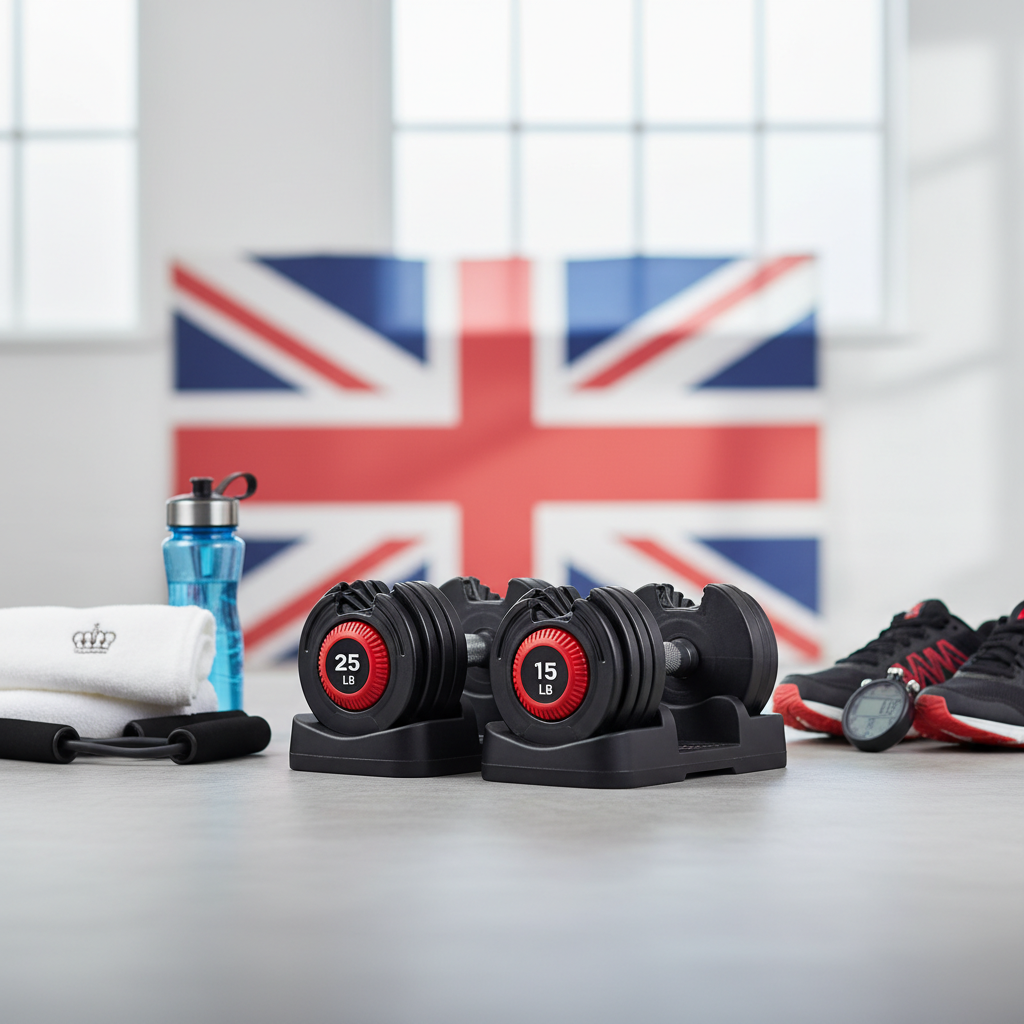
Each dumbbell unit, when sat in its tray, holds a series of weight plates. By rotating a dial on each end of the dumbbell handle, you can select the desired weight. As you lift the handle, only the plates corresponding to your selected weight will be engaged and lift out of the tray, leaving the unused plates behind. It's a remarkably intuitive system that, in theory, allows you to switch weights swiftly between exercises, or even within a superset, without cluttering your workout area or needing a small army to lug plates around.
The weight range offered by the 552s is impressive for their compact footprint. They start at a very manageable 2.27 kg (5 lbs) and go all the way up to 23.8 kg (52.5 lbs) per dumbbell. This covers a significant portion of what most home gym enthusiasts would need for a comprehensive strength training programme. For those of us used to metric, the increments are a bit of a mixed bag due to their original design in pounds, but Bowflex provides a useful chart to convert:
* 2.27 kg (5 lbs)
* 3.4 kg (7.5 lbs)
* 4.5 kg (10 lbs)
* 5.7 kg (12.5 lbs)
* 6.8 kg (15 lbs)
* 7.9 kg (17.5 lbs)
* 9.1 kg (20 lbs)
* 10.2 kg (22.5 lbs)
* 11.3 kg (25 lbs)
* 13.6 kg (30 lbs)
* 15.9 kg (35 lbs)
* 18.1 kg (40 lbs)
* 20.4 kg (45 lbs)
* 22.7 kg (50 lbs)
* 23.8 kg (52.5 lbs)
These increments mean you can progressively overload your muscles effectively, a cornerstone of successful strength training. We'll look into the practicalities of this shortly.
Key Features and Specifications
Let's break down what makes these dumbbells tick and what you can expect when they land on your doorstep.
Weight Range and Increments
As mentioned, the 552s offer a substantial range from 2.27kg to 23.8kg (5 to 52.5 lbs) per dumbbell. What's particularly useful is the ability to adjust in relatively small increments at the lower end – 1.13kg (2.5lb) jumps up to 11.3kg (25lbs) – which is brilliant for beginners or for isolation exercises where you don't need huge jumps in weight. Beyond 11.3kg, the increments shift to 2.27kg (5lb), which is still perfectly manageable for most compound lifts. This allows for excellent progressive overload, meaning you can gradually increase the weight as you get stronger, which is vital for continuous muscle growth and strength gains.
Adjustment Mechanism
This is where the magic happens. On each end of the dumbbell's handle, there's a large, red dial. You simply twist this dial to align with your desired weight. As you turn it, a locking mechanism either engages or disengages specific weight plates. It's largely smooth, with a satisfying click as you hit each weight selection. The system is designed so that you must place the dumbbell back into its cradle before you can adjust the weight, which is a sensible safety feature to prevent plates from falling off mid-lift.
Dimensions and Build Quality
Here's an important point for anyone considering these: they are *long*. Regardless of whether you select 2.27kg or 23.8kg, the overall length of the dumbbell remains constant, approximately 40 cm (15.75 inches). This can feel a bit unwieldy, especially at lighter weights or when performing certain exercises like bicep curls or flyes where a shorter dumbbell might offer a more natural range of motion. It's something you get used to, but it's definitely a noticeable difference compared to traditional fixed dumbbells.
In terms of build, the 552s combine steel weight plates with a durable moulded plastic coating and a solid plastic housing for the adjustment mechanism. The handle itself is made of steel, with a rubberised grip. While the use of plastic can sometimes raise eyebrows amongst hardcore lifters who prefer solid iron, it's generally high-quality and necessary for the SelectTech mechanism to function. However, it does mean these aren't designed to be dropped, unlike traditional fixed dumbbells. This isn't a gym where you can throw your weights down after a heavy set of deadlifts!
The Optional Stand
While not essential, Bowflex offers a custom stand (sold separately, usually around £130-£170 depending on retailer and offers) for the SelectTech dumbbells. This stand elevates the dumbbells to waist height, making it far more comfortable to pick them up and put them down, reducing strain on your back. It also includes a media rack for your phone or tablet, which is handy for following workout apps or watching tutorials. Given the size and weight of the dumbbells, I'd strongly recommend budgeting for the stand if space allows, as it significantly enhances the user experience.
First Impressions and Setup
When the rather large box (or boxes, if you get the stand too) arrived, I was admittedly a bit daunted. But unboxing the Bowflex SelectTech 552s themselves was simple. There's no assembly required for the dumbbells; they come ready to go, nestled securely in their trays. The weight plates and handle are all integrated. The only "setup" involves taking them out of the box and finding a suitable place for them. If you opt for the stand, that requires a bit of IKEA-esque assembly, but it's well-documented and fairly easy to put together with basic tools.
Picking them up for the first time, my initial thought was about their length. They certainly feel substantial. The grip is comfortable, though not traditionally knurled steel like you'd find on commercial gym dumbbells. It's a textured rubber, which offers good purchase even with slightly sweaty hands. The balance felt decent, even if they looked a bit odd in my hands at lighter settings.
The weight adjustment dials feel solid and click satisfyingly into place. It’s a very satisfying mechanism to operate. The first few times I picked them up, I double-checked that all the plates were securely locked in – a natural apprehension with adjustable weights – but they felt reassuringly solid.
Performance in Action: My Experience
Now for the real test: how do they perform when you’re actually sweating buckets and trying to push some iron (or, well, plastic-coated steel)?
Weight Adjustment – Smooth Operator?
For the most part, yes, the adjustment is smooth and quick. Being able to go from, say, 10kg for bicep curls straight to 20kg for bent-over rows in a matter of seconds by just twisting a dial is incredibly convenient. It genuinely speeds up your workout, minimises faffing about, and helps maintain your heart rate. This is particularly valuable when you’re doing circuits or supersets where rapid weight changes are crucial.
However, it’s not always perfectly natural. Occasionally, a plate might slightly snag, or the dial might feel a tiny bit stiff. This is rare, but it does happen. Usually, wiggling the dumbbell gently back into the tray or giving the dial another firm twist solves it. It’s never been a deal-breaker, but something to consider that it’s