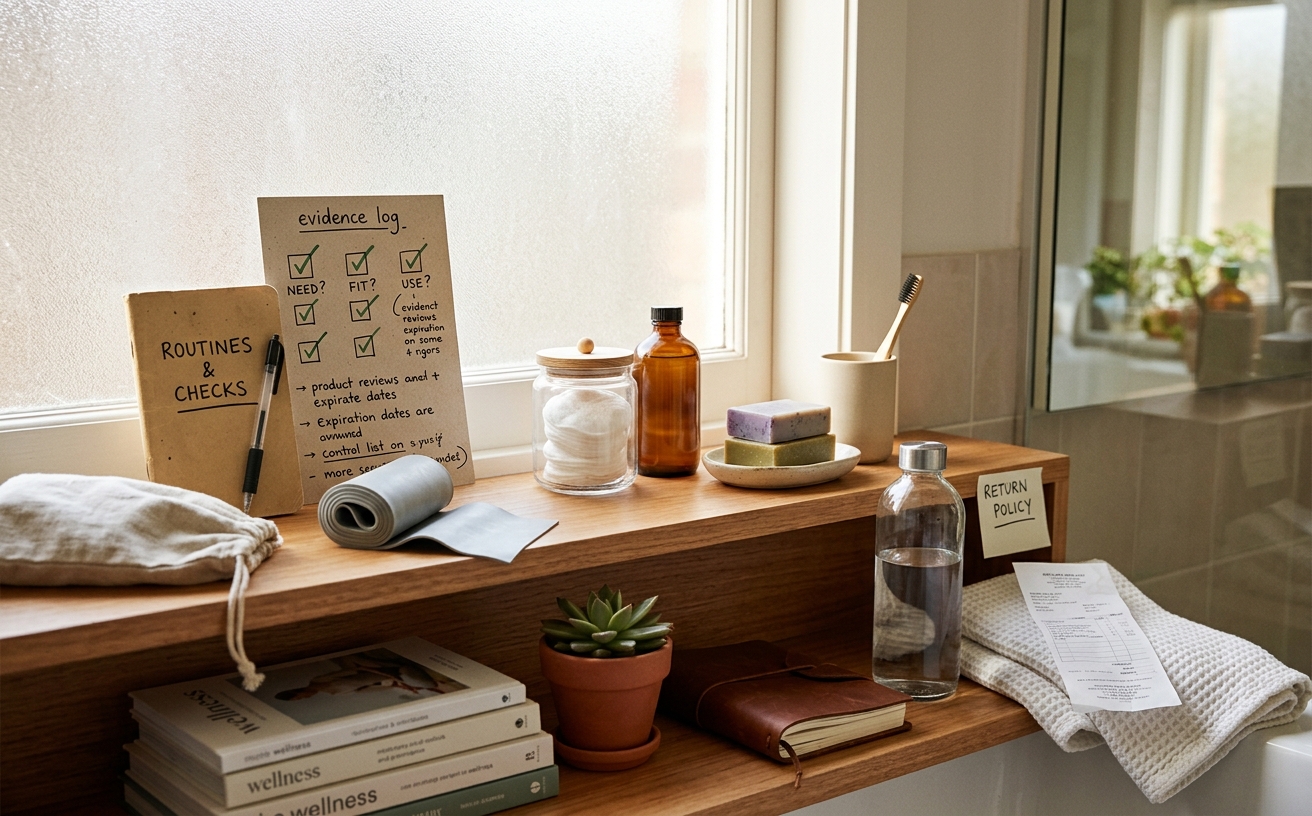
The life constraint comes first; the product claim stays on probation.
The bathroom vanity often becomes a quiet graveyard for well-intentioned wellness purchases. Half-used clay masks, separated serums, and multiple varieties of dental floss tend to accumulate over months and years. A systematic bathroom shelf declutter is not merely an aesthetic exercise; it is a routine-management tool grounded in practical hygiene and cognitive psychology. Clearing this space reduces visual noise, lowers morning decision fatigue, and ensures the products you apply to your skin are chemically stable and safe to use.
We approach this process by looking at the evidence behind visual clutter and the physical reality of product degradation. The morning routine sets the baseline for your day. When you have to navigate around five half-empty bottles of expired toner just to reach your daily sunscreen, you introduce unnecessary friction into your morning. By auditing your personal care items, you create an environment that supports your actual habits rather than your aspirational ones.
The Psychological and Physical Cost of Clutter
Visual clutter has a documented impact on cognitive load and cortisol levels. The brain interprets a disorganized environment as unfinished work, which can subtly elevate stress before you have even left the house. In a space designed for hygiene and preparation, a crowded shelf creates a barrier to efficient routines.
Beyond the mental friction, there is a physical reality to bathroom storage. Bathrooms are notoriously harsh environments for cosmetics and skincare. Frequent fluctuations in heat and humidity from showers create an ideal breeding ground for bacteria and mold, particularly in products packaged in jars where you repeatedly dip your fingers. Preservative systems in skincare are formulated to withstand normal use, but they eventually fail. Holding onto old products increases the risk of introducing compromised formulas to your skin barrier.
Understanding Product Degradation and Expiration
Evaluating your bathroom inventory requires an understanding of how and why personal care products expire. Unlike food, skincare degradation is not always immediately obvious, but the chemical shifts can lead to skin irritation, breakouts, or localized infections.
The PAO Symbol Explained
Most cosmetic and skincare products feature a Period After Opening (PAO) symbol on the packaging. It looks like a small open jar with a number and the letter M inside (for example, "12M"). This indicates the number of months the product is guaranteed to remain stable and safe after it is first unsealed. Once that window passes, the efficacy of active ingredients drops, and the risk of bacterial overgrowth rises.
Signs of Chemical Instability
Even if you cannot remember when you opened a product, physical changes often indicate that the formula has degraded. Look for the following warning signs:
- Changes in smell: Oils and lipids can go rancid, producing a distinct sour or plastic-like odor.
- Separation: Emulsions (creams and lotions) may split into distinct oil and water layers. If shaking the bottle does not permanently recombine them, the formula is compromised.
- Color shifts: Active ingredients like L-ascorbic acid (Vitamin C) are highly prone to oxidation. A Vitamin C serum that has turned dark orange or brown has oxidized and is no longer effective, potentially causing irritation instead of antioxidant protection.
- Texture changes: Products that become unexpectedly gritty, clumpy, or unusually watery should be discarded.
The Systematic Declutter Framework
To effectively reset your space, you need a structured approach rather than aimlessly shuffling bottles. The following method categorizes items by their actual utility rather than their intended purpose.
Begin the process by entirely emptying your shelves, drawers, and shower caddies. Wipe down the surfaces to remove dust and product residue. Once you have a clean slate, sort every item into one of four distinct categories:
- The Daily Baseline: These are the non-negotiable items you use every single day. Toothpaste, daily cleanser, moisturizer, deodorant, and sunscreen belong here. These items will earn the prime, eye-level real estate in your bathroom.
- Targeted Interventions: Items used consistently but not daily. This includes chemical exfoliants, weekly hair masks, or specific shaving supplies. These should be accessible but stored slightly out of the primary sightline, such as in a top drawer.
- Unopened Reserves: Brand-new backup products or travel-sized toiletries you actively use when away from home. These belong in deep storage, such as a lower cabinet or a designated travel bag, to keep them out of your daily visual field.
- The Discard Pile: Anything expired, separated, or heavily oxidized. This also includes products that consistently break you out, cause redness, or that you simply hate using.
Navigating Sunk Cost Bias in Personal Care
One of the primary reasons bathroom shelves become overcrowded is the sunk cost fallacy. Throwing away an expensive serum that caused a breakout feels like throwing away money. However, the financial cost was incurred the moment you purchased the item. Keeping a product that harms your skin or simply gathers dust does not recoup the money; it only adds visual clutter and takes up valuable space.
If you struggle with the guilt of discarding unused products, consider practical alternatives for items that are still sanitary and within their PAO window. A heavy face cream that caused facial congestion can often be repurposed as a rich hand cream or body lotion. Gentle facial cleansers that failed to impress can be used to clean makeup brushes. However, if a product is expired or housed in an unhygienic jar packaging, the safest option is to discard it.
Important Boundaries: Who Should Skip This Audit
While organizing a physical space is generally beneficial, there are specific circumstances where a rigorous decluttering process should be paused or modified.
- Chronic Skin Conditions: If you are managing conditions like severe eczema, psoriasis, rosacea, or cystic acne, your bathroom shelf likely contains prescribed topical treatments. Do not discard or alter your use of prescription creams, ointments, or specialized barrier repair products without consulting your dermatologist or general practitioner.
- Mental Health Considerations: For individuals experiencing hoarding disorder, severe anxiety, or obsessive-compulsive tendencies related to cleanliness and organization, a sudden, large-scale decluttering effort can trigger significant distress. In these cases, organization should be approached gently, ideally with the support of a mental health professional.
- Current Medical Treatments: If you are undergoing treatments that alter your skin or hair (such as chemotherapy or certain hormonal medications), your personal care needs will fluctuate. Keep gentle, hydrating products on hand even if you are not using them daily, as your skin barrier may require them unexpectedly.
Rebuilding for Low-Friction Routines
Once you have audited your inventory, the final step is returning the surviving items to your space in a way that supports your desired habits. The goal is to make the right choices easy and the unnecessary choices invisible.
Place your morning routine items together in sequential order. If your goal is to remember to apply sunscreen every day, place the SPF directly next to your toothpaste. This utilizes habit stacking, linking a new or desired behavior to an established one. Conversely, if you are trying to stop obsessively picking at your skin, remove magnifying mirrors and store extraction tools entirely out of the bathroom.
Keep the surfaces as clear as possible. A clear vanity is easier to wipe down, reducing the time required for weekly cleaning and minimizing the accumulation of dust and moisture.
Frequently Asked Questions
How often should I audit my bathroom shelf?
A thorough review every six months is generally sufficient. A practical approach is to align this audit with the change of seasons, such as moving from the dry Melbourne winter into the more humid summer months, as your skincare needs and the ambient bathroom temperature will shift.
How do I responsibly dispose of cosmetic packaging?
Cosmetic packaging is notoriously difficult to recycle through standard municipal council bins due to mixed materials, pumps, and dark plastics. In Australia, look for specialized cosmetic recycling programs. Retailers like Mecca and Priceline often host TerraCycle bins, which accept empty, clean cosmetic tubes, compacts, and pump bottles that cannot go into your household recycling.
What if a product has no expiration date or PAO symbol?
If a product lacks clear labeling, rely on the physical indicators of degradation mentioned earlier: changes in smell, texture, or color. As a general rule of thumb, liquid eyeliners and mascaras should be replaced every three to six months to prevent eye infections. Water-based skincare generally lasts six to twelve months, while unopened, properly stored products typically have a total shelf life of two to three years from the date of manufacture.