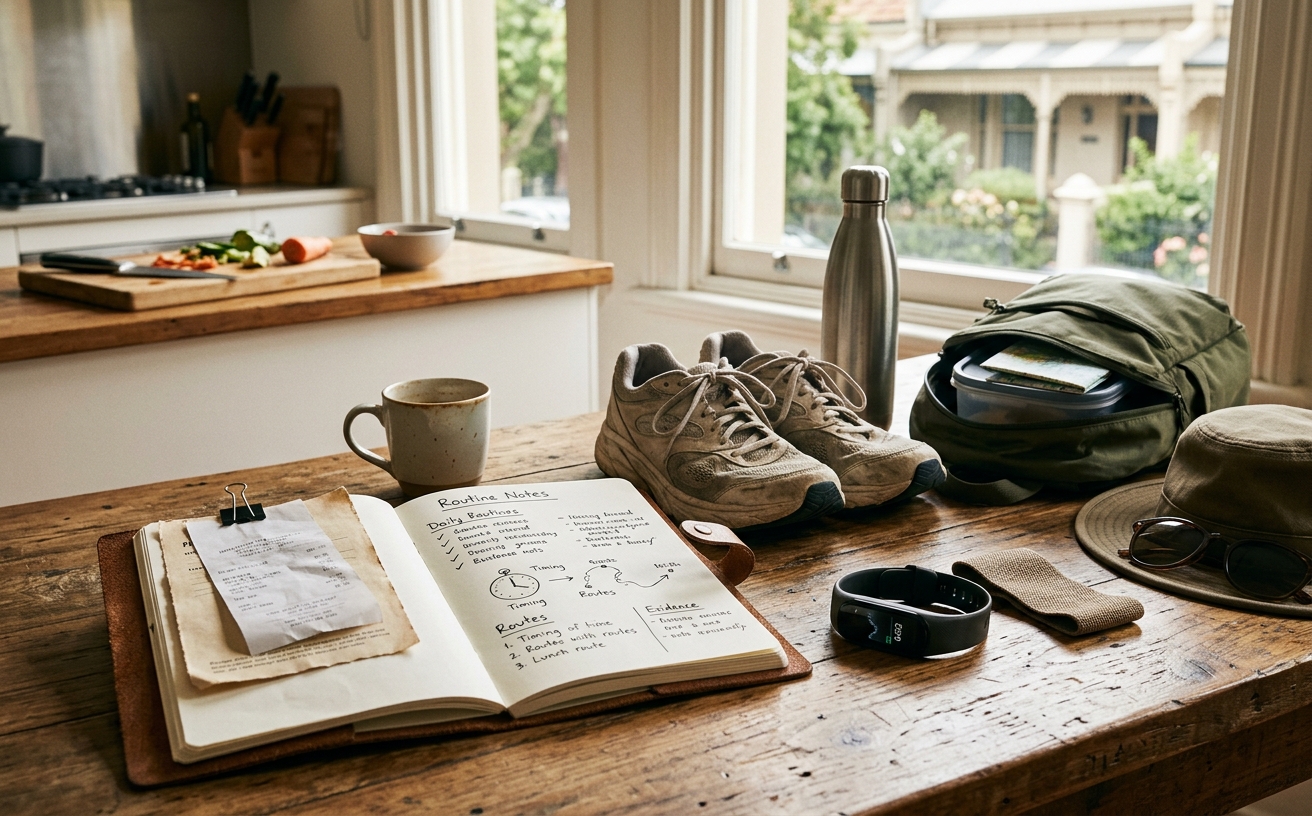
The life constraint comes first; the product claim stays on probation.
A lunch break walk system is a structured routine that allocates specific time blocks for eating, movement, and returning to a calm state before resuming work. Relying on spontaneous motivation often means working straight through lunch or returning to your desk rushed, sweaty, and stressed. By treating the midday walk as a logistical framework rather than a fitness goal, you secure the cognitive and physical benefits of movement without compromising your actual rest period.
The primary goal is predictability. A system removes the daily friction of deciding where to go, how far to walk, and when to eat. This approach shifts the focus from achieving a high step count to ensuring consistent, low-intensity movement that supports digestion and mental clarity for the afternoon ahead.
The Evidence Behind Midday Movement
The physiological rationale for walking during the middle of the day is well-documented, particularly regarding digestion and metabolic regulation. Light physical activity after eating helps blunt the sharp rise in blood sugar that typically follows a meal. Muscle contractions during a moderate walk require glucose, drawing it from the bloodstream and reducing the overall glycemic impact of your lunch.
Beyond digestion, midday movement supports circadian rhythm regulation. Exposure to natural daylight, even on overcast Melbourne afternoons, helps anchor your internal clock. This light exposure signals to the brain that it is daytime, which can reduce the severity of the common mid-afternoon energy slump and support better sleep onset later in the evening.
Cognitive detachment is another critical factor. Stepping away from a workstation and changing your physical environment allows the brain to shift out of direct problem-solving mode. Research into attention restoration suggests that natural environments, or simply a change of scenery away from screens, helps replenish directed attention, making the second half of the workday more focused and less fatiguing.
Core Components of a Walk System
Building a reliable routine requires auditing your available time and establishing strict boundaries. A successful system relies on a realistic division of minutes rather than an optimistic guess.
The Time Audit
The most common failure point is attempting a thirty-minute walk during a thirty-minute break. You must account for transitions.
- The Sixty-Minute Break: Allocate twenty minutes for eating, thirty minutes for walking, and ten minutes for transitions. Transitions include changing shoes, waiting for elevators, packing your bag, and cooling down before your next task.
- The Thirty-Minute Break: Allocate fifteen minutes for eating, ten minutes for a brief walk, and five minutes for transitions. A ten-minute walk is still highly effective for digestion and light exposure.
Route Architecture
Decision fatigue easily derails a midday walk. Your system should include two or three pre-planned routes.
- The Out-and-Back Method: This is the safest approach for strict schedules. If you have twenty minutes to walk, you walk in one direction for exactly ten minutes, turn around, and walk back. This guarantees you will not run out of time, unlike a circular loop where an unexpected detour can make you late.
- The Fixed Loop: Best for predictable environments. Map a route around a local park or a specific set of city blocks that you know takes a precise amount of time. Keep a short version and a long version in your mental inventory.
The Sequencing: Eat-Walk versus Walk-Eat
You must decide whether to eat before or after you move.
- Eat then Walk: This sequence maximizes the blood sugar benefits of post-meal movement. It requires eating a meal that sits comfortably in the stomach, avoiding overly heavy or rich foods that might cause discomfort during movement.
- Walk then Eat: This sequence is often preferred by those who want to use the walk to clear their head immediately after morning meetings, returning to eat in a calm state. The trade-off is that you miss the immediate digestive benefits of walking directly after the meal.
Managing Logistics and Trade-offs
A system is only as good as its ability to handle minor inconveniences. Office environments and unpredictable weather require practical workarounds.
Footwear Management: Walking in stiff office shoes or high heels alters your gait and increases the risk of blisters or plantar fascia irritation. Keep a dedicated pair of supportive walking shoes under your desk or by the front door if working from home. The minor inconvenience of changing shoes is a necessary trade-off for joint health.
Pace and Sweat Control: A lunch break walk is not a cardiovascular conditioning session. The goal is light to moderate movement. Walking too fast elevates the heart rate excessively, leading to sweating that can be uncomfortable when returning to office wear. Keep the pace conversational. If you find yourself sweating heavily, you are walking too fast for a midday break.
Weather Adaptability: Melbourne weather shifts rapidly. Your system needs a wet-weather contingency. This might mean having a designated indoor route, such as walking through connected shopping arcades or a large office building lobby, or simply keeping a reliable umbrella and a lightweight, breathable rain shell at your desk. On days of extreme heat or high UV index, the system should adapt to a shorter walk strictly in the shade, or be suspended entirely.
When to Skip or Modify This Routine
General movement guidelines do not apply universally. There are specific medical and psychological contexts where a lunch break walk system should be modified, skipped, or discussed with a healthcare professional.
Eating Disorders and Disordered Eating: If you find yourself using the walk to compensate for the calories consumed at lunch, or if skipping the walk causes intense anxiety or guilt, this routine may be harmful. Movement should be an addition to your wellbeing, not a punishment or a transaction for eating. Consult a mental health professional or a specialized dietitian if you recognize these patterns.
Chronic Illness and Fatigue: Individuals managing conditions like Chronic Fatigue Syndrome (ME/CFS), Fibromyalgia, or Postural Orthostatic Tachycardia Syndrome (POTS) must prioritize energy conservation. A midday walk might deplete the energy required for the rest of the day. Pacing strategies should always supersede generic movement advice.
Pregnancy: While walking is generally encouraged during pregnancy, conditions such as pelvic girdle pain or severe fatigue require modification. A ten-minute walk might be beneficial, but pushing through pelvic pain to complete a systematic route is counterproductive. Discuss movement boundaries with your obstetrician or pelvic floor physiotherapist.
Acute Injuries: Sprains, stress fractures, or severe back flare-ups require rest. Do not push through acute pain to satisfy a daily routine.
Medication Factors: Certain medications, particularly those affecting blood pressure or heart rate, can cause dizziness when moving from a seated position to walking, especially in the heat. Allow time to stand slowly and assess how you feel before committing to a walk.
Troubleshooting Common Friction Points
Even the best systems face friction. Recognizing these obstacles helps maintain the habit over the long term.
Meetings Running Over: When a morning meeting bleeds into your lunch hour, the instinct is to abandon the walk entirely. The system should dictate that you simply scale down. If your thirty-minute walk is no longer possible, execute a five-minute walk around the block. The habit of leaving the building is more important than the duration.
The Heavy Lunch: Occasionally, you will eat a meal that makes movement feel unappealing. On these days, alter the pace. A very slow stroll is still better for digestion than sitting immediately, but listen to your body. If walking causes indigestion or reflux, prioritize seated rest.
Task Fixation: It is easy to convince yourself that working through lunch will make the afternoon less stressful. Evidence points to the contrary; cognitive fatigue usually slows down afternoon output. Treat the walk as a mandatory appointment rather than an optional luxury.
Frequently Asked Questions
Does a ten-minute walk actually do anything?
Yes. Ten minutes of light walking is sufficient to encourage gastric emptying, blunt post-meal blood glucose spikes, and provide a necessary break from screen-induced visual fatigue.
Should I listen to work-related audio while walking?
It depends on your goal. If the objective is cognitive restoration and stress reduction, listening to work materials defeats the purpose of the break. Opt for music, non-work podcasts, or simply the ambient sounds of your environment to allow your brain to rest.
What if my office is in an industrial or unappealing area?
The visual environment matters less than the physical act of moving and changing your context. If the outdoor environment is genuinely hostile or unsafe, look for indoor alternatives like stairwells or large corridors, though you will miss the benefits of natural light exposure.