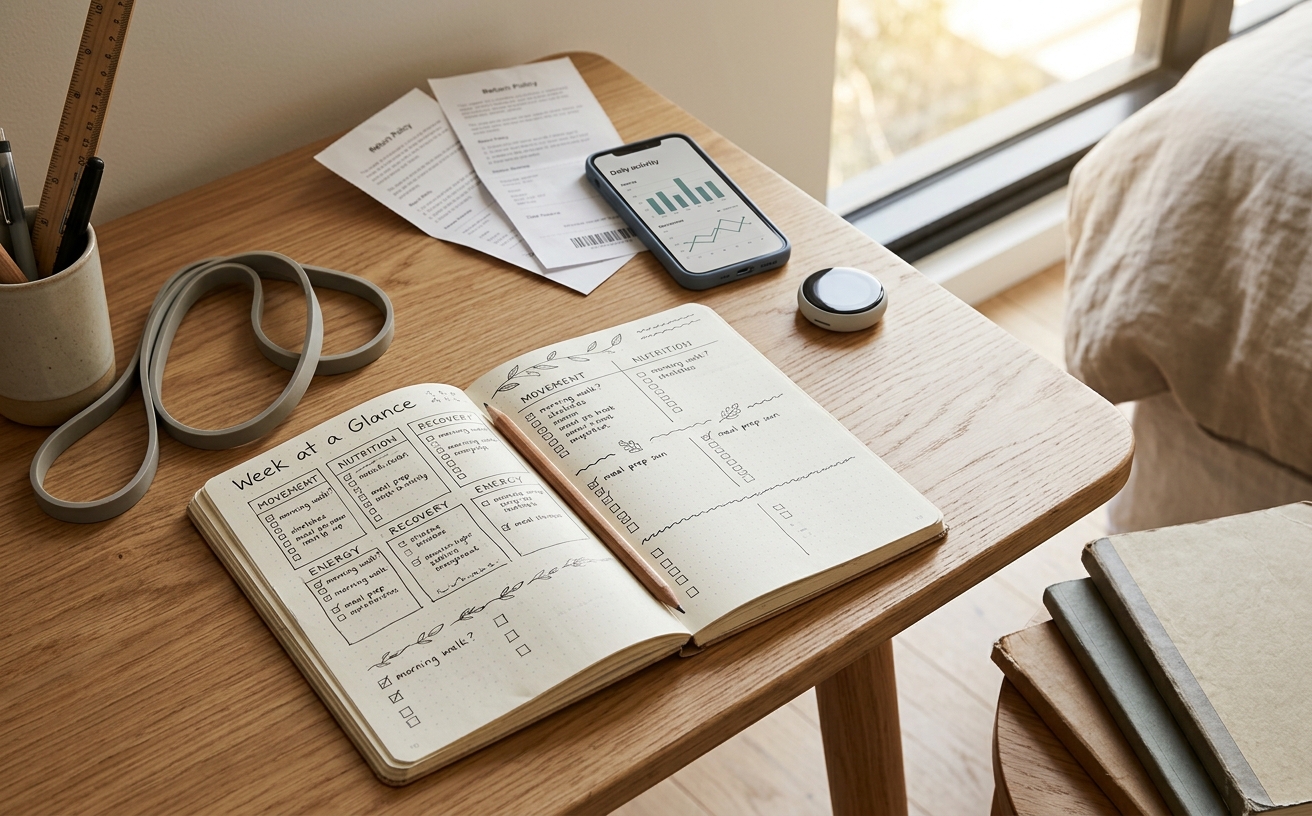
The life constraint comes first; the product claim stays on probation.
When organizing a planner layout for health goals, the most effective approach shifts the focus away from long-term outcomes and anchors directly onto manageable daily inputs. A functional layout dedicates space to three core areas: scheduling specific blocks for movement, a minimalist checklist for daily routines, and a brief section for weekly reflection. Designing your planner this way reduces decision fatigue and creates a clear visual record of your baseline habits without requiring hours of administrative upkeep.
Rather than attempting to monitor every metric from caloric intake to minutes in deep sleep, a grounded planner layout prioritizes behavioral consistency. Behavioral science consistently highlights that self-monitoring is a highly effective tool for habit formation, provided the tracking method does not become a source of stress itself. The goal is to build a paper or digital framework that supports your routines, whether that involves scheduling a morning walk before the weather turns or simply noting down your evening wind-down process.
The Evidence Behind Behavioral Tracking
Self-monitoring works by keeping your intentions visible and moving the administrative burden out of your working memory. Research in habit formation suggests that writing down a specific plan increases the likelihood of follow-through. However, the evidence also points to a distinct difference between tracking inputs and tracking outcomes.
Tracking outcomes, such as daily body weight or specific biometric data, can frequently lead to frustration because these metrics fluctuate due to variables outside your immediate control. Tracking inputs, such as drinking a specific amount of water, completing a 15-minute mobility routine, or turning off screens an hour before bed, reinforces self-efficacy. A sensible planner layout heavily favors input tracking. It provides a straightforward visual cue that you completed the tasks you set out to do, reinforcing the identity of someone who prioritizes their baseline well-being.
Furthermore, keeping a physical or digital record helps identify behavioral patterns over time. You might notice that on days you skip your morning stretch, your afternoon energy dips, or that scheduling a grocery run on Sundays consistently leads to better nutritional choices throughout the week. The planner acts as a field-notes journal for your own daily life, allowing you to audit what works and discard what does not.
Essential Elements of a Health-Focused Layout
Whether you are modifying a standard weekly diary or drawing a custom layout in a blank notebook, a few specific components make the process much more practical. A functional system separates the broad logistical planning from the daily execution.
The Weekly Overview
The weekly spread is where logistical planning happens. This is the space to identify which days you have time for a longer workout and which days require a short, 10-minute stretching session due to work commitments. It is also the ideal place to outline basic nutrition preparation, such as noting which evenings you will cook and when you will rely on leftovers. By looking at the week as a whole, you can anticipate bottlenecks and adjust your expectations accordingly.
The Daily Time-Block
Within the daily layout, assign specific times for your health behaviors. Simply writing exercise on a to-do list rarely works as well as blocking out a specific window, such as a brisk walk from 7:00 AM to 7:45 AM. Treating movement and recovery routines as fixed appointments prevents them from being pushed to the end of the day when energy levels are typically lowest. If your schedule is highly unpredictable, use relative time-blocking instead, such as scheduling a habit immediately after lunch or right before your evening shower.
The Minimalist Habit Tracker
A grid or checklist for daily habits is a staple of health planners, but it requires strict limitations. Select no more than three to five daily habits to track at any one time. Examples might include taking prescribed medication, eating a specific number of vegetable servings, or completing a brief mindfulness exercise. Limiting the tracker prevents the layout from feeling like an overwhelming burden. Keep the tracking binary: you either completed the habit or you did not. Graded tracking often leads to unnecessary self-criticism.
Common Layout Mistakes and Trade-offs
The most frequent error in designing a planner layout for health goals is overcrowding. When a daily page demands that you log your mood, energy levels, hydration, sleep quality, step count, and exact meals, the planner stops being a supportive tool and becomes a second job. An overcomplicated layout is the fastest route to abandoning the practice entirely.
- Tracking too many variables: If you are trying to establish a new sleep routine, focus solely on your bedtime. Leave hydration and step counts off the tracker until the sleep routine becomes automatic.
- Prioritizing aesthetics over function: Intricate, highly decorated layouts can create friction. If setting up your weekly page takes an hour of drawing and color-coding, you are less likely to maintain the practice during a busy week. A functional layout should take no more than five minutes to set up.
- Lack of buffer zones: A rigid schedule that accounts for every minute of the day is bound to fail. A practical layout includes blank space for unexpected delays, longer-than-usual recovery times, or simply resting.
- Failing to review: A planner is only useful if you look at it. Placing the planner in a drawer defeats its purpose. The layout must be simple enough that reviewing it morning and night feels effortless.
When to Skip Tracking and Seek Alternative Support
While a structured planner layout is helpful for many, detailed tracking is not appropriate for everyone. Self-monitoring can sometimes cross the line from supportive to harmful, particularly when it exacerbates anxiety, perfectionism, or physical strain.
- Eating disorders and orthorexia: Individuals with a history of or current struggles with eating disorders, disordered eating, or an unhealthy obsession with clean eating should generally avoid strict food, calorie, or macro tracking. Consult a registered dietitian or mental health professional for guidance on gentle nutrition structures that do not rely on rigid logging.
- Pregnancy and postpartum: During pregnancy and the postpartum period, energy levels, sleep quality, and physical capabilities fluctuate wildly. Rigidly tracking movement or sleep during these phases can cause unnecessary stress. Consult your healthcare provider for appropriate movement guidelines, and allow your daily routines to remain highly flexible.
- Acute injuries: If you are recovering from a physical injury, standard movement tracking should be paused. Work with a physiotherapist to design a specific rehabilitation schedule, and focus your planner solely on those prescribed recovery exercises rather than general fitness goals.
- Chronic illness and pain management: For those managing conditions like chronic fatigue syndrome, fibromyalgia, or autoimmune disorders, rigid daily scheduling can lead to pacing failures. A flexible layout that focuses on energy management and symptom logging, under the guidance of a healthcare provider, is often much safer than strict behavioral targets.
- Severe mental health symptoms: If you are experiencing severe depression or anxiety, the cognitive load of maintaining a planner might be too high. Focus on basic care, remove the pressure of tracking, and seek support from a mental health clinician.
Paper Versus Digital Planner Layouts
The choice between a physical notebook and a digital application involves concrete trade-offs. Paper layouts offer a tactile experience and are completely free from notifications. Using a paper planner for your evening reflection supports sleep hygiene by keeping you away from blue light and the temptation to check emails right before bed. A paper layout also forces you to be intentional about what you write down, as space is physically limited.
Digital layouts, conversely, excel at handling recurring tasks. If you need a reminder to take medication at the exact same time every day, a digital calendar or dedicated routine app is far more reliable than a paper diary. Digital tools also allow you to easily shift a scheduled workout to the next day without scribbling out ink. Many people find success in a hybrid approach: using a digital calendar for rigid time-blocking and appointments, while keeping a paper layout on their desk for daily habit checklists and brief evening reflection.
A Step-by-Step Guide to Setting Up Your Page
If you are using a blank notebook, setting up a functional layout requires only a pen and a straight edge. The goal is to create a visual structure that guides your attention to your priorities without demanding excessive time to draw.
- Divide the page: Split your weekly spread into two sections. Use the left side for your daily schedule and the right side for overarching weekly goals and tracking.
- Create a daily column: Write the days of the week down the left margin. Leave enough space next to each day to write down your top three health priorities, such as a gym session, packing a lunch, or a stretching routine.
- Draw the habit grid: On the right side of the page, draw a small grid. List three habits down the side and the days of the week across the top.
- Add a reflection box: Leave a small square at the bottom right of the page to write one or two sentences at the end of the week. Note what worked well and what needs adjusting for the following week.
Frequently Asked Questions
How often should I change my planner layout?
Stick with a new layout for at least three to four weeks before making major changes. It takes time to determine whether a layout is genuinely ineffective or if you are simply adjusting to a new routine. If you find you are consistently ignoring a specific section, remove it in your next iteration.
What should I do if I miss several days of tracking?
Leave the blank spaces as they are and simply resume tracking on the current day. Attempting to backfill missed days relies on memory, which is often inaccurate, and turns the planner into a source of guilt rather than a forward-looking organizational tool. A blank space is just data indicating that your routine was interrupted.
Should I track my mood alongside my health goals?
Tracking mood can be useful for identifying patterns, especially if you are adjusting your sleep or movement routines. Keep it simple by using a three-point scale, such as good, neutral, or low, rather than writing lengthy emotional logs. If you require more detailed emotional processing, it is usually better to keep a separate, dedicated journal for mental health purposes rather than crowding your daily health planner.