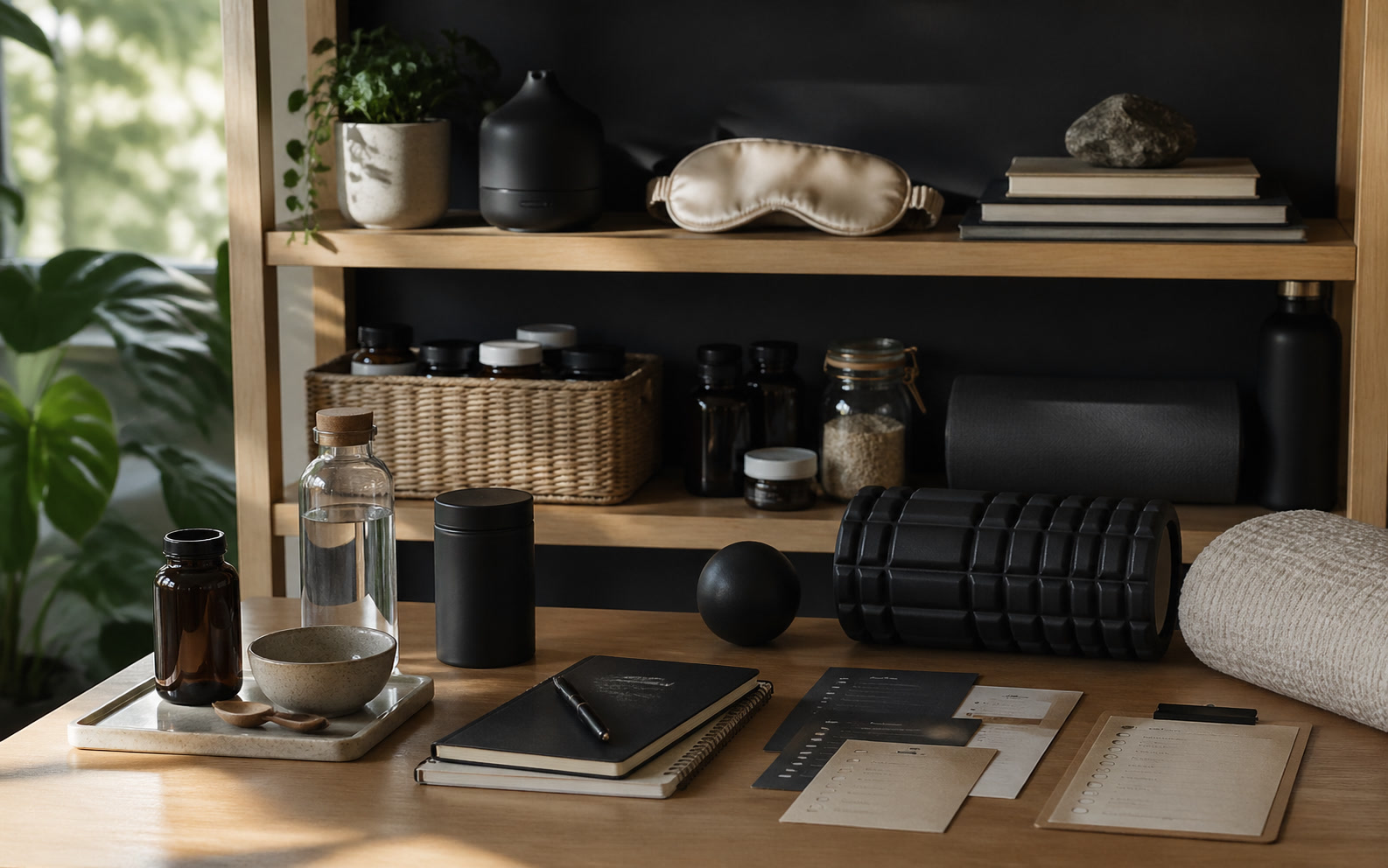
The life constraint comes first; the product claim stays on probation.
Most bathroom cabinets or pantry shelves hide a graveyard of abandoned health purchases. Half-empty jars of adaptogenic mushrooms, expired greens powders, and complex massage tools covered in dust are the hallmarks of a routine built on impulse rather than utility. A low-hype wellness shelf is the exact opposite. It is a strictly curated, minimalist collection containing only the pragmatic, unglamorous tools and staples you actually use to support sleep, movement recovery, and basic nutrition. Building one requires stripping away the marketing noise, auditing your current habits, and committing to items that serve a clear, biological purpose.
The goal here is not to assemble a photogenic display for social media. A functional health stash should lower decision fatigue and support your baseline physical needs without demanding massive financial upkeep. By isolating your genuine requirements—whether that is mechanical muscle relief after a long run or a reliable wind-down cue before bed—you can permanently filter out the noise. Here is exactly how to audit your current collection, establish practical purchasing filters, and select reliable, evidence-grounded staples.
The Core Principles of a Pragmatic Setup
Before you throw anything away or buy anything new, it helps to understand the philosophy behind a low-hype approach. The health and wellness industry thrives on the promise of optimization—the idea that you are always one supplement or gadget away from perfect energy and flawless sleep. A low-hype shelf rejects optimization in favor of basic support.
The first principle is prioritizing single ingredients over proprietary blends. Proprietary blends often mask the exact dosages of their ingredients, meaning you might be paying a premium for a tiny dusting of an active compound hidden behind cheap fillers. Buying single-ingredient items—like plain creatine, standard whey protein, or a basic magnesium powder—allows you to control the dose, track how it actually affects your body, and easily identify any digestive triggers or allergens.
The second principle is high turnover. If an item sits on your shelf for six months, it does not belong in your routine. High turnover means you are actually consuming or using the product regularly. It is far better to have three items you use daily than twenty items you use sporadically. Finally, utility must always beat aesthetics. If a bright orange lacrosse ball from a sports store releases muscle tension better than a sleek, matte-silicone boutique tool, the ugly orange ball wins.
Step One: The Brutal Cabinet Audit
Begin by pulling every single health, recovery, and wellness item you own out of the cupboards and placing them on a table. This includes supplements, teas, balms, massage tools, heat packs, and sleep aids. Seeing the sheer volume of accumulated products is often the wake-up call needed to change purchasing habits.
Sort these items into three distinct piles. The first pile is for anything expired, degraded, or compromised. Fish oils go rancid, gummy vitamins melt or harden, and herbal tinctures lose their potency. Safely dispose of these items. Do not flush pills or powders down the toilet; instead, mix them with something unpalatable like used coffee grounds and place them in your general waste bin.
The second pile is the aspirational graveyard. These are the items you bought for the person you wanted to be, rather than the person you are. Perhaps you bought a complex pre-workout powder but you actually prefer training in the evenings, or you purchased an expensive acupressure mat that you find too painful to use. Be honest with yourself. If you have not touched it in three months, donate the unopened items or throw away the opened ones.
The final pile contains your daily drivers. These are the items that are nearly empty because you rely on them constantly. This small pile forms the foundation of your new, low-hype shelf.
Stocking the Baseline: Movement and Recovery
Physical recovery does not require electricity, Bluetooth connectivity, or an app subscription. The most effective tools for mechanical recovery are often the simplest, relying on basic physics and targeted pressure to relieve tissue tension.
Mechanical Tools
A dense, smooth massage ball—such as a standard lacrosse ball—is incredibly effective for isolating trigger points in the glutes, shoulders, and feet. Unlike vibrating foam rollers or percussive massage guns, a simple ball never needs to be charged, will not break down, and fits easily into a work bag. Pair this with a standard, high-density foam roller for larger muscle groups like the quadriceps and upper back.
Topical and Thermal Relief
Skip the expensive, heavily marketed muscle balms infused with exotic botanicals. A basic menthol or camphor heat rub from the local pharmacy provides the exact same localized counter-irritant effect, increasing blood flow to the area and temporarily masking pain signals. For thermal recovery, a classic wheat bag or hot water bottle remains unmatched for soothing lower back stiffness or menstrual cramps.
Epsom Salts
Magnesium sulphate (Epsom salt) is a staple for tired muscles, but there is no need to buy it from the boutique bath aisle. Look for plain, unfragranced Epsom salts sold in bulk bags at hardware stores, agricultural suppliers, or bulk food shops. You will pay a fraction of the price and can add your own drop of lavender oil if you want a sensory experience.
Stocking the Baseline: Sleep and Settling
Sleep hygiene is mostly behavioral—keeping the room cool, dimming lights, and stepping away from screens. However, a few low-hype shelf items can act as powerful physical and psychological cues that it is time to wind down.
Herbal Teas
Drinking tea before bed is less about the pharmacological effects of the herbs and more about the ritual. The thermal load of a hot drink gently warms the core, and the time it takes to steep and sip forces a pause in your evening. Keep it simple with standard chamomile or peppermint tea. Loose-leaf offers better value and flavor, but standard tea bags are perfectly fine. Avoid complex "sleep blends" that contain unnecessary sweeteners or hidden caffeine from green tea extracts.
Magnesium
Magnesium is one of the few supplements with a pragmatic place on a low-hype shelf, often used to support muscle relaxation and nervous system settling. Look for highly bioavailable forms like magnesium glycinate or magnesium citrate, rather than the poorly absorbed magnesium oxide. Keep in mind that magnesium is a gentle support tool, not a sedative.
Environmental Controls
The highest return on investment for sleep quality comes from blocking out the environment. A contoured eye mask that keeps pressure off your eyelids and a bulk box of soft foam earplugs will do more to protect your deep sleep architecture than any expensive nighttime supplement powder.
Stocking the Baseline: Nutritional Support
Nutritional supplements should plug specific gaps in your diet, not replace whole foods. A low-hype shelf keeps nutritional support incredibly basic, focusing on macronutrients and hydration rather than micronutrient mega-dosing.
Protein Powders
A straightforward whey protein isolate or a simple pea and rice protein blend is a highly practical tool for meeting daily protein targets, especially on busy workdays or after training. Unflavoured or lightly flavored options are usually best, as they are less likely to cause flavor fatigue over time and contain fewer artificial sweeteners that can cause digestive upset in some people.
Electrolytes
For those who sweat heavily during exercise, work physically demanding jobs, or are navigating the peak of a hot summer, a basic electrolyte powder is useful. Look for a product focused strictly on sodium, potassium, and magnesium. Avoid brands that pad their ingredient lists with excessive B-vitamins, herbal stimulants, or high amounts of refined sugar.
Evaluating New Additions (The 48-Hour Rule)
Once your shelf is curated, the challenge is keeping it that way. The wellness industry is relentless in its marketing, and it is easy to be swayed by a compelling podcast ad or a targeted social media campaign. To protect your low-hype shelf, institute a strict 48-hour purchasing filter.
When you see a new product you want to buy, force yourself to wait two full days. During this time, ask yourself three questions. First, what is the specific active ingredient, and what is the biological mechanism of action? If you cannot explain how it is supposed to work without using marketing buzzwords, do not buy it. Second, what is the cost-per-dose? A sixty-dollar jar might seem reasonable until you realize it only contains fourteen servings. Third, what existing problem am I trying to solve? If you are sleeping well and recovering fine, you do not need to add a new supplement just because someone on the internet said it was optimal.
Who Should Skip This (and When to Seek Clinical Advice)
While the goal of a low-hype shelf is to stick to safe, basic staples, any changes to your health routine require strict boundaries. This guide is for general, everyday maintenance and is not a substitute for medical advice.
Pregnancy and Breastfeeding: If you are pregnant, trying to conceive, or breastfeeding, you must bypass general wellness advice entirely. Many seemingly harmless "natural" items, including certain herbal teas, high-dose vitamins, and topical treatments, are contraindicated during pregnancy. Always consult your obstetrician or GP before consuming any new supplement or herb.
Chronic Illness and Medications: If you have a chronic health condition (such as kidney disease, liver issues, or cardiovascular disease) or take prescription medications, you must audit your shelf with a clinician. Common supplements can have severe interactions with medications. For example, high doses of certain minerals can affect heart medications, and herbs like St John's Wort or grapefruit extracts can alter how your liver metabolizes drugs.
Eating Disorders: If you have a history of eating disorders or disordered eating, fixating on nutritional powders, supplements, or specific wellness routines can be triggering. Replacing whole food meals with protein shakes or relying heavily on dietary supplements is a red flag. Please seek guidance from a qualified dietitian or mental health professional.
Severe Symptoms: A low-hype shelf is designed for mild, everyday recovery. If you are experiencing chronic insomnia, severe joint or muscle pain, unexplained fatigue, or persistent digestive issues, no amount of magnesium or foam rolling will fix the root cause. These are clinical symptoms that require diagnosis and treatment by a medical professional.
Frequently Asked Questions
Do I really need a greens powder?
For the vast majority of people, no. Greens powders are essentially highly processed, expensive insurance policies with questionable bioavailability. The drying and powdering process often destroys the fiber and degrades certain heat-sensitive vitamins. You are almost always better off spending that money on fresh or frozen vegetables, which provide intact fiber matrices and higher satiety.
How long do powdered supplements actually last?
While protein powders and electrolytes often have a shelf life of one to two years, this degrades rapidly once the seal is broken and the powder is exposed to oxygen, light, and moisture. Store your powders in a cool, dark, dry place—not on a shelf in a steamy bathroom or right next to the kitchen stove. If a powder changes color, develops a strange odor, or clumps into hard rocks, it is time to throw it away.
Are expensive massage guns worth the money?
A percussive massage gun can be a helpful tool for rapid localized blood flow, but it is rarely a necessity. A good rule of thumb: do not invest in an expensive electronic recovery tool unless you have already proven to yourself that you can consistently use a cheap, manual tool (like a foam roller or massage ball) for at least three months. If you cannot commit to rolling out manually, an expensive gadget will likely just end up gathering dust next to your expired supplements.