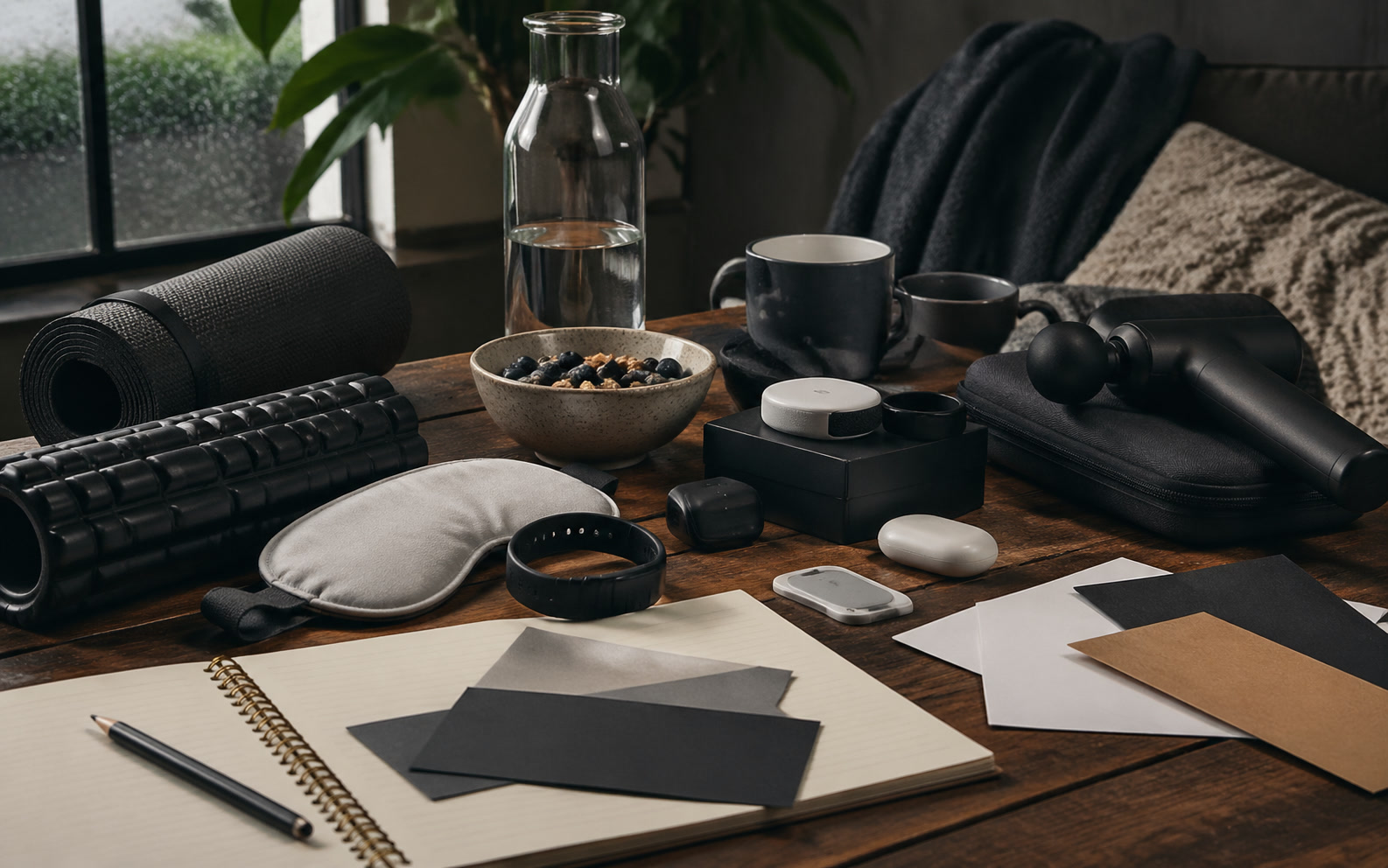
The life constraint comes first; the product claim stays on probation.
It is easy to fall into the habit of shopping for health. You feel chronically fatigued, so you look up new sleep trackers. Your muscles ache after a long week of work, so you browse premium percussive therapy devices. The impulse to purchase a tangible solution is completely understandable. Buying a product provides an immediate sense of accomplishment and control over your well-being. However, acquiring a new wellness tool is rarely the most effective way to address a physical or mental plateau.
Knowing when to pause your spending requires honest self-assessment. If your foundational habits—consistent sleep schedules, adequate daily movement, and balanced meals—are currently missing, a high-end wearable or a premium subscription app will only highlight those gaps rather than fill them. Often, the most productive step you can take for your health is to close the browser tab and look at the routines you already have in place. This guide outlines how to audit your current health behaviors, identify when a purchase is merely a distraction, and recognize when your symptoms require professional clinical attention rather than a consumer product.
The Cognitive Load of Wellness Consumerism
Every physical object and digital application you introduce into your routine requires maintenance. The wellness industry frequently mirrors the broader technology sector, presenting consumer goods as necessary upgrades for the human body. Yet, these tools come with a hidden cost: cognitive load.
Consider a smart water bottle designed to track your hydration. On the surface, it is a tool for health. In reality, it is another device that needs to be charged, synced to an application, updated, and carefully washed. The mental energy spent managing the tool often detracts from the energy needed to actually perform the healthy behavior. Drinking a glass of water from the tap requires zero technical maintenance.
Sustainable health practices are often repetitive and unglamorous. When we buy a new tool, we are usually seeking a shortcut past the mundane reality of habit formation. A meditation cushion will not force you to sit still, and a premium running shoe will not get you out of bed when it is raining. Acknowledging that the friction lies in the habit itself, rather than the lack of equipment, is the first step toward building a more grounded wellness routine.
Signs You Have Reached Tool Saturation
It is entirely possible to have too much data and too many recovery protocols. You might be experiencing tool saturation if you notice the following patterns in your daily life:
- Data overlap: You are wearing a smartwatch that tracks your steps, a smart ring that tracks your sleep, and an app that tracks your caloric intake. If multiple devices are giving you the same general feedback—that you need more rest or more movement—adding another tracker will not provide new insights.
- Subscription fatigue: You are paying monthly fees for a meditation app, a mobility app, and a digital fitness platform, but you rarely open them. The presence of the subscription creates a false sense of participation.
- Outsourcing bodily awareness: You check your wearable device to decide if you feel tired, rather than paying attention to your own physical sensations. If you wake up feeling refreshed but become anxious because your sleep score was low, the tool is actively hindering your connection to your body.
When to Seek Clinical Care Instead of a Consumer Product
There is a strict boundary between general wellness maintenance and medical care. Consumer tools are designed for the former; they are completely unequipped to handle the latter. Attempting to manage a medical condition with consumer wellness products can delay necessary treatment and create serious health risks.
If you are pregnant, managing a chronic illness, recovering from an acute injury, or taking prescription medications, you should skip consumer wellness trends entirely until you have consulted your primary care doctor. Supplements, even those marketed as natural, can have severe interactions with prescription medications. Wearable devices cannot diagnose medical conditions, and percussive massage tools can exacerbate underlying tissue or joint injuries.
Furthermore, if you are experiencing severe symptoms such as chronic insomnia, sudden weight changes, persistent joint pain, or unexplained fatigue, no consumer wellness tool is appropriate. These are clear prompts to consult a medical professional.
Mental health risks must also be considered. If you have a history of eating disorders, orthorexia, obsessive-compulsive tendencies, or severe health anxiety, tracking applications and wearables pose a significant risk. Fixating on biometric data, caloric intake, or sleep scores can trigger or exacerbate these conditions. In these instances, the healthiest choice is often to remove tracking tools entirely and work with a qualified mental health professional.
Conducting a Routine Audit
Before adding a new variable to your health routine, examine the foundation. The most advanced recovery tool cannot compensate for chronic sleep deprivation, and a premium supplement cannot replace a balanced diet. Begin by auditing these three core areas of your daily life.
Sleep Hygiene
Sleep is the foundation of all physical and mental recovery. Before purchasing sleep aids, specialized pillows, or tracking mats, evaluate your basic sleep environment. Are you going to bed and waking up at roughly the same time every day, including weekends? Is your bedroom dark, quiet, and cool? Are you looking at bright screens immediately before trying to sleep? Addressing these environmental and behavioral factors will yield better results than any consumer product.
Basic Movement
If you are considering buying complex mobility tools or expensive home gym equipment, look at your baseline movement first. Are you walking daily? Are you breaking up long periods of sitting with brief moments of stretching or standing? The human body benefits immensely from simple, consistent movement throughout the day. A daily thirty-minute walk requires nothing but a standard pair of shoes, yet it offers profound benefits for cardiovascular health and mental clarity.
Nutritional Consistency
The supplement industry thrives on the promise of optimization. However, powders and pills are meant to supplement a diet, not replace the fundamentals of nutrition. Before buying expensive greens powders or specialized vitamins, review your basic eating habits. Are you eating regular meals? Are you consuming adequate dietary fiber through whole vegetables and fruits? Are you drinking enough water? If the basics are inconsistent, supplements will offer minimal benefit.
How to Evaluate Your Existing Inventory
Once you have audited your habits, it is time to audit the tools you already own. A practical approach is to categorize your current wellness products and subscriptions into three groups: Keep, Pause, and Cancel.
Keep: These are the tools that genuinely reduce friction in your life. If a basic foam roller helps you stretch your back after a long day at a desk, and you use it consistently without overthinking it, keep it. If a simple pedometer encourages you to take an evening walk, it is serving its purpose.
Pause: These are items or apps that you feel obligated to use but rarely do. Place physical items in a box and put them out of sight for a month. Pause the digital subscriptions. If you do not miss them after thirty days, you have your answer.
Cancel: These are the tools that cause anxiety or require more effort than they are worth. If a wearable device makes you stress about your heart rate variability to the point of anxiety, take it off. If a complex diet-tracking app makes you feel guilty about eating a normal meal, delete it. Wellness tools should support your life, not dictate your mood.
Establishing a Purchase Pause
To break the cycle of wellness consumerism, implement a mandatory thirty-day waiting period for any new health-related purchase. When you feel the urge to buy a new tracker, supplement, or recovery device, write the item down on a list along with the date.
During those thirty days, try to address the underlying issue using only the resources you already have. If you want a massage gun for sore legs, commit to ten minutes of manual stretching every evening instead. If you want a sleep tracker because you are tired, commit to turning off your phone an hour earlier for a month. More often than not, the desire to buy the product will fade as you implement the practical behavior.
If, after thirty days, you have maintained the foundational habit and you still believe the specific tool will provide a concrete, measurable benefit, you can make the purchase with intention rather than impulse.
Frequently Asked Questions
How do I know if a health app is actually helping me?
A health app is helpful if it gently encourages positive behavior change without causing anxiety or requiring excessive manual data entry. If the app makes you feel empowered to take a walk or go to sleep earlier, it is working. If you feel guilty, anxious, or obsessed with maintaining a streak or a perfect score, the app is likely doing more harm than good.
Can tracking my sleep make it worse?
Yes. There is a documented phenomenon known as orthosomnia, which is an unhealthy obsession with achieving perfect sleep metrics. People suffering from orthosomnia often experience worse sleep because they are anxious about the data their tracker will report in the morning. If looking at your sleep data makes you stressed, the best intervention is to take the tracker off.
What is the most effective free recovery method?
Time and sleep. The body has highly evolved, built-in recovery mechanisms that operate primarily while you are sleeping. Ensuring you get adequate, high-quality sleep and allowing your body sufficient time to rest between intense bouts of physical or mental exertion will outperform any consumer recovery gadget on the market.