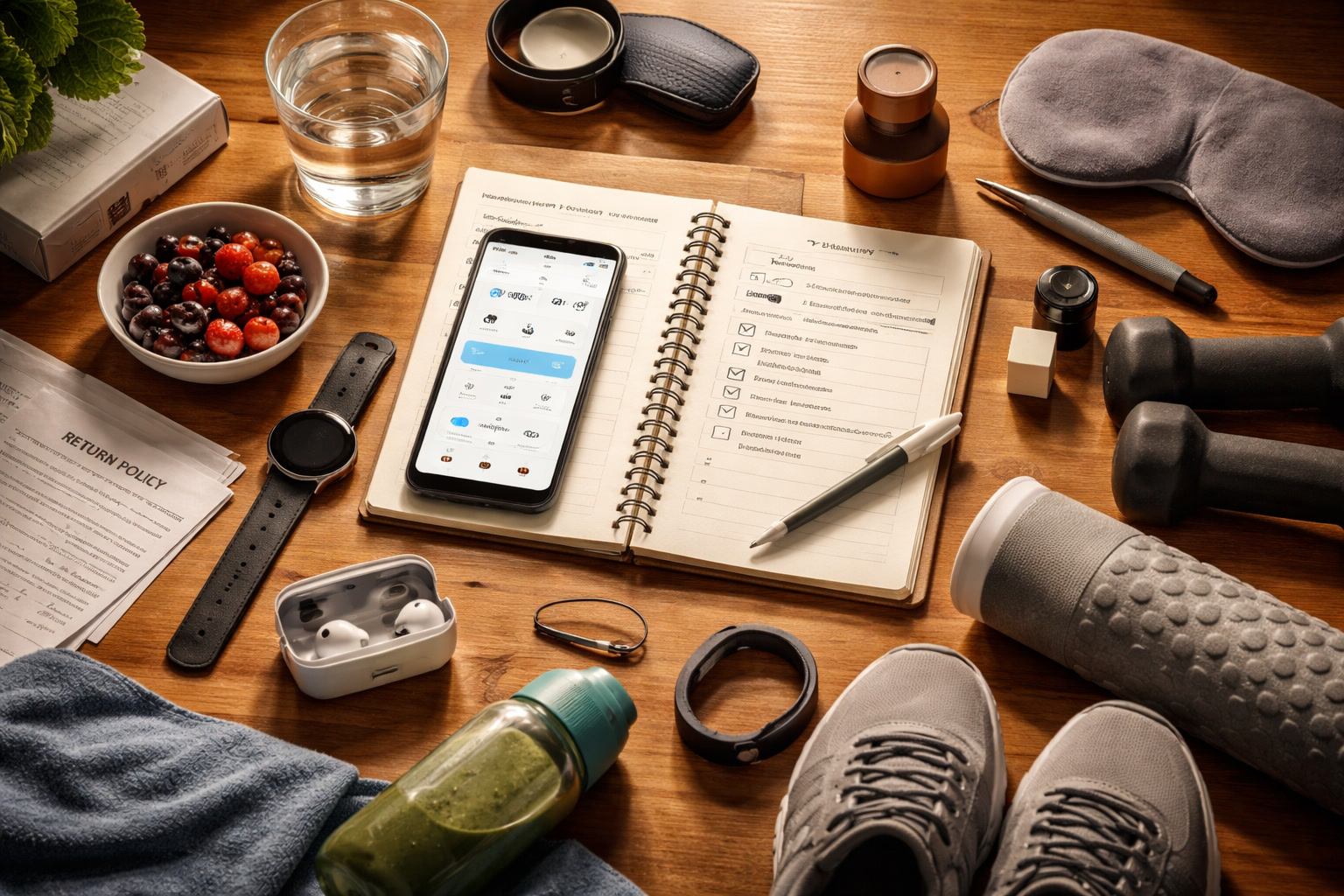
The life constraint comes first; the product claim stays on probation.
Downloading a health app takes roughly ten seconds. Figuring out if that software actually supports your physical or mental well-being takes considerably longer. Most subscription-based wellness platforms rely on a highly predictable consumer cycle: a surge of initial motivation, a brief period of intense daily logging, followed by a quiet abandonment where the application sits unused on a secondary home screen while the annual fee quietly auto-renews.
To avoid this common trap, you need a structured testing period. A thirty-day trial provides the exact window required to move past the initial novelty and observe how the software interacts with your actual daily routine, your baseline stress levels, and your phone's battery life. This systematic approach helps you determine whether a digital tool offers genuine, practical utility or simply adds another layer of digital administration to your day.
The Purpose of a Structured Trial Period
Health applications are designed to be highly engaging during the first few days of use. Onboarding screens celebrate your commitment, notifications are fresh, and the interface feels novel. However, true habit formation and sustainable routines do not operate on novelty. They operate on low friction and realistic integration.
The goal of a thirty-day trial is not to find a flawless piece of software, but to identify an application whose specific trade-offs you can tolerate long-term. Every app requires a compromise. Active tracking apps, like food diaries or symptom loggers, require your time and manual input. Passive tracking apps, which pull data from wearables, require your trust regarding data privacy and background location permissions. By stretching your evaluation over an entire month, you expose the application to the reality of your life: busy work days, weekends where your routine shifts, and moments of low motivation.
Pre-Trial Checklist: Defining Your Baseline
Before you hit download, you must establish exactly what problem you are attempting to solve. Are you looking for a structured mobility program to use after work, a simple interface to log dietary triggers for digestion, or a tool to prompt evening wind-down routines? If you enter an app ecosystem without a specific goal, the application will assign you one—usually the metric that keeps you opening the platform most frequently.
Write down your current baseline. What are your current habits regarding the metric you want to track? What is your budget if you decide to keep the app after the trial? Having these answers written down prevents the app's marketing copy from convincing you that you need to track data points you previously cared nothing about.
The Immediate Cancellation Method
If the application requires a credit card to access a free seven-day or thirty-day trial, sign up, then immediately navigate to your phone's subscription settings and cancel the renewal. You will almost always retain full access for the duration of the trial period, but you remove the mental burden of remembering to cancel on day twenty-nine. This allows you to evaluate the tool objectively, without the pressure of an impending charge.
Week One: Setup, Permissions, and Friction Testing
The first seven days are about evaluating the setup burden and the software's respect for your digital boundaries. Pay close attention to the permissions requested during the initial launch. Does a simple breathing timer demand access to your contacts or precise GPS location? Deny unnecessary permissions immediately. A well-designed health tool should function without harvesting irrelevant background data.
Next, audit the friction of daily use. When you open the application, how many screens do you have to navigate through to log a single entry or begin a workout? If a habit tracker requires four minutes to log a simple daily action, the friction is too high, and you will likely abandon it by week three. The interface should be clean, intuitive, and respectful of your time.
Finally, address the notifications. Health applications are notorious for aggressive push alerts. Turn them all off initially, except for the core function you downloaded the app for, such as a specific reminder to take a supplement or begin a workout. You can always opt back into notifications later if you feel you need more prompting.
Weeks Two and Three: Integration and the Gamification Test
By the second week, your initial enthusiasm will inevitably dip. This is the most crucial phase of the trial because it reveals how the application responds to human inconsistency. What happens when you miss two days of tracking or skip a programmed workout?
Observe the language the application uses. Does it send a neutral, practical reminder to pick up where you left off, or does it employ guilt-inducing language about losing your progress? Many platforms use gamification mechanics, such as streaks, borrowed directly from social media design. While streaks can be motivating initially, they often become a source of anxiety.
Testing the Streak Mechanic
During week three, intentionally break your streak. Skip a day of logging or ignore a daily goal. Pay attention to your psychological response and the app's reaction. Are you feeling anxious about a broken digital ring? Are you modifying your behaviour purely to satisfy the algorithm rather than listening to your physical needs? Grounded health routines should reduce your overall stress. If an app makes you feel guilty for resting or taking a day off, it is not a sustainable long-term tool.
Week Four: The Audit and Export Check
As you approach the end of the thirty days, it is time to conduct a final value audit. Begin by looking at data portability. Does the application allow you to export your own health information in a usable format, such as a CSV file? If a platform locks your historical data behind a continuous paywall, meaning you lose all your logged history the moment you stop paying, that is a significant negative trade-off.
Review the insights the application provided over the month. Did it tell you anything you did not already know? If a sleep tracking tool simply confirms that you sleep poorly after consuming caffeine late in the afternoon, and you were already aware of this fact, the paid tier might not offer ongoing value. Conversely, if a mobility app consistently helped you relieve tension in your shoulders during the workday, the subscription cost may be entirely justified.
Compare the annual subscription cost to a tangible, real-world alternative. If an app costs one hundred dollars a year, consider whether that money would be better spent on a consultation with a registered professional, a piece of physical equipment, or simply saved.
When to Skip App Tracking Entirely
Health tracking is not a neutral act, and digital quantification is not universally beneficial. For certain individuals, monitoring bodily functions introduces significant risks and can actively degrade well-being.
If you have a history of eating disorders or disordered eating, applications focused on calorie counting, macro tracking, or fasting windows should be strictly avoided unless explicitly recommended and monitored by a registered dietitian or psychologist. Similarly, if you experience health anxiety, providing yourself with a constant stream of biometric data—such as heart rate variability or respiratory rates—can trigger hypervigilance and panic rather than providing peace of mind. Those managing severe insomnia should be highly cautious of sleep trackers, which frequently induce orthosomnia, a condition where an unhealthy obsession with achieving perfect sleep metrics actively prevents restful sleep.
Furthermore, app algorithms are built on broad population averages. If you are pregnant, recovering from a physical injury, managing a chronic illness, or adjusting to new medications, a generic software baseline will not accurately reflect your physiological reality. Pushing yourself to meet an algorithm's daily movement goal while recovering from a joint injury is actively detrimental. Always consult a qualified clinician or allied health professional before altering your routines based on software prompts, particularly if you experience severe symptoms like chronic pain, dizziness, or prolonged fatigue.
Frequently Asked Questions
What if the app only offers a seven-day free trial?
A seven-day trial is long enough to test the interface for friction and check data permissions, but it is rarely long enough to test habit integration. If you like the app after seven days but remain unsure about long-term use, subscribe for a single month on a rolling monthly contract. It will cost slightly more upfront than the pro-rated annual fee, but it prevents you from being locked into a year-long contract for a tool you might abandon in week six.
How do I know if an app is selling my health data?
You must read the privacy policy, specifically looking for sections regarding data sharing and third-party partners. Look for explicit, plain-language statements confirming that the company does not sell your personal or biometric data to data brokers or marketing firms. If the privacy policy is vague or states that data is shared with unnamed affiliates for marketing purposes, it is safest to assume your data is being monetised.
Should I trial multiple health apps at the same time?
No. Trialling multiple apps simultaneously introduces too many variables into your routine and heavily increases digital fatigue. If you want to find a new hydration tracker and a new stretching routine, test the stretching routine for thirty days first. Once that habit is either established or discarded, move on to testing the hydration tool.