Supplements
Reviewed by Dr. Nathan ColeUpdated March 2026UK market focus
Huel vs MyProtein Whole Fuel: Meal Replacement Showdown
Right, listen up, because we're about to dive deep into a topic that's become a bit of a a solid upgrade for many of us trying to juggle life, work, and not survive purely on crisps and lukewarm tea: meal replacements. If you're anything like me, you've probably had those mornings where the thought of making breakfast feels like climbing Everest, or those lunch breaks that vanish before you've even had a chance to open your Tupperware. That's where these powders of promise come in. They offer convenience, a decent whack of nutrition, and the promise of escaping the 'sad desk salad' cycle.
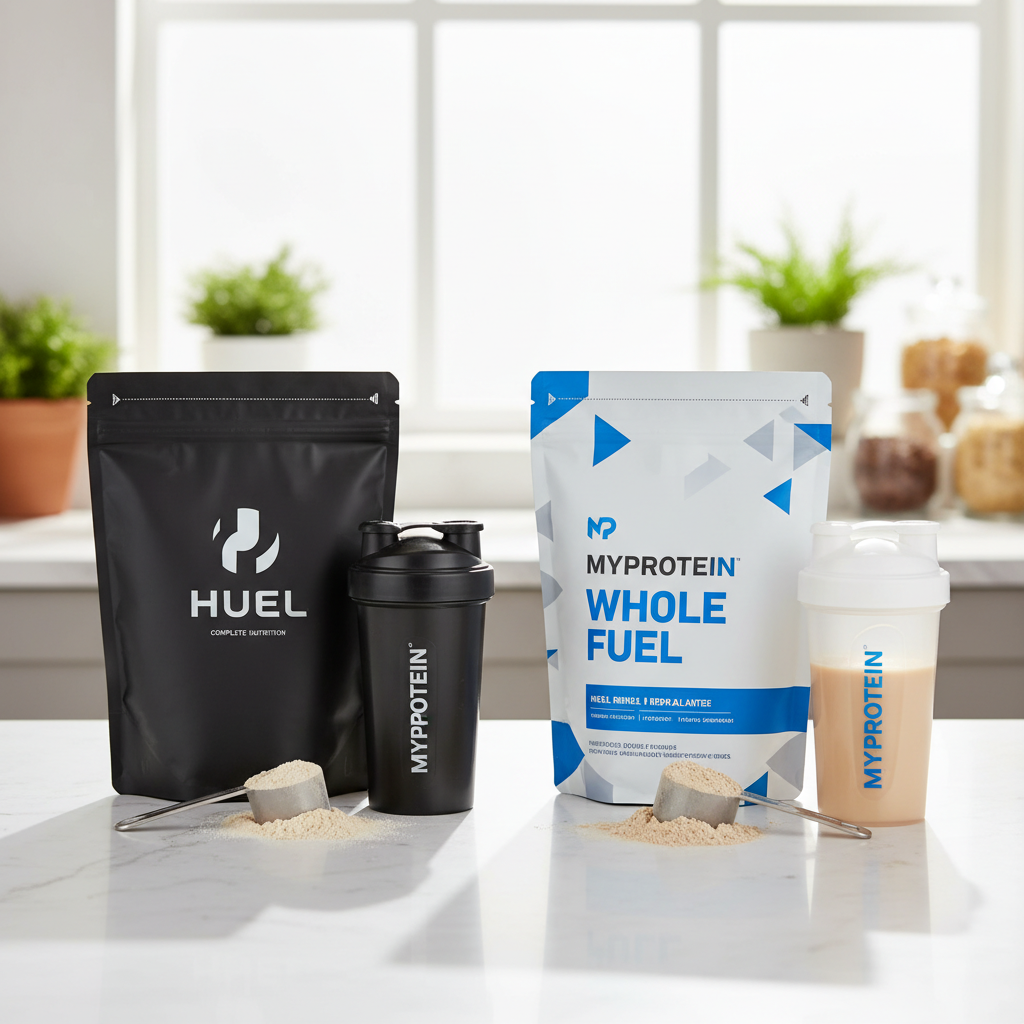
Now, in the UK market, two names loom large in this space: Huel and MyProtein. Huel has built itself a reputation as the granddaddy of 'complete nutrition' – a brand almost synonymous with the idea of a nutritionally balanced, convenient meal in a shake. MyProtein, on the other hand, is a titan in the sports nutrition world, and their entry into the meal replacement arena with 'Whole Fuel' brings their expertise in macro-balanced, cost-effective supplements to the fore.
This comparison looks at Huel and Myprotein meal replacement products side by side, including ingredients, macros, taste, texture, price, and where each brand is a better fit.
Huel: The 'Complete Nutrition' Pioneer
Huel, a portmanteau of 'Human Fuel', burst onto the scene with a clear mission: to provide nutritionally complete, convenient, and affordable food with minimal environmental impact. They've certainly made waves, convincing a huge number of people that yes, you can actually thrive on a powdered meal. Their approach is all about giving your body everything it needs, from protein and healthy fats to carbohydrates, fibre, and a full spectrum of 27 essential vitamins and minerals, all from plant-based sources.
What's in the Huel Shaker? (Focus on Powder v3.1 & Black Edition)
When we talk about Huel, we're usually talking about their flagship product, the *Huel Powder*. They're currently on version 3.1, but they also have *Huel Black Edition*, which is essentially a low-carb, high-protein version. I'll mainly focus on the standard Powder v3.1 here, but will touch on Black Edition where relevant.
* **Main Ingredients (Powder v3.1):** Huel prides itself on using whole-food ingredients. The core components are:
* *Oats:* Ground ultra-fine, these provide complex carbohydrates for sustained energy and a good dose of soluble fibre.
* *Pea Protein:* A fantastic plant-based protein source, rich in essential amino acids.
* *Brown Rice Protein:* Another complementary protein source, often used alongside pea protein to create a complete amino acid profile.
* *Flaxseed:* Packed with omega-3 fatty acids (alpha-linolenic acid, or ALA), which are crucial for heart health and reducing inflammation. It also contributes fibre.
* *Sunflower Oil Powder:* Provides omega-6 fatty acids and contributes to the overall fat profile.
* *Coconut MCTs (Medium-Chain Triglycerides):* These are fats that are metabolised differently to long-chain fats, providing a quick source of energy.
* *Micronutrient Blend:* This is where Huel really shines, packing in all 27 essential vitamins and minerals in carefully calibrated amounts.
* **Nutritional Profile (Standard 400kcal serving of Powder v3.1, Unflavoured & Unsweetened):**
* *Energy:* 400 kcal (this is Huel's standard serving size, which you adjust by scoop count).
* *Protein:* 30g (from pea and rice protein, offering a complete amino acid profile). This is substantial and really helps with satiety and muscle maintenance.
* *Carbohydrates:* 40g (primarily from oats, meaning complex carbs for sustained release).
* *Fat:* 13g (from flaxseed, sunflower, and coconut, providing a good balance of omegas).
* *Fibre:* 7.7g (a decent chunk of your daily recommended intake, great for gut health).
* *Sugar:* 1.2g (very low, especially in the unflavoured version).
* *Vitamins & Minerals:* 27 essential vitamins and minerals, hitting 100% of the UK's Nutrient Reference Value (NRV) for a 2000 kcal daily intake.
* **Huel Black Edition Difference:** This version ups the protein (40g per 400kcal) and slashes the carbs (17g per 400kcal), making it ideal for those following lower-carb diets or needing a higher protein hit. It uses tapioca starch instead of oats for carbs, and also contains fermented vegan protein for an even more solid amino acid profile.
Flavours & Mixability
Huel has expanded its flavour range considerably. You can get classics like Vanilla, Chocolate, and Banana, but also more adventurous ones like Salted Caramel, Coffee, and Berry. They also offer 'Unflavoured & Unsweetened' for those who prefer to customise or just want the pure nutritional hit.
* **Mixability:** Generally, Huel Powder v3.1 mixes pretty well in a shaker, especially if you use cold water and give it a good, vigorous shake. However, it can sometimes be a bit clumpy or have a slightly 'gritty' texture due to the oat flour. Using a blender gets you a much smoother result, which I'd highly recommend for optimal enjoyment. *Huel Black Edition* tends to be a bit smoother due to the absence of oats.
Price Point (GBP)
Huel isn't the cheapest option on the market, but it's competitive when you consider the comprehensive nutrition. Prices vary depending on flavour, whether you subscribe, and the size of the pouch you buy.
* Typically, a 1.75kg pouch (35 meals at 400kcal each) costs around GBP 25-28, which works out to about **GBP 0.71 – GBP 0.80 per 100kcal**, or **GBP 2.85 – GBP 3.20 per 400kcal meal**. Subscriptions usually offer a 10-15% discount.
Pros of Huel
* **Truly Complete Nutrition:** Delivers on its promise of providing all 27 essential vitamins and minerals, along with balanced macros.
* **Whole-Food Ingredients:** Focus on ingredients like oats, flaxseed, and pea protein gives a more natural feel compared to some other blends.
* **High Protein & Fibre:** Excellent for satiety and gut health.
* **Vegan & Lactose-Free:** Suitable for a wide range of dietary preferences and restrictions.
* **Sustainable Sourcing:** Huel places a strong emphasis on environmental impact.
* **Variety of Products:** Beyond the standard powder, they offer Black Edition (low carb/high protein), Hot & Savoury meals, Ready-to-Drink bottles, and bars, catering to different needs.
* **Clear Nutritional Information:** Very transparent about ingredients and nutrient breakdowns.
Cons of Huel
* **Taste & Texture:** Can be an acquired taste for some, and the texture can be slightly gritty or thick, especially if not blended well.
* **Price:** While justifiable, it's not the cheapest meal replacement out there.
* **Initial Bloating:** Some users report initial bloating or digestive discomfort as their bodies adjust to the high fibre content.
* **Flavour Customisation Needed:** The 'Unflavoured & Unsweetened' can be very bland on its own.
MyProtein Whole Fuel: The Sports Nutritionist's Take
MyProtein needs little introduction for anyone remotely interested in fitness or supplements. They're a giant, known for their protein powders, creatine, and seemingly endless sales. So, when they threw their hat into the meal replacement ring with *Whole Fuel*, it was met with a mix of curiosity and anticipation. Their proposition is similar to Huel's: a convenient, nutritionally balanced meal replacement, but with a distinct MyProtein flavour profile and, typically, a slightly more budget-friendly price point.
What's in the MyProtein Whole Fuel Tub?
MyProtein's Whole Fuel is designed to provide a comprehensive nutritional profile suitable as a meal replacement. It leans into MyProtein's expertise in blending different protein sources and ensuring palatable flavours.
* **Main Ingredients:**
* *Oat Flour:* Similar to Huel, this is the primary carbohydrate source, providing complex carbs and fibre.
* *Pea Protein Isolate:* A high-quality plant-based protein, offering a good amino acid profile.
* *Soy Protein Isolate:* Another excellent plant-based protein that complements pea protein for completeness. (Note: some people have concerns about soy, but for most, it's a perfectly healthy protein source).
* *Flaxseed Powder:* A source of omega-3 fatty acids and fibre, crucial for health.
* *Chia Seed Powder:* Another good source of omega-3s, fibre, and various micronutrients.
* *Micronutrient Blend:* Like Huel, Whole Fuel includes a blend of 27 essential vitamins and minerals to ensure it's a complete meal.
* **Nutritional Profile (Standard 400kcal serving of Whole Fuel Blend):**
* *Energy:* 400 kcal (this is MyProtein's recommended serving for a meal).
* *Protein:* 30g (from a blend of pea and soy, ensuring a full amino acid spectrum). This matches Huel's standard powder.
* *Carbohydrates:* 42g (from oat flour, providing complex carbs).
* *Fat:* 11g (from flaxseed and chia seeds, offering healthy fats).
* *Fibre:* 6.4g (a good amount, slightly less than Huel v3.1 but still substantial).
* *Sugar:* 1.2g (again, very low, especially in the unflavoured version).
* *Vitamins & Minerals:* A full spectrum of 27 essential vitamins and minerals, designed to meet daily NRVs with multiple servings.
Flavours & Mixability
MyProtein, being a flavour powerhouse, offers Whole Fuel in several classic, appealing options like Chocolate Smooth, Vanilla, Strawberry Cream, and Unflavoured. They tend to make their products taste pretty good, which is a big selling point for many.
* **Mixability:** Whole Fuel generally mixes very well in a standard shaker. It tends to be smoother than Huel Powder v3.1, likely due to slightly different processing of ingredients and potentially finer grinds. You're less likely to encounter significant clumps here, which is a bonus for on-the-go consumption.
Price Point (GBP)
MyProtein is known for its aggressive pricing and frequent sales, making Whole Fuel often a more budget-friendly choice.
* A 2.5kg bag (50 meals at 400kcal each) typically costs around GBP 35-45, depending on sales and flavour. This works out to approximately **GBP 0.70 – GBP 0.90 per 100kcal**, or **GBP 2.80 – GBP 3.60 per 400kcal meal**. Often, with their frequent discounts, you can get it for significantly less, sometimes as low as **GBP 2.00 – GBP 2.50 per meal**, making it highly competitive.
Pros of MyProtein Whole Fuel
* **Competitive Pricing:** Often more affordable than Huel, especially with MyProtein's regular discounts.
* **Good Taste & Smooth Texture:** Generally considered very palatable and mixes well, making it easy to consume daily.
* **Balanced Macronutrients:** Offers a solid 30g protein, 42g carbs, and 11g fat per 400kcal, hitting the mark for a balanced meal.
* **Complete Micronutrient Profile:** Ensures you're getting all essential vitamins and minerals.
* **Vegan-Friendly:** Utilises pea and soy protein, making it suitable for plant-based diets.
* **Accessibility:** Widely available and often on sale through the MyProtein website.
Cons of MyProtein Whole Fuel
* **Soy Content:** While healthy for most, some individuals prefer to avoid soy.
* **Less Emphasis on 'Whole Foods':** While it contains oat flour, flax, and chia, the overall brand philosophy feels less 'whole food' focused than Huel's, perhaps leaning more towards a 'nutritionally optimised blend'.
* **Fewer Product Variants:** Less variety in terms of different meal replacement formats