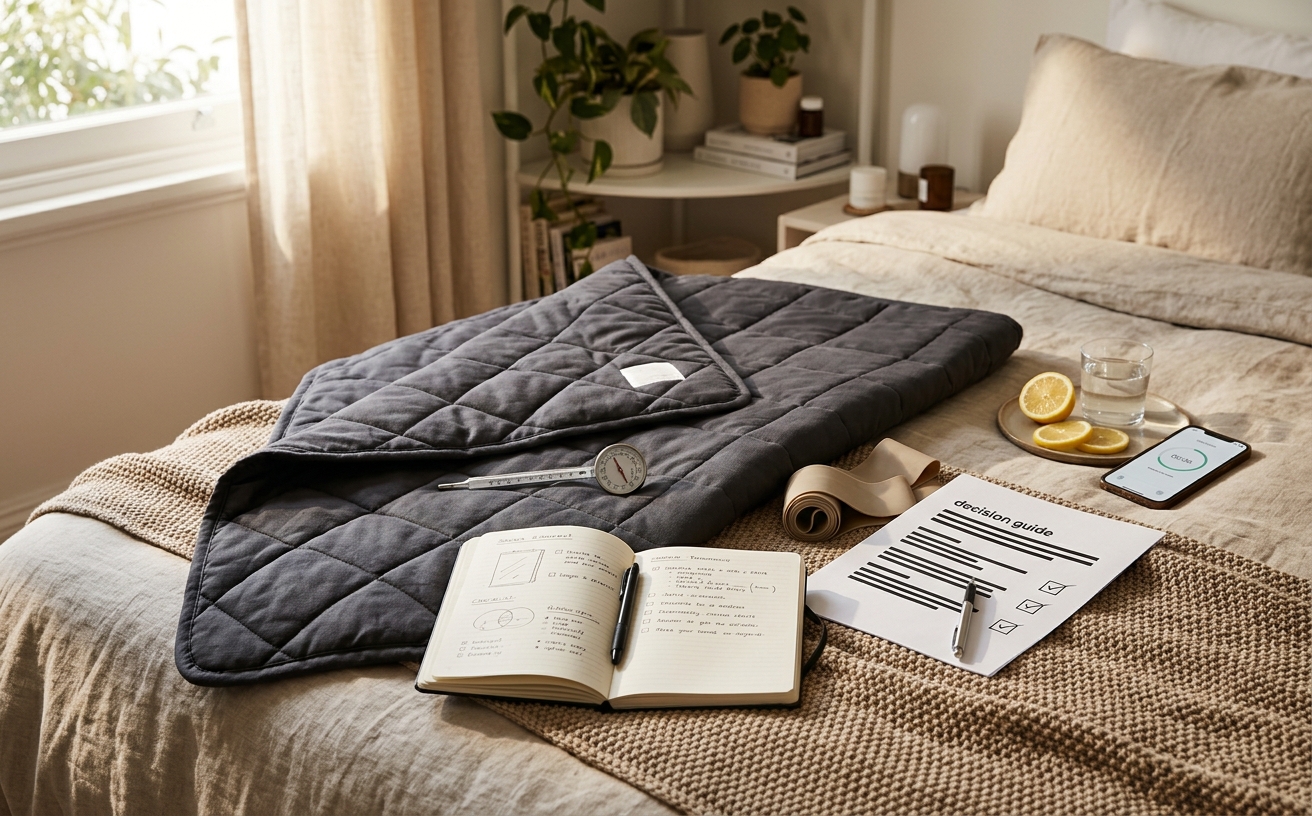
The life constraint comes first; the product claim stays on probation.
Infrared sauna blankets have moved from niche spa treatments to common home recovery tools. While they offer a convenient way to experience deep heat therapy, wrapping yourself in a high-temperature electrical appliance requires a grounded approach to safety. If you are considering adding one to your routine, the primary safety questions revolve around thermal load management, material integrity under high heat, electrical certifications, and your own physiological baseline.
The core appeal of a sauna blanket is straightforward: it uses infrared heat to warm your body directly, promoting intense sweating, temporary muscle relaxation, and a perceived sense of recovery. However, unlike a traditional wooden sauna where you can easily walk out or adjust your posture, a blanket restricts movement and traps heat directly against your skin. Navigating the safety of these devices means looking past marketing claims about detoxification and focusing instead on how your body handles controlled heat stress, what materials you are exposing to high temperatures, and knowing when to avoid use entirely.
The Reality of Thermal Load and Overheating
When you use a sauna blanket, you are intentionally inducing thermal stress. The infrared heat penetrates the skin, causing vasodilation—the widening of blood vessels—which increases your heart rate and prompts your body to sweat in an attempt to cool down. This is a normal physiological response, but it requires careful management.
The most immediate safety risk with a sauna blanket is overheating, particularly because the restrictive nature of the blanket can make it difficult to quickly dissipate heat if you become uncomfortable. Furthermore, the relaxing nature of the heat can induce sleepiness. Falling asleep inside a sauna blanket is a significant hazard. Prolonged exposure to high temperatures without conscious monitoring can lead to heat exhaustion or, in severe cases, heatstroke.
To manage thermal load safely, always use a device with a reliable, built-in automatic shut-off timer. Sessions should generally be capped at 30 to 45 minutes, though beginners should limit their exposure to 15 or 20 minutes to gauge their tolerance. Additionally, you must protect your skin from direct contact with the heating elements. Lying directly on the bare interior of a sauna blanket can cause minor burns or a condition known as erythema ab igne (toasted skin syndrome), a rash caused by chronic exposure to low-level heat. Always wear long sleeves, long pants, and socks, or use a dedicated, thick cotton insert designed specifically for sauna blankets.
Material Safety and Chemical Off-Gassing
Sauna blankets are constructed from synthetic materials, and applying high heat to synthetics raises valid concerns about chemical off-gassing and the release of volatile organic compounds (VOCs). Breathing in heated plastics is counterproductive to any health routine.
When evaluating a blanket, the material composition is a critical safety checkpoint. Cheaper models are often made from polyvinyl chloride (PVC), which can release phthalates and other harmful compounds when heated. Safer alternatives utilize polyurethane (PU) leather or Oxford cloth, which are generally more stable under high temperatures.
Look for products that explicitly state they are free from heavy metals, phthalates, and toxic adhesives. Certifications such as RoHS (Restriction of Hazardous Substances) offer a baseline indication that the manufacturer has audited their materials for specific toxic elements. While a new device may have a slight manufactured odor out of the box, it should not emit strong, acrid chemical smells when heated. If a blanket consistently smells like burning plastic or strong chemicals after the first few uses, it is safer to discontinue its use.
Electrical Standards and the EMF Conversation
Because a sauna blanket is a high-wattage electrical appliance that you wrap tightly around your body while sweating, electrical safety cannot be an afterthought. The wiring must be robust enough to handle the heat and flexible enough to withstand repeated folding and unfolding.
First, verify that the product carries standard electrical safety certifications relevant to your region, such as SAA for Australia, CE for Europe, or UL for North America. These certifications indicate that the electrical components have been tested for basic fire and shock safety.
The conversation around electromagnetic fields (EMFs) is also prominent in the infrared sauna space. All electrical appliances emit some level of EMFs. While the scientific consensus on the health impacts of low-frequency EMFs from household appliances remains nuanced, many users prefer to minimize their exposure during recovery routines. Reputable sauna blanket manufacturers use shielded wiring designs to significantly reduce EMF emissions. If this is a priority for your safety parameters, look for brands that provide third-party testing reports confirming low EMF levels, rather than relying on vague marketing promises.
Electrical safety also extends to how you store the blanket. Folding the device tightly while it is still hot can damage the internal heating wires, creating a fire hazard or causing localized hot spots during future uses. Always allow the blanket to cool completely while laid flat before storing it.
Hydration and the Physiological Toll of Sweating
A common misconception is that heavy sweating equates to fat loss or deep cellular detoxification. In reality, the weight lost during a sauna blanket session is entirely water weight, and the primary substances excreted in sweat are water and electrolytes—predominantly sodium, with trace amounts of potassium and magnesium.
Entering a high-heat environment while already dehydrated is a significant safety risk. It forces your cardiovascular system to work harder to maintain blood pressure and cool the body, increasing the likelihood of dizziness, lightheadedness, or fainting upon standing up.
A practical hydration protocol involves drinking a glass of water an hour before your session, keeping water nearby during the session (if your design allows your arms to be free), and aggressively rehydrating afterward. Plain water is often not enough to replace what is lost during a 45-minute intense sweat; incorporating a pinch of salt or a formulated electrolyte supplement into your post-session water helps restore optimal fluid balance. If you experience a headache, severe nausea, or a racing heartbeat that feels irregular during or after a session, these are clear signs that you have pushed past a safe physiological limit.
Who Should Skip Sauna Blankets (Contraindications)
Sauna blankets are not appropriate for everyone. The physical stress of elevated core temperature and rapid fluid loss can exacerbate many underlying health conditions. You should skip using a sauna blanket, or explicitly seek a clinician's approval before trying one, if any of the following apply to you:
- Pregnancy: Elevated core body temperatures are strictly contraindicated during pregnancy due to the risk of neural tube defects and other developmental complications.
- Cardiovascular Conditions: Heat stress causes blood vessels to dilate and heart rate to increase. Individuals with a history of heart disease, high or low blood pressure, or prior cardiac events should avoid this added cardiovascular strain.
- Neuropathy or Sensory Deficits: If you have conditions like diabetic neuropathy that impair your ability to feel heat or pain, you are at a high risk for severe burns because you may not realize the blanket is too hot.
- Certain Medications: Medications that affect blood pressure, heart rate, or hydration levels (such as diuretics, beta-blockers, or certain antihistamines) can interact dangerously with heat exposure.
- Active Skin Conditions: Open wounds, severe eczema, rosacea, or active skin infections can be severely aggravated by intense heat and trapped sweat.
- Eating Disorders: Individuals with a history of eating disorders or disordered behaviors around body image should avoid sauna blankets, as the rapid water-weight loss can be triggering and misused for unhealthy weight manipulation.
- Mental Health and Claustrophobia: The restrictive nature of a heavy, heated blanket can trigger severe anxiety, panic attacks, or feelings of claustrophobia. If you are prone to panic in enclosed spaces, this recovery tool is not a practical choice.
- Acute Illness or Fever: Never use a sauna blanket to "sweat out" a fever. Your body is already struggling to regulate its temperature, and adding external heat is dangerous.
Post-Session Hygiene and Device Maintenance
Safety also encompasses hygiene. A dark, warm, and damp environment is the ideal breeding ground for bacteria and fungi. Failing to clean a sauna blanket properly can lead to skin infections and degrade the interior materials over time.
After every session, the blanket must be opened completely and wiped down. Avoid harsh chemical cleaners, as residues will be heated and absorbed or inhaled during your next session. A simple solution of water and white vinegar, or a mild, non-toxic dish soap heavily diluted in water, is sufficient to clean the interior. Wipe away all sweat, then go over the surface with a clean, damp cloth. Crucially, the blanket must be left open to air dry completely before it is folded and put away. Trapping residual moisture inside the folds will inevitably lead to mold growth.
A Pre-Purchase Safety Checklist
If you have determined that a sauna blanket is appropriate for your physical baseline, use this checklist to audit potential purchases:
- Automatic Shut-Off: Does the controller have a mandatory timer that turns the heating elements off after a set period?
- Material Transparency: Does the manufacturer clearly state what the interior and exterior are made of, avoiding PVC in favor of PU leather or non-toxic fabrics?
- Electrical Certifications: Is the device certified by recognized safety boards (e.g., SAA, CE, UL)?
- Granular Temperature Control: Can you adjust the temperature by specific degrees, rather than just choosing between vague "low" and "high" settings?
- Warranty and Return Policy: Does the company stand behind the durability of their wiring and control units?
Frequently Asked Questions
Do I have to wear clothes inside the blanket?
Yes. For safety reasons, you should always have a physical barrier between your skin and the heating elements. Wear loose, breathable cotton clothing—long sleeves, long pants, and socks. Alternatively, use a specialized cotton insert designed for the blanket. This prevents burns and absorbs sweat, making cleanup easier.
What temperature is safe for a beginner?
Start at a lower temperature, around 50 degrees Celsius, for 15 to 20 minutes. Observe how your body reacts to the thermal load and how you feel afterward. You can gradually increase the temperature and duration in subsequent sessions as your heat tolerance improves, but there is rarely a physiological need to push the device to its absolute maximum setting.
How often is it safe to use a sauna blanket?
For most healthy individuals, using a sauna blanket one to three times a week is sufficient for recovery routines. Daily use increases the risk of chronic dehydration and electrolyte imbalances, and the compounding thermal stress can lead to fatigue rather than recovery.