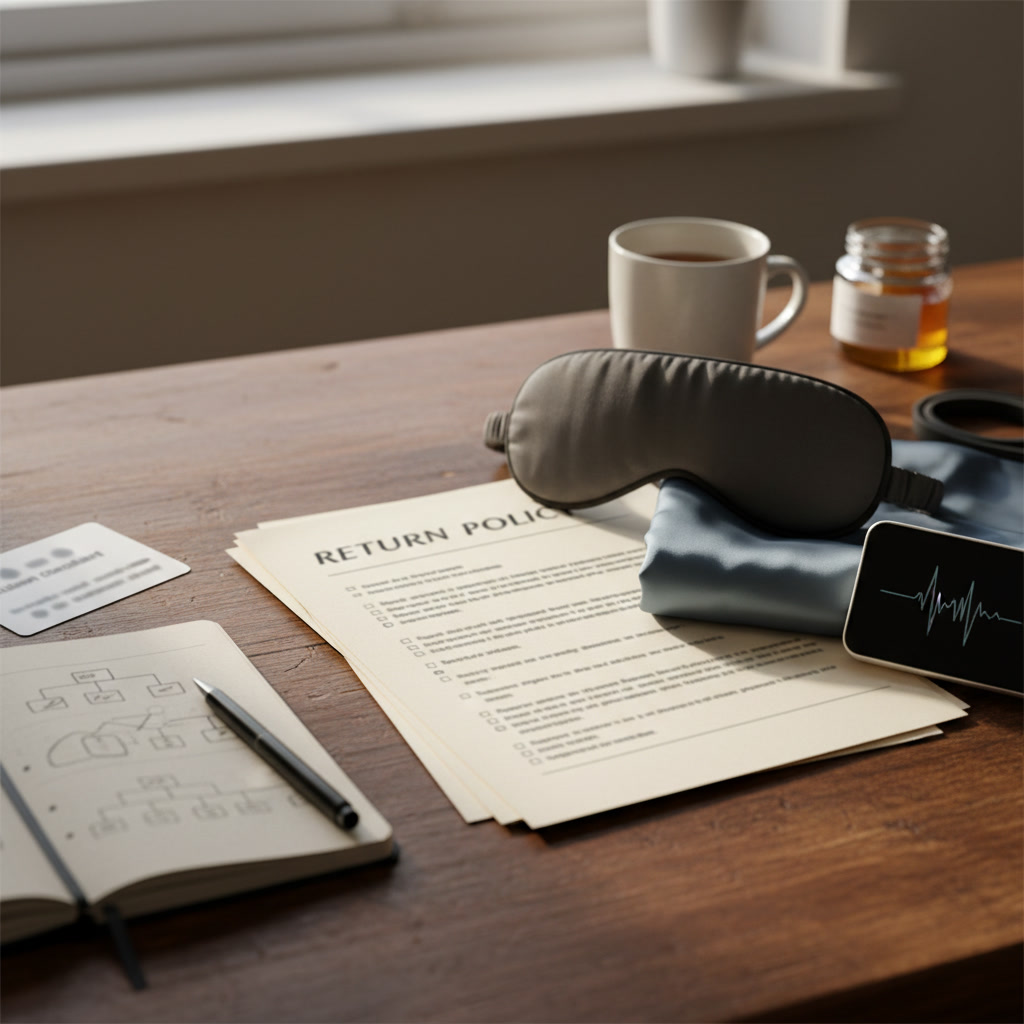
The life constraint comes first; the product claim stays on probation.
When you purchase a new mattress, an ergonomic pillow, or a wearable sleep tracker, the marketing often highlights a generous, risk-free trial period. A hundred nights to test a mattress or thirty days to try a weighted blanket sounds reassuring. However, navigating the actual return process requires reading the fine print before you hand over your payment details. A lengthy return window is only useful if you understand the mandatory break-in periods, hidden shipping costs, and strict hygiene requirements that dictate whether you actually get your money back.
Sleep products are highly personal, and what works for one body may cause discomfort for another. Because of this, trial periods have become an industry standard. Yet, the logistics of returning a heavy, bulky, or intimately used item are complex. Retailers manage this complexity through specific terms and conditions that protect their margins. Understanding these rules ensures you are not left with an expensive product that disrupts your rest or a partial refund that barely covers the cost of return postage.
The Reality of Sleep Trials and Break-In Periods
The most heavily advertised feature of modern sleep products, particularly mattresses in a box, is the extended trial period. These range from 30 days to a full year. What is less prominently advertised is the mandatory adjustment period, often referred to as a break-in phase.
Many companies require you to keep the product for a minimum number of nights—usually between 14 and 30—before they will even allow you to initiate a return. The physiological reasoning provided by brands is that your body needs time to adjust to a new sleeping surface, especially if you are transitioning from a sagging innerspring mattress to high-density memory foam. While there is truth to this adjustment phase, the mandatory waiting period also serves an administrative purpose: it reduces impulse returns and encourages buyers to simply get used to the product.
If a product is causing you acute pain from the first night, a mandatory 30-day wait can be incredibly frustrating. Before purchasing, check if the trial period has a minimum retention requirement and consider whether you are willing to store or sleep on an uncomfortable product for a month while waiting for the return window to open.
Hidden Costs: Shipping, Restocking, and Pick-Up Fees
A policy that promises a full refund on the purchase price does not necessarily mean the return process is free. The financial trade-offs of returning sleep products often hide in the logistics of moving bulky items from your bedroom back to a warehouse.
Return Shipping Fees
While many premium mattress brands cover the cost of return pick-ups, smaller items like weighted blankets, contour pillows, and sleep trackers often require the buyer to pay for return shipping. Weighted blankets can weigh up to 10 kilograms; posting an item of that weight through standard courier services can be surprisingly expensive, significantly reducing the value of your refund.
Restocking and Processing Fees
Some retailers deduct a flat restocking fee or a percentage of the purchase price from your refund. This is particularly common with electronic sleep wearables and specialised medical-grade foam products. The fee covers the cost of inspecting, repackaging, or safely disposing of the returned item.
Remote Area Surcharges
If you live outside a major metropolitan area, you may face additional hurdles. Mattress companies that offer free returns in capital cities sometimes stipulate that regional or rural customers are responsible for transporting the mattress to a designated charity or paying a high courier fee for retrieval. Always check the geographic limitations of a return policy.
Condition Requirements and Hygiene Clauses
Sleep products are subject to stringent health and safety regulations. Once a mattress, pillow, or sheet set has been used, it generally cannot be resold as new. Consequently, companies enforce strict condition requirements for returns.
The most critical rule is the hygiene clause. If a mattress or pillow is stained, soiled, or damaged in any way, the return policy is immediately voided. A spill, a pet accident, or even a noticeable sweat stain will disqualify the item from a refund. To protect your purchase during the trial period, it is highly recommended to use a high-quality, waterproof protector from the very first night.
Additionally, pay attention to the original tags. Law tags (the labels stating "do not remove under penalty of law") must remain attached for the return to be valid. For smaller items like sleep trackers or smart alarm clocks, you will almost certainly need to retain the original packaging, manuals, and charging cables in pristine condition.
When to Pause: Who Should Skip the Trial-and-Error Process
Retail trial periods are designed for general consumers looking for improved comfort, not for individuals seeking treatment for medical conditions. Relying on commercial sleep products to solve underlying health issues can delay necessary care and exacerbate symptoms.
You should consult a healthcare professional rather than cycling through retail sleep trials if you experience any of the following:
- Chronic Pain or Injuries: If you are managing chronic back pain, recovering from spinal surgery, or dealing with acute joint injuries, do not rely on mattress marketing to dictate your support needs. A physiotherapist or specialist can provide specific recommendations for your physical requirements.
- Diagnosed Sleep Disorders: Products like weighted blankets or new pillows will not cure sleep apnea, restless leg syndrome, or clinical insomnia. If you frequently wake up gasping for air, experience severe daytime fatigue, or rely on sleep medication, seek an evaluation from a sleep physician.
- Pregnancy-Related Discomfort: Severe pelvic girdle pain or lower back pain during pregnancy requires clinical management. While a body pillow may offer temporary relief, persistent pain should be discussed with an obstetrician or pelvic floor physiotherapist.
- Severe Mental Health Symptoms: If poor sleep is tied to severe anxiety, depression, or other mental health risks, purchasing new sleep technology is not a substitute for psychological support and medical intervention.
How to Audit a Return Policy Before Checking Out
Evaluating a return policy requires a methodical approach. Instead of relying on the bold text on the product page, look for the dedicated Returns or Terms and Conditions page. Use this checklist to audit the policy:
- Identify the exact return window: Does the 100-night trial begin on the date of purchase or the date of delivery? For items that take weeks to ship, this distinction is vital.
- Check the refund method: Will the money be returned to your original payment method, or does the company only offer store credit? Store credit is not a true refund if you have no intention of buying from that brand again.
- Look for third-party retailer clauses: If you buy a brand-name sleep tracker from a local electronics store rather than directly from the manufacturer, the manufacturer's generous trial period usually does not apply. You are bound by the electronics store's standard return policy, which may only allow returns for unopened items.
- Verify the initiation process: Do you need to email customer service, fill out an online portal, or call a retention team who will try to talk you out of the return?
- Check for final sale exemptions: Items purchased during major clearance events or bundled as "free gifts" with a larger purchase are frequently marked as final sale and cannot be returned.
Returning Different Sleep Products: Mattresses vs. Tech
The logistics of returning a sleep product vary wildly depending on the category. Knowing what to expect can save you from a stressful post-purchase experience.
Mattresses and Bulky Furniture
You generally do not need to keep the original cardboard box for a mattress, as it is physically impossible to compress the bed back into it at home. Most direct-to-consumer mattress brands handle returns by coordinating with a local charity or a junk removal service to pick up the expanded bed. You will need to be home during a specified window to facilitate this pickup, and you must obtain a receipt from the removal team to prove to the manufacturer that the item was collected before they will process your refund.
Bedding and Pillows
Unlike mattresses, pillows, sheets, and weighted blankets usually require you to package the item yourself and drop it off at a post office or courier depot. Keeping the original packaging for these items during the trial period is highly advisable, as finding a custom-sized box for a heavy blanket can be difficult and costly.
Sleep Trackers and Wearables
Wearable technology, such as smart rings or watches, falls under electronics return policies. These are often much stricter than bedding policies. You may face a 10% to 20% restocking fee if the seal on the box is broken. Furthermore, before returning any smart device, you must perform a factory reset and unlink the device from your smartphone and user account. Failure to remove your personal data or software locks can result in the return being rejected.
Frequently Asked Questions
Do I need to keep the plastic wrapping for my mattress?
No. Once a compressed mattress is unrolled, the plastic wrapping is discarded. Mattress companies do not expect you to keep the plastic or the box. However, you must keep the mattress clean, which is why a mattress protector is essential.
What actually happens to returned sleep products?
Due to health regulations, used mattresses and pillows are rarely resold as new. Depending on the condition and local laws, mattresses are often donated to charities, shelters, or sent to specialised recycling facilities where the foam and springs are separated. Electronic sleep trackers are usually refurbished, sanitised, and sold at a discount.
Can I return a product if I used a discount code?
Usually, yes, but your refund will only be for the exact amount you paid, not the retail value of the item. However, be cautious with deep-discount clearance events, as these are sometimes categorised as final sale, stripping away the trial period entirely. Always check the specific terms attached to the promotional code.