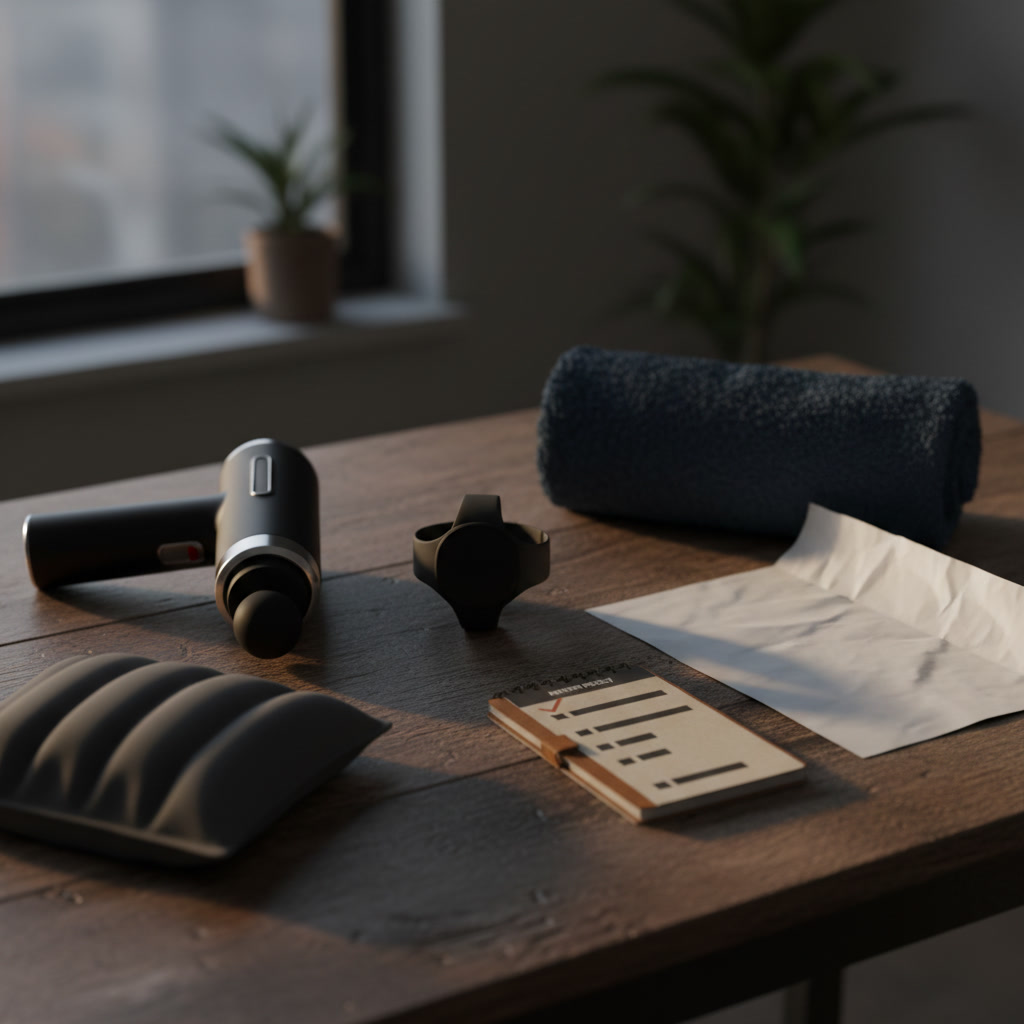
The life constraint comes first; the product claim stays on probation.
The recovery technology market is saturated with devices promising to eliminate muscle soreness, improve circulation, and optimise your sleep architecture. If you are debating whether to purchase pneumatic compression boots, a high-end percussive massage gun, or a new biometric wearable, the initial step is stepping back from the promotional material. The core search intent for most buyers is simple: will this expensive device actually make me feel better, or will it gather dust in a cupboard?
Recovery technology can be highly effective when used correctly, but it is entirely supplementary. Devices are tools, not miracles. This article provides a grounded framework to evaluate recovery tools based on utility, maintenance, and actual evidence, helping you decide whether a purchase makes sense for your specific routine.
Examine Your Current Baseline
Before allocating funds to technology, audit your free, foundational recovery habits. The human body has an intricate, built-in recovery system that operates primarily through sleep, nutrition, and hydration. No consumer device can outwork a persistent sleep deficit or inadequate protein intake.
Ask yourself if you are consistently achieving seven to nine hours of quality sleep. Consider whether you are consuming enough water and eating adequately to support your movement levels. Look at your training schedule to ensure you have programmed actual rest days. If your foundational habits are erratic, spending money on a vibrating foam roller or a thermal therapy device is premature. Fix the baseline first, then look to technology for marginal gains.
Five Questions to Ask Before Purchasing
If your basics are solid and you are ready to invest, run any potential purchase through this five-point audit.
1. What exact symptom am I addressing?
Vague goals like "better recovery" often lead to buyer's remorse. Identify the specific friction point in your routine. Are you trying to reduce delayed onset muscle soreness (DOMS) after heavy leg days? Are you trying to wake up feeling less stiff? Are you trying to gather data on how alcohol affects your resting heart rate? Matching the specific problem to the specific tool prevents you from buying a cold plunge when what you actually need is a sleep tracker.
2. What is the hidden friction?
Every device comes with a maintenance burden. Consider the setup, cleaning, and storage requirements. A massage gun is relatively low-friction; you pick it up, turn it on, and put it back in its case. A home cold plunge, however, requires regular water changes, chemical balancing, filter replacements, and significant floor space. If a device takes more than five minutes to set up, your likelihood of using it daily drops significantly.
3. What does the independent evidence say?
Look beyond the manufacturer's claims. Distinguish between devices that create a physiological change and those that simply provide temporary neurological relief. For example, percussive therapy temporarily desensitises the nervous system, making you feel less sore in the short term, but it does not physically lengthen the muscle tissue or "break up" scar tissue. Knowing the reality of what a device does helps manage your expectations.
4. How does the cost break down per use?
A thousand-dollar pair of compression boots sounds exorbitant, but if you are a marathon runner who will use them for thirty minutes every single day, the cost per use over two years is minimal. Conversely, a two-hundred-dollar massage gun that you use twice a year is a poor investment. Be realistic about your own habits and consistency.
5. Could this create new stress?
This is particularly relevant for biometric wearables. Having access to your heart rate variability (HRV), sleep stages, and respiratory rate can be empowering for some, but highly anxiety-inducing for others. If seeing a "poor recovery" score on an app causes you to skip a workout you were otherwise looking forward to, the technology has become a detriment.
Evaluating Common Recovery Categories
Understanding the general consensus on different categories of recovery tech can help narrow your choices.
- Percussive Therapy (Massage Guns): Excellent for short-term pain relief, increasing local blood flow, and warming up tissues prior to movement. They are generally low-friction and highly portable.
- Pneumatic Compression (Boots): These use compressed air to massage the legs. They are highly relaxing and force the user to sit still for twenty to thirty minutes, which is a recovery benefit in itself. However, they are expensive and bulky.
- Thermal Therapy (Sauna Blankets, Cold Tubs): Heat and cold exposure have strong subjective benefits for perceived recovery and mental resilience. However, they carry the highest maintenance burden and require careful attention to safety protocols regarding exposure times.
- Wearables (Rings, Straps, Watches): Useful for establishing baselines and identifying trends over time (like how a late meal impacts your sleep). They require daily wearing and regular charging, and the accuracy of specific metrics like sleep stages can vary widely between brands.
When to Pause or Skip Recovery Tech Entirely
Recovery technology is not appropriate for everyone, and in some cases, it can cause harm. The following boundaries are crucial. This is general information only, not medical advice. Always consult a healthcare clinician before introducing new physical stressors or devices if any of the following apply.
- Acute Injuries: Do not use massage guns, compression boots, or heavy foam rollers on torn muscles, sprains, fractures, or undiagnosed sharp pain. These tools are for general muscle fatigue, not trauma.
- Chronic Illness and Circulation Issues: Individuals with deep vein thrombosis (DVT), severe varicose veins, neuropathy, or cardiovascular conditions must avoid pneumatic compression and extreme thermal therapy (hot or cold) unless explicitly cleared by a doctor.
- Medication Interactions: If you are on blood-thinning medications, aggressive percussive therapy or compression can cause severe bruising or other complications.
- Pregnancy: Thermal therapy (particularly raising core body temperature in saunas) and certain types of deep tissue compression have specific contraindications during pregnancy. Always seek obstetric guidance first.
- Eating Disorders or Orthorexia: If you have a history of obsessive behaviours around food, exercise, or body metrics, biometric wearables can trigger intense fixations. The constant tracking of calories burned, sleep scores, or activity levels can severely impact mental health. If data causes you distress, skip the wearable.
Red Flags in Recovery Marketing
When browsing products, watch out for specific marketing tactics designed to overstate a device's capabilities. Be highly skeptical of any product claiming to "flush toxins" from your body. The human liver and kidneys handle detoxification; a vibrating piece of plastic does not.
Similarly, ignore proprietary metrics that cannot be independently verified. Many brands invent their own scoring systems to make their ecosystem seem essential. Finally, recognise the placebo effect. Feeling better because you took thirty minutes to lie down and use a device is a valid outcome, but you should not pay a massive premium simply for the privilege of resting.
Frequently Asked Questions
Do I need a sleep tracker to improve my sleep?
No. Most people already know why they sleep poorly: late-night screen time, caffeine late in the day, alcohol consumption, or an inconsistent bedtime. A tracker will simply confirm these facts with data. Fix the obvious habits first. Trackers are best used for fine-tuning an already decent sleep routine.
Are cheap massage guns as good as expensive ones?
For the average user, mid-range devices perform almost identically to top-tier professional models. The primary differences are usually battery life, the stall force (how hard you can press before the motor stops), and noise levels. Unless you are a professional athlete or therapist, a reliable mid-range option is usually sufficient.
Can recovery technology prevent injuries?
There is no strong independent evidence that consumer recovery devices directly prevent injuries. Injury prevention is governed by appropriate load management, adequate rest, proper nutrition, and good movement mechanics. Recovery tech can help manage the soreness associated with training, but it cannot protect you from the consequences of overtraining or poor technique.