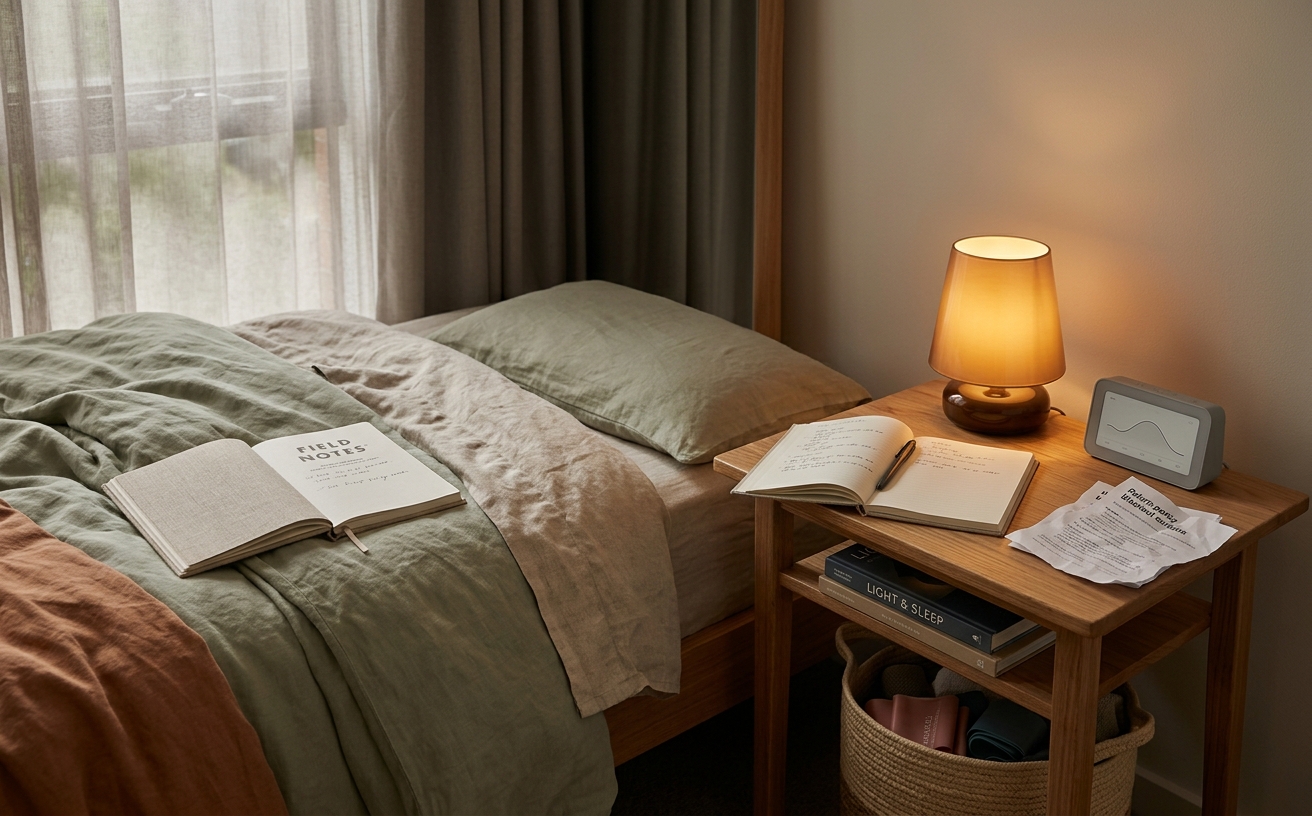
The life constraint comes first; the product claim stays on probation.
A bedroom light audit is a systematic assessment of your sleeping environment designed to identify and manage artificial light sources that may be disrupting your rest. Human circadian rhythms are highly sensitive to light exposure, particularly in the hours leading up to and during sleep. Rather than relying heavily on sleep supplements or complex nighttime routines, addressing the physical environment is often the most grounded, cost-effective method for improving overall sleep quality.
Even minor amounts of artificial light from streetlamps, charging electronics, or hallway fixtures can interfere with the body's natural sleep architecture. An audit involves methodically checking your room under normal nighttime conditions, identifying the specific sources of light pollution, and applying targeted, practical interventions to reduce them. The goal is not necessarily to create a pitch-black cave if that poses safety risks, but to deliberately control the light your eyes are exposed to while resting.
The Physiological Impact of Nighttime Light
The evidence supporting dark sleeping environments is well-established in sleep science. Photoreceptors in the retina communicate directly with the brain's suprachiasmatic nucleus, which acts as the master clock regulating our sleep-wake cycles. When these receptors detect light, they signal the pineal gland to suppress the production of melatonin, the hormone responsible for facilitating sleep onset and maintaining deep sleep stages.
Light intensity is measured in lux. While direct sunlight can measure over 10,000 lux and a brightly lit office might sit around 300 lux, even minimal exposure can be disruptive at night. Research indicates that exposure to just 5 to 10 lux during sleep—roughly equivalent to a streetlamp shining through thin curtains or a bright digital clock next to the bed—can increase heart rate, disrupt glucose metabolism, and cause micro-awakenings that leave you feeling unrefreshed the next day. Managing these low-level light sources is the primary objective of a bedroom light audit.
Conducting Your Bedroom Light Audit
To perform an accurate audit, you need to replicate your actual sleeping conditions. Wait until your usual bedtime, turn off the main overhead lights, and allow your eyes to adjust to the darkness for at least five to ten minutes. Once your vision has adapted, systematically evaluate the room.
Step 1: The Ambient External Check
Begin by looking at your windows and doors. External light pollution is often the most significant contributor to a bright bedroom. Note whether streetlights, passing car headlights, or a neighbor's security light are bleeding through your window treatments. Pay special attention to the edges of your curtains or blinds; light often spills over the top of a curtain rail or down the sides of poorly fitted roller blinds. Next, check the bedroom door. If you live with others or leave hallway lights on, observe how much light enters through the gap at the bottom of the door.
Step 2: The Internal Point-Source Check
Once you have assessed external light, scan the room for internal point sources. These are the small, often overlooked indicator lights on electronic devices. Look for the standby light on a television, the glowing interface of an air purifier or humidifier, the charging indicator on a laptop or phone cable, and the display of a digital alarm clock. While these lights seem insignificant during the day, their concentrated glow can be highly disruptive in an otherwise dark room, particularly if they emit blue or white light.
Step 3: The Midnight Navigation Check
The final step of the audit involves considering what happens when you need to get out of bed during the night. If you use the bathroom or fetch a glass of water, note what lights you are forced to turn on. Flipping on a bright, overhead bathroom light at 3:00 AM delivers a massive dose of lux to your retinas, immediately suppressing melatonin and making it significantly harder to fall back asleep.
Practical Interventions and Trade-Offs
Once you have identified the light sources in your bedroom, you can apply specific interventions. Each option comes with practical trade-offs regarding cost, convenience, and comfort.
- Window Treatments: Blackout curtains are highly effective at stopping external light. However, for maximum efficacy, they must be installed outside the window frame or paired with a pelmet to prevent light from escaping over the top. The trade-off is that heavy blackout curtains can be expensive and may trap heat during warmer months. Alternatively, blackout roller blinds are more affordable but often leave a halo of light around the edges.
- Managing Electronics: The most practical approach to device light is removal. If a device does not need to be in the bedroom, move it elsewhere. For essential items like air purifiers or medical devices, use LED dimming stickers. These are inexpensive, semi-transparent adhesive sheets that reduce the glare of a standby light by 50 to 80 percent without entirely hiding the indicator. Electrical tape is a cheaper alternative, though it blocks the light completely and can leave a sticky residue over time.
- Sleep Masks: If modifying the room is not feasible—such as in a rental property or when traveling—a sleep mask is a highly effective, low-cost intervention. Look for contoured masks featuring deep eye cups; these prevent the fabric from pressing directly against your eyelids and eyelashes, which can cause irritation. The primary limitation of sleep masks is physical discomfort. Some individuals find the strap tension causes mild headaches, while others may experience skin breakouts from the fabric. Wash your mask regularly to mitigate skin issues.
- Nighttime Navigation: To solve the midnight bathroom trip issue, install motion-sensor nightlights in your hallway and bathroom. Opt for amber or red bulbs, as warm-colored light has a longer wavelength and is significantly less disruptive to melatonin production than white or blue light.
The Morning Light Dilemma
Creating a perfectly dark bedroom introduces a secondary challenge: waking up. Morning sunlight is a critical physiological trigger that halts melatonin production, increases cortisol, and helps clear sleep inertia—that heavy, groggy feeling upon waking. If your room is completely sealed off from external light by heavy blackout curtains, your body may struggle to recognize that it is morning.
If you rely on blackout curtains, you must actively manage your morning light exposure. One practical workaround is to open the curtains immediately upon waking to flood the room with natural light. If you wake before the sun rises, or if getting out of bed to open the curtains feels too difficult in the dark, a sunrise alarm clock can be a useful tool. These devices gradually increase the light in the room over 30 minutes before your audio alarm sounds, simulating a natural sunrise and helping to gently pull you out of deep sleep stages.
Safety Boundaries and When to Skip This
General sleep hygiene information is not a substitute for medical advice. There are specific circumstances where pursuing a pitch-black sleeping environment is either unsafe or entirely inappropriate.
- Mobility and Fall Risks: If you are an older adult, have physical injuries, experience mobility issues, or take medication that causes dizziness, fall prevention must take priority over total darkness. Keep pathways to the door and bathroom adequately lit with warm-toned, low-level lighting.
- Pregnancy: Frequent nighttime urination is common during pregnancy, and changes in center of gravity can affect balance. Ensure your path to the bathroom is safe and visible. Do not use blackout conditions if they compromise your ability to navigate safely.
- Mental Health Risks: If absolute darkness triggers severe anxiety, nyctophobia (fear of the dark), or exacerbates PTSD symptoms, skip this audit. A dark room is only beneficial if it allows you to relax; if it causes psychological distress, it will actively harm your sleep quality.
- Severe Symptoms and Chronic Conditions: For individuals managing chronic illnesses, severe insomnia, sleep apnea, or eating disorders (such as night eating syndrome), environmental tweaks are secondary to professional clinical care. If you require a CPAP machine for sleep apnea, do not cover its essential ventilation ports or indicator lights in a way that compromises the machine's function. Always consult your treating clinician regarding severe sleep disruptions.
Frequently Asked Questions
Does the color of the light in my bedroom matter?
Yes. Blue and bright white light are the most disruptive to your circadian rhythm because they mimic daylight. Red, amber, and warm orange lights have longer wavelengths and are far less likely to suppress melatonin. If you must have a light on in the bedroom or hallway for safety, choose a dim, warm-colored bulb.
Are smart bulbs worth the investment for sleep?
Smart bulbs can be practical if they allow you to automate a reduction in brightness and a shift toward warmer color temperatures in the hours leading up to bedtime. However, they are not strictly necessary. A standard bedside lamp with a low-wattage, warm-toned bulb serves the exact same purpose at a fraction of the cost.
How dark does the room actually need to be?
The general rule of thumb is that your bedroom should be dark enough that you cannot clearly see the outline of objects across the room once your eyes have adjusted. If you can easily read the title of a book on your nightstand, the room is likely too bright. However, refer to the safety boundaries above; prioritize physical and psychological safety over absolute darkness.