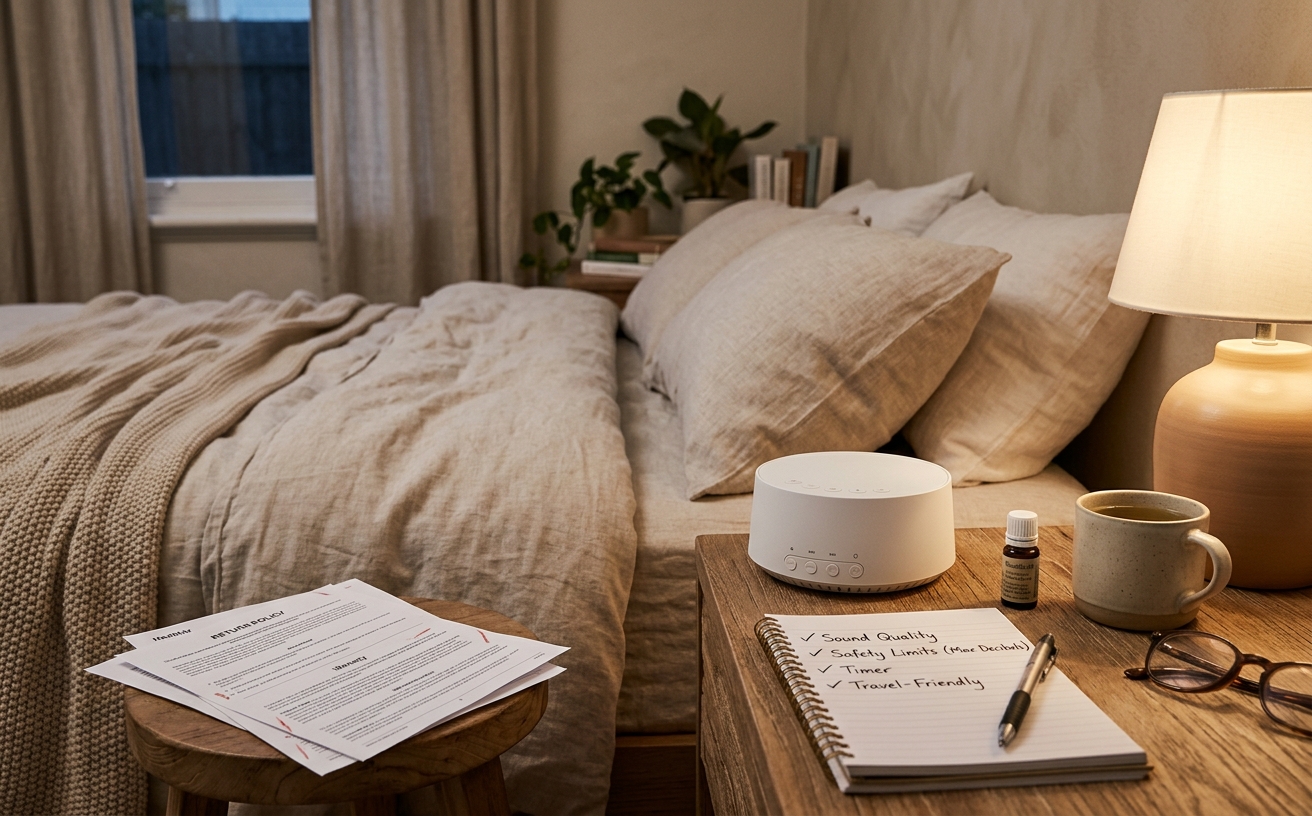
The life constraint comes first; the product claim stays on probation.
A white noise machine is a straightforward tool designed to mask disruptive environmental sounds, from early morning street traffic to noisy housemates. If you are looking to buy one, the decision primarily comes down to choosing between a mechanical fan-based unit and a digital speaker, alongside checking for non-looping audio, safe volume limits, and a lack of bright display lights. Rather than curing sleep issues, these devices simply raise the baseline noise floor of your bedroom, making sudden sounds less jarring.
Finding the right machine requires looking past the marketing descriptions and focusing on hardware specifics. A device that produces a noticeable audio loop or emits a bright blue LED light will likely harm your sleep environment more than it helps. We have outlined the practical differences in sound generation, hardware features, and safety considerations to help you choose a unit that fits your bedroom setup without causing unnecessary distraction.
Mechanical Versus Digital Sound Generation
The most fundamental choice when buying a sound machine is how it creates noise. The market is split into two distinct categories: mechanical machines and digital machines. Understanding how each operates will heavily influence your buying decision.
Mechanical White Noise Machines
These units contain an actual physical fan housed inside an acoustic casing. There is no digital audio file, no microchip, and no speaker. By twisting the outer shell or adjusting the physical vents on the device, you change the airflow dynamics, which alters the pitch and volume of the rushing air sound.
- Pros: The sound is entirely organic. Because it is a physical process, there is absolutely no digital looping. Many people find the analog sound of moving air to be far less fatiguing on the ears over an eight-hour period compared to a digital track.
- Cons: They are generally bulkier, heavier, and draw slightly more power. They only produce one type of sound (moving air), and the maximum volume is physically limited by the size of the internal fan. They also require occasional dusting to keep the motor running smoothly.
Digital White Noise Machines
These devices use internal memory to play recorded or synthesised audio tracks through a built-in speaker.
- Pros: They are highly versatile. A single digital machine can produce white noise, pink noise, brown noise, rain sounds, and ocean waves. They are usually compact, making them easy to pack for travel, and often feature precise volume controls that can go much louder than mechanical fans.
- Cons: The audio quality is entirely dependent on the internal speaker. Cheap models often sound tinny, harsh, or muffled. More importantly, digital machines rely on audio files that eventually repeat.
The Problem with Audio Loops
If you opt for a digital machine, the quality of the audio track is the most critical factor. The human brain is exceptionally good at pattern recognition, even while you are trying to fall asleep. If a digital sound machine uses a short, ten-second audio file on repeat, your brain will eventually detect the loop. You might notice a faint click, a slight dip in volume, or a specific repeating frequency.
Once your brain recognises this pattern, it will anticipate it. Instead of relaxing, you may find yourself lying awake waiting for the loop to repeat. This defeats the entire purpose of the device.
When reviewing specifications, look for digital machines that explicitly state they use non-looping sounds. These devices typically use dynamic algorithms to generate sound continuously rather than playing a static audio file. If a machine does use recorded audio, the track needs to be exceptionally long—usually several hours—so that the loop is imperceptible during a normal sleep cycle.
Understanding Sound Colours
While we use the term white noise as a catch-all phrase, digital machines usually offer a spectrum of sonic colours. Finding the right frequency balance is highly subjective, but understanding the differences can help you select a device with the right options for your specific environment.
- White Noise: This contains all frequencies across the spectrum of audible sound in equal measure. It sounds similar to television static or a hissing radiator. Because it includes high frequencies, it is excellent at masking sharp, high-pitched noises like sirens or alarms. However, some people find it too harsh or piercing for extended listening.
- Pink Noise: This is often described as a more balanced sound. It contains all frequencies, but the higher frequencies are reduced in volume. It mimics natural sounds like steady rainfall or wind rustling through trees. Many users find pink noise more soothing than white noise while still providing effective acoustic masking.
- Brown Noise: Also known as red noise, this profile heavily emphasises low frequencies and almost entirely removes the high frequencies. It sounds deep and rumbling, similar to a distant waterfall, thunder, or the hum of an airplane cabin. Brown noise is particularly good at masking lower-frequency disruptions like footsteps from an upstairs apartment or heavy traffic.
- Green Noise: A newer addition to many digital machines, green noise sits in the middle of the spectrum. It removes the high-pitched hiss of white noise and the heavy rumble of brown noise, focusing on mid-range frequencies. It is often compared to the sound of a rushing river.
Hardware Details to Check Before Buying
A sound machine can have excellent audio quality but fail as a sleep tool due to poor physical design. Check the following details before purchasing.
Display Lights and Indicators
Many modern devices include LED screens, glowing buttons, or nightlights. For an optimal sleep environment, the room should be as dark as possible. Any machine you buy must have an option to completely disable all lights and displays. A bright blue power indicator light can be enough to disrupt your circadian rhythm. If a machine has lights that cannot be turned off, it is best avoided.
Volume Range and Controls
The machine needs a wide volume range. It should be capable of playing softly enough to act as a gentle background hum, and loud enough to mask a nearby construction site. Look for models with continuous volume dials or highly granular digital steps rather than machines with only three or four preset volume levels.
Power Source and Portability
Consider where you will place the machine. Devices that run on standard wall plugs are reliable for permanent bedroom setups. USB-powered machines offer flexibility, as they can be plugged into standard charging bricks or even portable power banks. If you travel frequently or experience power outages, a model with an internal rechargeable battery is highly practical.
Timers Versus Continuous Play
Some users only need white noise to fall asleep, while others need it to stay asleep through early morning disruptions like garbage trucks or birds. Ensure the machine offers a continuous play mode that will run all night without shutting off automatically. Auto-shutoff timers (usually 30, 60, or 90 minutes) are useful features, but they should be entirely optional.
Build Quality and Base Grip
Because these devices generate sound through vibration, a lightweight plastic machine with a hard base can rattle against a wooden bedside table, creating an irritating buzzing noise. Look for machines with a solid weight and rubberised, non-slip feet to absorb mechanical vibrations.
Dedicated Machines Versus Smartphone Apps
Many people wonder if they need a dedicated piece of hardware when smartphone apps can generate white noise for free. While phone apps are a valid, cost-effective option, dedicated machines offer several distinct advantages for daily use.
Using a dedicated machine keeps your phone out of the bedroom, which is a fundamental recommendation for sleep hygiene. It prevents the temptation to check notifications if you wake up in the middle of the night. Dedicated machines also typically have better speakers designed specifically for sustained, room-filling sound, whereas phone speakers can sound directional and tinny. Finally, running a sound app all night drains your phone battery and can degrade the battery lifespan over time due to constant charging and discharging.
When to Skip a Sound Machine
White noise machines are general consumer electronics, not medical devices. They are not appropriate for every situation and can sometimes mask underlying issues that require proper clinical attention. Consider the following scenarios where a machine might not be the right choice.
Tinnitus
If you experience ringing, buzzing, or hissing in your ears, do not use a white noise machine to mask the sound without consulting an audiologist or an Ear, Nose, and Throat (ENT) specialist. While sound masking is a common therapy for tinnitus, using the wrong frequencies or excessive volumes can sometimes make habituation harder or aggravate the condition. You may require a specific, professionally guided sound therapy protocol rather than a generic consumer machine.
Infants and Young Children
Pediatric hearing is highly sensitive and still developing. If you are buying a machine for a nursery, strict volume limits are required. The machine should be placed well away from the crib—never inside it or attached to the rails. Consult your pediatrician regarding safe decibel limits and appropriate duration of use for infants to avoid potential hearing damage or dependency.
Severe Chronic Insomnia or Mental Health Risks
If you are experiencing chronic insomnia, severe anxiety, depression, or other mental health conditions impacting your sleep, a sound machine is not a treatment. It may serve as a minor comfort measure, but you should seek guidance from a doctor or a sleep psychologist. Evidence-based treatments like Cognitive Behavioural Therapy for Insomnia (CBT-I) address the root causes of sleep anxiety and architecture, whereas a sound machine only alters the acoustic environment.
Sensory Processing Sensitivities
For some individuals with sensory processing differences or neurodivergent profiles, constant background noise can induce fatigue, tension, or overstimulation rather than relaxation. If the sound causes any physical tension or anxiety, discontinue use immediately.
General Information Only: The information provided here is for practical consumer guidance and does not constitute medical advice. Always consult a qualified healthcare professional regarding persistent sleep disturbances, hearing concerns, or before introducing new sleep tools to vulnerable populations.
Frequently Asked Questions
Where should I place the machine in my bedroom?
For optimal acoustic masking, place the machine between your bed and the source of the disruptive noise. For example, if street noise is the primary problem, place the unit on a sill or table near the window. If the noise comes from a shared hallway, place it near the bedroom door. This positioning creates an active acoustic barrier.
How loud is too loud for an adult?
While there is no single rule for every environment, occupational health guidelines generally suggest keeping continuous nighttime noise below 50 to 60 decibels. As a practical test, you should be able to hold a normal conversation over the sound of the machine without raising your voice. If you have to shout to be heard by someone next to you, the machine is far too loud and risks causing long-term auditory fatigue.
Do white noise machines use a lot of electricity?
Most modern digital machines draw very little power, typically between 3 to 5 watts, which has a negligible impact on your household electricity bill. Mechanical machines with physical fans draw slightly more power, usually around 15 to 20 watts, but they are still highly efficient compared to standard household appliances like heaters, fans, or air conditioners.
Can I become dependent on a white noise machine?
Many users find they sleep worse without their machine once they are accustomed to it. This is a form of sleep association. While it is generally a harmless association—especially since modern, travel-sized machines make it easy to take your sleep environment with you—it is a practical limitation to consider if you frequently sleep in places without access to power or your specific device.