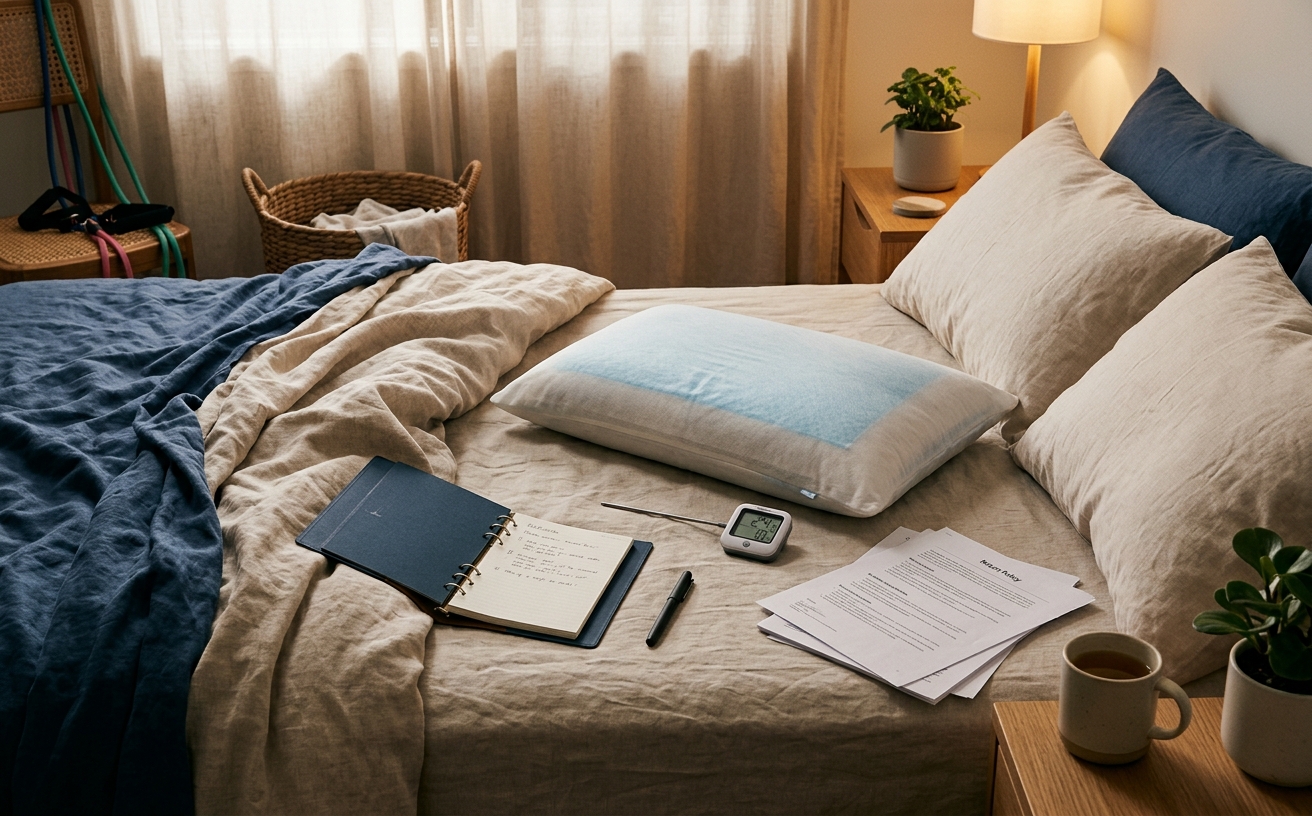
The life constraint comes first; the product claim stays on probation.
If you are struggling to sleep through warm nights, the promise of a pillow that actively lowers your temperature is incredibly appealing. Marketing materials often suggest these products will act like a miniature air conditioner for your head, keeping you perfectly chilled until morning. The reality of how cooling pillows function is far more grounded in basic thermodynamics. They do not generate cold; rather, they manage the microclimate around your face and neck by altering how heat is absorbed and dissipated.
Understanding whether a cooling pillow is worth the investment requires looking past the initial "cool to the touch" feeling in a store. The true test of these materials is how they handle thermal regulation over an eight-hour period. While certain technologies can successfully delay heat buildup and help you fall asleep more comfortably, every material reaches a state of thermal equilibrium eventually. Below, we examine the mechanics of cooling sleep products, the structural trade-offs involved, and how to determine if your sleep environment actually requires one.
The Mechanics of Heat Dissipation
Standard memory foam is notoriously poor at regulating temperature. Its dense cellular structure traps the heat radiating from your head, creating a localized warm zone that can disrupt the natural drop in core body temperature required for deep sleep. Cooling pillows attempt to solve this insulation problem using three primary methods: thermal conduction, phase change materials, and structural ventilation.
Thermal Conduction (Gel Layers and Infusions)
Gel is the most common material used in cooling pillows. It has a higher specific heat capacity than foam, meaning it can absorb a significant amount of your body heat before its own temperature rises. When you first lie down, a gel pad will pull heat away from your skin rapidly through conduction, creating a distinct cooling sensation.
However, gel acts as a heat sink, not a refrigerator. Once the gel absorbs its maximum capacity of heat, it will eventually match your skin temperature. If the pillow lacks adequate ventilation to release that stored heat into the surrounding air, the gel can actually become a warm, dense layer against your face. Gel infusions—where liquid gel is mixed into the foam matrix—offer a less dramatic initial chill but tend to distribute heat slightly more evenly than solid gel panels.
Phase Change Materials (PCMs)
Phase change materials represent a more advanced approach to temperature regulation. These are typically microscopic capsules embedded in the pillow's fabric cover or top layer of foam. PCMs work by absorbing heat as they transition from a solid to a liquid state—similar to how ice absorbs heat as it melts into water, though this happens on a microscopic level and at a temperature calibrated to human skin (usually around 28 to 30 degrees Celsius).
Because the material is actively changing its physical state, it delays the warming effect much longer than standard gel. Once the ambient temperature drops or you move to a different part of the pillow, the PCM releases the stored heat and solidifies again. While effective at buffering temperature swings, pillows utilizing high-quality PCMs are generally the most expensive option on the market.
Structural Ventilation and Convection
Sometimes the most reliable way to prevent a pillow from overheating is simply allowing air to move through it. Convection carries heat away through airflow. Pillows made from shredded foam, natural latex with molded pinholes, or buckling column gel grids (which look like a honeycomb) prioritize passive airflow.
Latex naturally sleeps cooler than memory foam because it does not conform as tightly to the skin, reducing the surface area where heat can become trapped. Shredded foam allows warm air to escape through the gaps between the pieces. While these options may not feel icy when you first touch them, they provide more consistent temperature neutrality throughout the entire night compared to solid memory foam.
Evaluating the Trade-offs
Upgrading to a temperature-regulating pillow involves several compromises. The materials that manage heat most effectively often alter the fundamental feel and maintenance requirements of the pillow.
- Weight and Density: Solid gel panels add significant weight. A standard foam pillow might weigh just over a kilogram, while a heavy-duty gel pillow can weigh up to three kilograms. This can be cumbersome if you frequently adjust or flip your pillow during the night.
- Firmness Changes: Gel layers tend to firm up in cooler room temperatures and soften as they absorb body heat. This means the structural support of your pillow might feel different at 3:00 AM than it did at 10:00 PM.
- Maintenance Restrictions: Most cooling pillows cannot be machine washed. Submerging memory foam or gel in water can degrade the materials and ruin the structural integrity. Typically, only the outer cover is washable, requiring spot-cleaning for the core.
- Cost: True phase change technology and highly engineered breathable grids command a premium price, often running well over a hundred dollars, whereas basic gel-infused foam is more accessible but less effective long-term.
When to Reconsider (and Consult a Clinician)
It is vital to distinguish between a bedroom that is simply too warm and physiological issues that cause severe night sweats. A cooling pillow is a comfort accessory designed to manage the microclimate of your bed; it is not a medical intervention.
You should skip relying on bedding upgrades and speak with a healthcare professional if you are experiencing persistent, drenching night sweats. Waking up with soaked sleepwear or bedding can be a symptom of underlying medical conditions. Clinician prompts are necessary if your temperature fluctuations are accompanied by:
- Hormonal Changes: Severe hot flashes related to perimenopause, menopause, or pregnancy often require targeted medical management or lifestyle adjustments beyond a change in bedding.
- Chronic Illnesses: Thyroid disorders (such as hyperthyroidism), autoimmune conditions, or underlying infections can disrupt your body's internal thermostat.
- Medication Side Effects: Many common medications, including certain antidepressants, fever reducers, and blood pressure medications, can cause significant night sweats.
- Mental Health and Stress: Severe anxiety or panic disorders can manifest physically during sleep, leading to sudden temperature spikes and sweating.
General information only, not medical advice. If you have concerns about sudden changes in your body temperature at night, unexplained weight loss, or if night sweats are disrupting your sleep quality consistently, consult a doctor to rule out underlying health issues.
The Room Environment Factor
A cooling pillow cannot defy the physics of its environment. Heat transfer relies on a temperature differential. If your bedroom is 26 degrees Celsius and poorly ventilated, the pillow has nowhere to dissipate the heat it absorbs from your body. To get any noticeable benefit from temperature-regulating materials, the ambient room temperature needs to be cooler than the pillow.
Sleep researchers generally recommend a bedroom temperature between 18 and 20 degrees Celsius for optimal sleep quality. If you cannot control the ambient temperature of your room through air conditioning or cross-ventilation, a cooling pillow will reach its heat capacity very quickly and offer minimal relief. In high-humidity environments, sweat cannot evaporate efficiently, which also neutralizes the benefits of breathable pillow structures.
A Practical Pre-Purchase Audit
Before spending money on specialized sleep technology, audit your current bedding setup. Often, the reason a pillow feels uncomfortably hot is due to the layers surrounding it.
Begin by checking your pillowcase. Polyester and synthetic microfiber pillowcases trap heat and moisture against the skin, essentially suffocating even the most advanced cooling foam. Switching to natural, breathable fibers like cotton percale, linen, or lyocell (Tencel) can significantly improve airflow and moisture wicking. Percale, in particular, uses a simple over-under weave that feels crisp and allows for excellent ventilation.
Next, examine your mattress protector. Waterproof protectors made with heavy plastic backings can trap heat beneath your upper body, radiating warmth upward regardless of the pillow you use. Look for protectors that utilize breathable polyurethane membranes or natural wool, which is naturally thermoregulating.
Frequently Asked Questions
Do cooling pillows stay cold all night?
No. No passive material can remain permanently colder than its environment while absorbing body heat. Gel pillows will eventually warm up to match your skin temperature. Phase change materials delay this process significantly, but they too will eventually reach thermal equilibrium. The goal is to keep you comfortable long enough to fall into deep sleep, not to refrigerate you until morning.
Can I put my pillow in the fridge or freezer?
Unless explicitly stated by the manufacturer, you should never place memory foam or gel pillows in the refrigerator or freezer. Extreme cold can cause the foam cells to become brittle and crack, permanently destroying the support and pressure-relieving qualities of the pillow. It can also introduce condensation deep into the foam, leading to mold growth.
Are cooling covers just a gimmick?
Covers woven with high-density polyethylene (often marketed as "ice fabric") do feel genuinely cool to the touch because they conduct heat away from the skin very efficiently. However, this sensation is fleeting. Once the fabric warms up, the underlying core of the pillow determines how well the heat is managed. A cooling cover over a dense block of unventilated memory foam will ultimately still sleep hot.