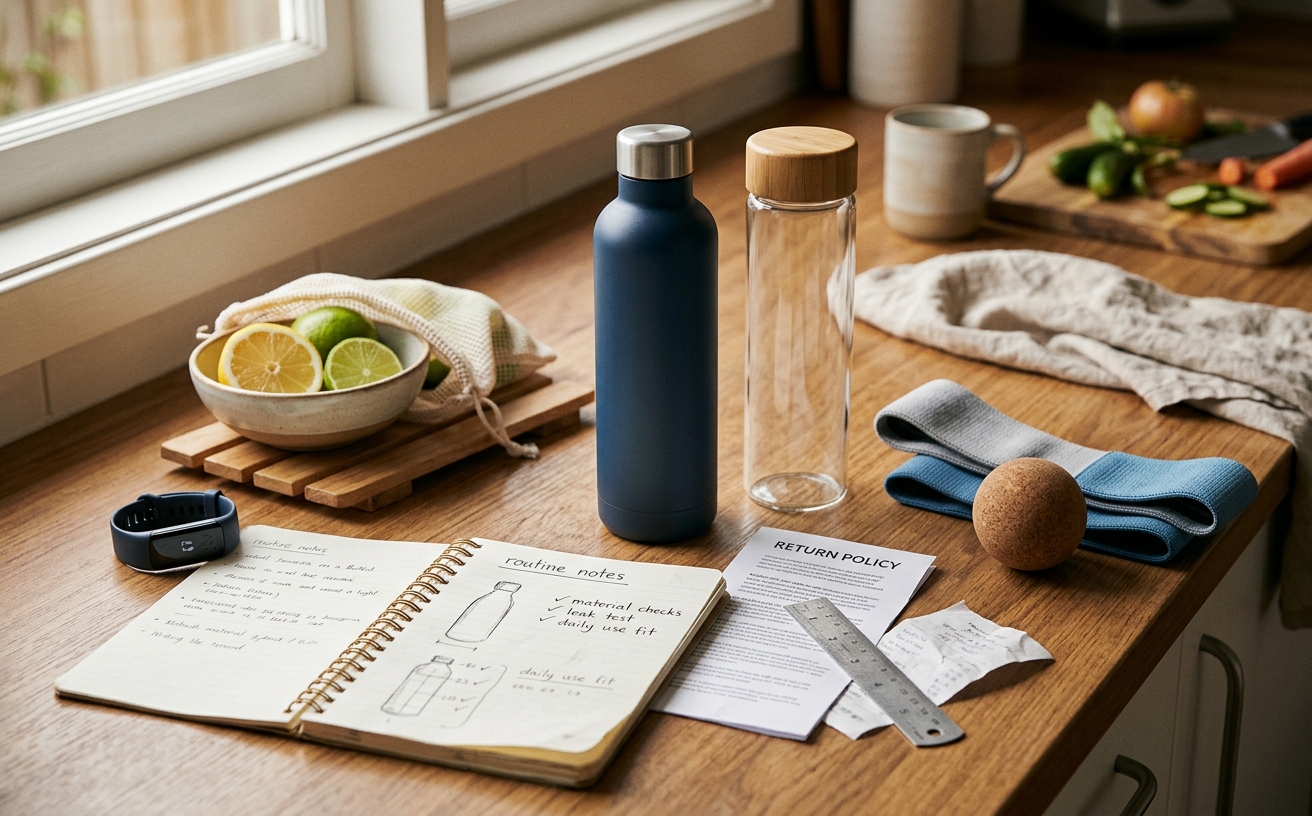
The life constraint comes first; the product claim stays on probation.
Choosing a reusable water bottle often feels more complicated than it needs to be. The market is heavily saturated with oversized jugs, smart bottles that track your intake, and highly insulated vessels promising ice-cold water for days. If you are looking to buy a new hydration bottle, the decision rarely comes down to finding a perfect wellness tool. Instead, it is about matching practical elements to your daily routine: the material, the lid mechanism, and the cleaning requirements.
Finding the right balance means you are more likely to keep the bottle with you and actually drink from it, without it becoming a hygiene hazard. A heavily insulated bottle might keep water cold during a sweltering Melbourne afternoon, but if it is too heavy to carry on the tram, it will sit unused on your kitchen counter. Answering the core search intent for a new bottle requires looking past marketing claims and assessing how a vessel fits into your specific lifestyle, commute, and dishwashing habits.
Material Trade-Offs: Steel, Glass, and Plastic
Stainless steel, borosilicate glass, and hard plastics dominate the hydration aisle. Each material presents concrete trade-offs between durability, thermal retention, and weight.
Stainless Steel
Double-walled, vacuum-insulated stainless steel (typically 18/8 food-grade) is excellent for temperature control. It prevents condensation from pooling in your bag and maintains water temperature for hours. The trade-off is weight and volume. An insulated bottle is significantly heavier and bulkier than a single-wall alternative of the exact same capacity. Steel is durable, but dropping a heavy insulated bottle on concrete will usually result in a permanent dent and chipped paint.
Borosilicate Glass
Glass offers the cleanest taste profile. It will not retain odors, stain, or impart a metallic flavor to your water. It is an excellent choice for desk use or keeping chilled in the fridge. However, even when wrapped in a protective silicone sleeve, glass remains inherently fragile. It is generally not the right candidate for throwing into a gym bag, taking on a hike, or giving to young children.
Hard Plastics
High-quality, BPA-free plastics (such as Tritan copolyester) are lightweight, highly durable, and often transparent, allowing you to visually track your water level. They are highly portable and usually the most affordable option. The downside is that they offer zero thermal insulation, meaning your water will reach room temperature quickly. Plastics can also retain the smell of dish soap or flavored sports drinks if not washed carefully.
The Lid Mechanism: Where Most Bottles Fail
The body of the bottle dictates the weight, but the lid dictates the user experience. The lid is the component you interact with most frequently, and it is also the most common point of failure, either mechanically or hygienically.
Screw Caps
A basic screw cap is the simplest design available. It is highly leak-proof and incredibly easy to clean because it lacks moving parts or hidden crevices. The primary limitation is that it requires two hands to open and close, making it inconvenient while driving, cycling, or walking. Look for external threads rather than internal threads, as external threads are easier to scrub clean.
Straw Lids and Bite Valves
Straw mechanisms allow for upright drinking, which is highly convenient at a desk or on a treadmill. Many people find they naturally drink more water when using a straw. However, straws and their folding mechanisms are notorious for harboring mold. They require dedicated, narrow cleaning brushes and regular disassembly. If you routinely wear lip balm, residue transfers easily to bite valves and requires vigilant scrubbing.
Chug Caps and Spouts
These offer a middle ground. A smaller drinking spout prevents water from splashing onto your face while moving, but the lid remains relatively simple to operate, often requiring only one hand. Look for designs where the drinking surface is covered by a secondary cap when closed, protecting the mouthpiece from dust and debris inside your bag.
Volume and Weight Considerations
The current trend leans heavily toward massive, one-liter or even two-liter bottles. While carrying a full day of water sounds efficient in theory, the physical reality of hauling a heavy cylinder on a crowded commute often leads people to leave the bottle at home.
Water weighs exactly one kilogram per liter. Add the weight of a double-walled steel bottle, and you are carrying a substantial load. Carrying an asymmetrical load of 1.5 kilograms in a tote bag on one shoulder can contribute to musculoskeletal strain over time.
For most daily routines, a 500ml to 750ml capacity is the most practical choice. It is light enough to carry comfortably and fits into standard vehicle cup holders and backpack sleeves. Unless you work outdoors away from potable water sources, refilling a smaller bottle at the office or a public tap is usually more convenient than hauling a massive jug all day.
Hygiene and Maintenance Realities
A water bottle is essentially a dark, damp environment, providing the exact conditions required for bacteria and mold to thrive. Buying a bottle without considering how you will clean it is a common mistake that leads to unpleasant odors and potential health risks.
Before purchasing, check if the bottle is genuinely dishwasher safe. Many insulated steel bottles are hand-wash only because the high heat of a dishwasher can compromise the vacuum seal and damage the exterior coating. If you are buying a hand-wash-only bottle, ensure the mouth is wide enough to fit a standard dish sponge or bottle brush.
Pay close attention to the silicone O-rings and gaskets inside the lid. These seals make the bottle leak-proof, but moisture gets trapped underneath them, creating biofilms. A well-designed bottle allows you to easily remove these gaskets for weekly scrubbing. If the gasket is permanently fixed and you cannot clean behind it, the bottle has a strictly limited hygienic lifespan. Soaking a lid in hot water is not enough; mechanical scrubbing is required to disrupt bacterial biofilms.
Medical and Safety Boundaries: When to Skip the Bottle Aisle
While adequate hydration is a baseline requirement for health, a new water bottle is not a medical intervention. There are specific situations where focusing on hydration products or dramatically increasing water intake requires clinical oversight rather than a shopping trip.
Excessive Thirst: If you find yourself constantly thirsty and seeking larger bottles to keep up with your intake, consult a doctor. Unquenchable thirst (polydipsia) can be a primary symptom of underlying conditions such as diabetes mellitus or kidney dysfunction.
Heart and Kidney Conditions: Certain chronic illnesses, including severe heart failure and specific kidney diseases, require strict fluid restriction. Always follow your specialist's guidelines regarding daily fluid limits, regardless of general wellness advice promoting high water consumption.
Eating Disorders: For individuals recovering from eating disorders, water loading (drinking excessive amounts of water to manipulate weight or suppress appetite) is a known risk. If hydration tracking becomes compulsive, step away from marked or smart bottles and discuss these behaviors with a mental health professional.
Pregnancy and Severe Nausea: Hydration needs increase during pregnancy. However, if you are experiencing severe nausea (hyperemesis gravidarum) and struggling to keep any fluids down, a new bottle will not solve the issue. Seek immediate medical advice for proper fluid management and potential intravenous hydration.
Endurance Athletics: Forcing massive water intake without replacing electrolytes during prolonged exercise can lead to hyponatremia (dangerously low blood sodium levels). Endurance athletes should follow specific, medically sound hydration and fueling protocols rather than simply drinking as much plain water as possible.
A Practical Buying Checklist
When assessing a potential purchase, run through these concrete questions to audit the bottle's utility for your specific life:
- Will it fit? Check the diameter against your car cup holder, bike cage, or the side pocket of your daily backpack.
- Can I clean it easily? Verify if it requires special brushes, if the gaskets are removable, and if the main body is dishwasher safe.
- Is the weight manageable? Consider the total weight when completely full of water, not just the empty vessel on the store shelf.
- Are replacement parts available? Quality brands sell replacement lids and silicone gaskets separately. This extends the life of the bottle significantly if a single component fails or gets lost.
- Does it match my environment? Choose steel for hot cars and outdoor sites, glass for indoor desk work, and plastic for lightweight gym carry.
Frequently Asked Questions
How often should I wash my reusable bottle?
You should wash your bottle with warm, soapy water every single day. Even if you only put plain water in it, bacteria from your mouth transfer to the bottle with every sip. The lid and mouthpiece require the most attention.
Are BPA-free plastics completely safe?
BPA (bisphenol A) has largely been phased out of reusable hydration products. Modern Tritan plastics are rigorously tested and generally recognized as safe for food and beverage contact. However, if you are concerned about plastic degradation over time, especially when exposed to high heat or UV light, stainless steel or borosilicate glass are more inert alternatives.
Do I need a smart bottle that tracks my drinking?
For the vast majority of people, no. Thirst is a highly evolved and reliable physiological mechanism for maintaining hydration. Smart bottles often introduce unnecessary electronic waste, require frequent charging, and complicate the cleaning process without offering meaningful health benefits over a standard reusable bottle.
Why does my water taste metallic or plastic?
If you are using a new stainless steel or plastic bottle, residual manufacturing oils can affect the taste. Wash the bottle thoroughly with hot soapy water. If a plastic bottle retains a bad taste after weeks of use, the plastic may have absorbed odors from dish soap or flavored drinks. A soak with water and baking soda can help neutralize lingering smells.