The life constraint comes first; the product claim stays on probation.
Most kitchens harbor a chaotic drawer filled with mismatched plastic tubs, warped lids, and containers permanently stained by last year’s tomato sauce. When you rely on preparing food ahead of time to manage your nutrition, budget, or busy schedule, fighting with your storage system quickly becomes a daily frustration. Finding meal prep containers worth keeping comes down to evaluating three highly practical factors: how well they seal, how easily they clean, and whether they can survive repeated cycles of heating and freezing without degrading.
The goal is not to curate an aesthetically perfect, color-coordinated refrigerator. Rather, it is to build a highly functional inventory of containers that safely hold your food, do not leak in your bag during your morning commute, and do not require excessive effort to maintain. By understanding the concrete trade-offs between glass, plastic, and stainless steel, you can make informed decisions about which materials actually suit your daily routines.
Material Trade-Offs: Glass, Plastic, and Stainless Steel
No single material excels in every category. Choosing the right container means deciding which compromises you are willing to accept regarding weight, durability, and heating capabilities.
Glass Containers
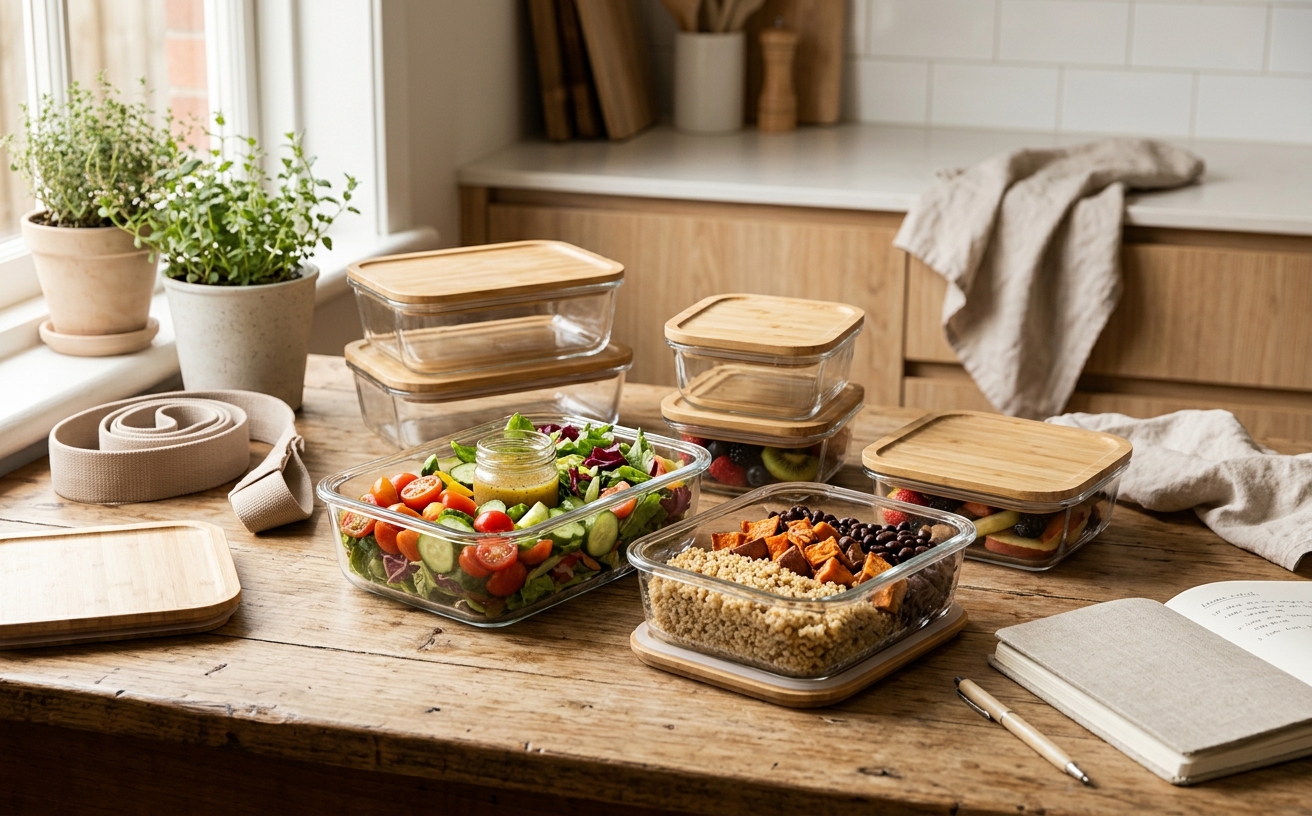
Glass is often considered the gold standard for food storage, and for good reason. It is non-porous, meaning it will never absorb odors from a pungent curry or take on an orange tint from a rich bolognese. It transitions easily from the refrigerator to the microwave, and many types can even go into the oven. From a longevity standpoint, a good glass container will outlast almost anything else in your kitchen.
However, glass has distinct drawbacks. It is heavy, which matters if you are carrying multiple meals on public transport. It is also fragile; dropping a glass container on a tiled kitchen floor usually results in a frustrating and dangerous cleanup. Finally, glass containers are prone to thermal shock. Moving a container directly from the freezer to a hot microwave can cause the glass to shatter, even if it is made from tempered or borosilicate glass.
Plastic Containers
Plastic containers are lightweight, inexpensive, and highly portable. For people who carry their lunches in a backpack or tote bag, the weight savings of plastic compared to glass are significant. Modern high-quality plastics, such as Tritan, are designed to resist shattering and are generally free from BPA.
The primary issue with plastic is degradation. Over time, repeated exposure to acidic foods, microwave heat, and abrasive dishwashing detergents causes plastic to become cloudy, pitted, and scratched. Scratched plastic is harder to clean and can harbor lingering odors. Even the highest quality plastic containers eventually reach a point where they need to be recycled and replaced.
Stainless Steel Containers
Stainless steel is exceptionally durable, lightweight, and completely resistant to stains and odors. It is an excellent option for cold foods, salads, sandwiches, or snacks. A high-quality stainless steel container can easily last a lifetime and can survive being dropped onto concrete without cracking.
The obvious limitation of stainless steel is that it cannot be used in the microwave. If your meal prep relies entirely on foods that must be reheated at the office, stainless steel will only work if you are willing to transfer your food to a ceramic plate before heating. Additionally, stainless steel containers are opaque, meaning you must open them or use labels to identify what is inside.
Seal and Lid Mechanics: The Weakest Link
A container is only as good as its lid. The vessel itself might last for decades, but if the lid warps, cracks, or fails to seal, the entire unit becomes useless for transport.
Snap-lock lids with silicone gaskets offer the most reliable defense against leaks. The silicone ring creates an airtight and watertight barrier, making these containers safe for soups and dressings. However, this design requires diligent maintenance. Moisture and food particles easily become trapped behind the silicone gasket. If the gasket is not regularly removed and thoroughly dried, black mold will develop in the crevices. When purchasing snap-lock containers, check if the silicone ring can be easily removed with a blunt tool like a butter knife.
Press-fit lids, which simply push down onto the container rim, are much easier to wash and dry because they lack deep crevices and removable gaskets. The trade-off is that they are rarely leak-proof. They are perfectly adequate for storing dry goods in the pantry or leftover roasted vegetables in the fridge, but they are a risky choice for carrying dressed salads or stews in a bag.
Shape and Storage Efficiency
The physical footprint of your containers dictates how efficiently you can use your refrigerator and cupboard space. Rectangular and square containers are generally more space-efficient than round ones. Refrigerators are essentially large boxes, and rectangular containers tessellate neatly, utilizing corner spaces that round containers leave empty.
When assessing containers for purchase, consider how they behave when empty. Containers that nest inside one another will save significant cupboard space. Lids should ideally be uniform; buying into a system where one size of lid fits multiple depths of containers drastically reduces the time spent searching for a match.
Health, Safety, and Medical Boundaries
Food storage intersects directly with food safety. Heating food safely, preventing cross-contamination, and managing bacterial growth are critical components of any meal prep routine.
When it comes to microwaving, heat accelerates the breakdown of materials. Even when plastics are labeled as microwave-safe, this simply means they will not melt under normal microwave conditions. Many health professionals recommend transferring food to glass or ceramic before heating to reduce the potential migration of microplastics or chemical compounds into your meal.
Medical and Safety Boundaries: General food storage advice does not apply to everyone. Consider the following safety prompts:
- Severe Allergies and Celiac Disease: If you or someone in your household manages severe food allergies, celiac disease, or a compromised immune system, exercise extreme caution with plastic containers. Scratched or pitted plastic can harbor microscopic traces of allergens or bacteria even after a thorough run through the dishwasher. Glass or stainless steel containers are strongly recommended for maintaining strict cross-contamination protocols.
- Eating Disorders and Mental Health: If the rigid structure of meal prepping, strict portioning, or tracking food in identical containers triggers anxiety, obsessive thoughts, or exacerbates a history of disordered eating, skip structured meal prep entirely. There is no health benefit to a storage system that harms your psychological well-being. Consult a registered dietitian or mental health professional for an approach to food management that supports your recovery and overall mental health.
Who Should Skip Upgrading Their Containers
Upgrading your kitchen storage requires a financial investment and contributes to environmental waste if you are throwing away usable items. You should skip buying new containers if:
- Your current system works. If your mismatched collection currently holds your food, fits in your fridge, and does not leak in your bag, there is no practical reason to replace it.
- You are buying aspirationally. Purchasing a twenty-piece glass container set will not magically create the habit of cooking on Sundays. If you do not currently prep your meals, begin by cooking larger batches of dinner and storing leftovers in whatever you already own. Build the habit first, then buy the equipment to support it.
- You struggle with hand strength or dexterity. Heavy glass containers and stiff snap-lock lids can be difficult to manage for individuals with arthritis, carpal tunnel, or reduced grip strength. Lightweight plastics with simple press-fit lids may be a more accessible choice, even if they require more careful transport.
A Practical Container Audit Checklist
Before purchasing anything new, evaluate your current inventory. Empty your cupboards and assess each container and lid using a strict set of criteria.
- Match everything up. If a base has no lid, or a lid has no base, recycle or repurpose it immediately. Stray pieces only create clutter.
- Check for damage. Inspect plastics for deep scratches, cloudiness, or pitting. These hold bacteria and odors and should be retired.
- Test the seals. Fill the container with water, secure the lid, and turn it upside down over the sink. If it drips, it is no longer safe for liquid transport and should be downgraded to pantry storage or home-only use.
- Inspect the gaskets. Pull out the silicone rings on your snap-lock lids. If they are permanently stained with black mold that cannot be removed with a bleach solution or vinegar, the lid needs to be discarded.
Frequently Asked Questions
How do I remove lingering smells from silicone seals?
Silicone is notorious for absorbing strong odors, particularly from garlic, onions, and spices. To neutralize the smell, remove the gasket and soak it in a solution of equal parts water and white vinegar for an hour. Alternatively, make a paste of baking soda and water, coat the gasket, let it dry, and then rinse. Leaving the clean, dry gasket in direct sunlight for a few hours can also help eliminate stubborn odors.
Can I put a glass container directly from the freezer into the microwave?
It is highly discouraged. Rapid temperature changes cause thermal shock, which can cause even tempered glass to fracture or shatter violently. You should always thaw frozen meals in the refrigerator overnight before microwaving them. If you must heat from frozen, use the defrost setting on your microwave to raise the temperature gradually, and ensure the lid is resting loosely on top to vent steam.
Are containers with built-in compartments useful?
Divided containers look excellent for portion control, but they often fail in practice. The internal dividers rarely reach all the way to the lid, meaning liquids and sauces will inevitably mix if the container tilts in your bag. Furthermore, the corners of the small compartments are notoriously difficult to clean. Unless you are packing entirely dry foods like nuts and crackers, standard single-compartment containers are generally more practical and easier to wash.