The life constraint comes first; the product claim stays on probation.
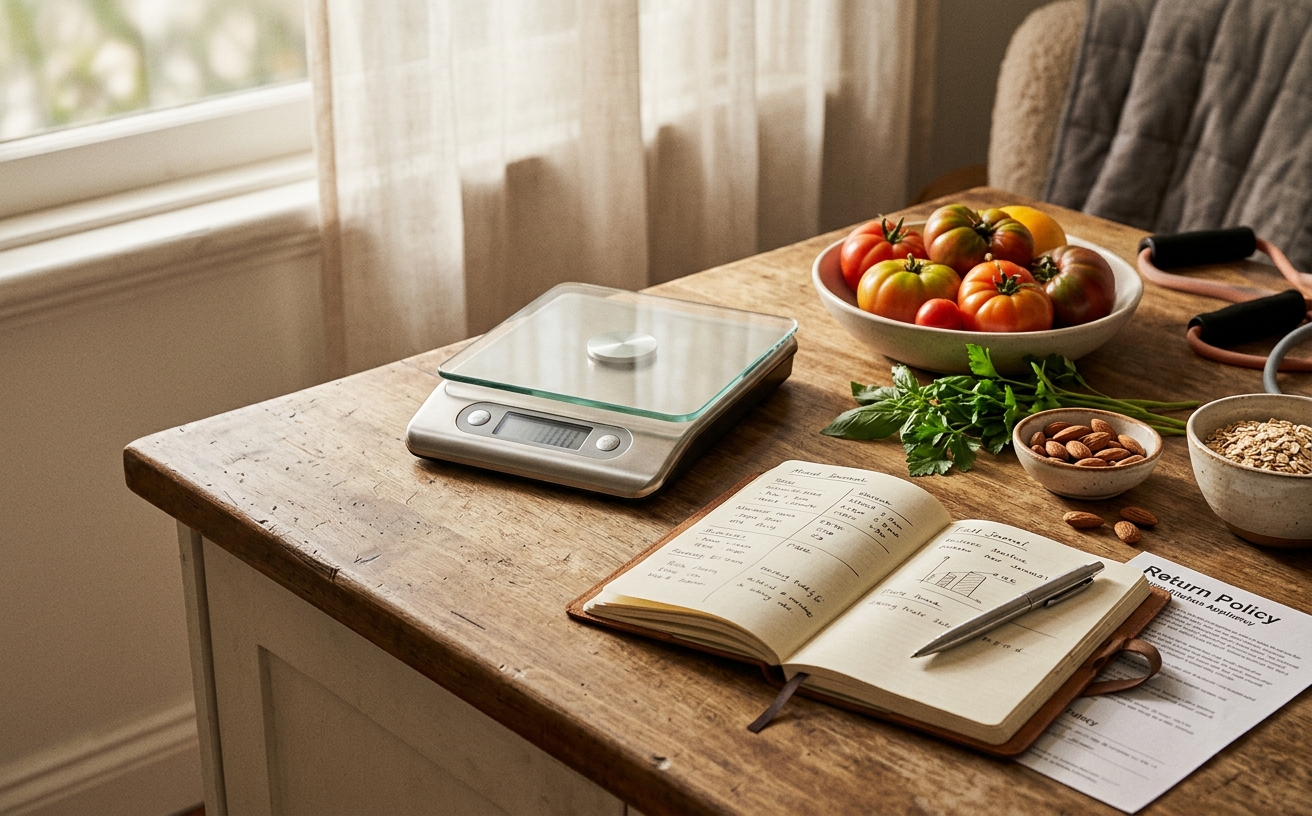
A kitchen scale sits on the counter of many Melbourne homes, often carrying a heavy psychological weight alongside its physical function. People usually buy them for baking precision or to track macronutrients, but the line between helpful data gathering and obsessive tracking is notoriously thin. If you want to understand your baseline nutritional intake without falling into a spiral of micromanagement, the approach matters more than the hardware.
Using a kitchen scale does not have to mean weighing every lettuce leaf or packing a digital device in your bag when you go out to a restaurant. The most sustainable way to use a food scale is as an occasional calibration tool. By measuring your food for a short, defined period, you can educate your eyes on what standard portion sizes actually look like. Once you have that baseline knowledge, the scale can go back in the drawer.
Why Weigh Your Food at All?
Visual estimation is notoriously inaccurate. Human beings are generally poor at judging volume, especially when dealing with different shapes and densities of food. A standard serving of peanut butter is often listed as 20 to 30 grams. If you scoop what you assume is 30 grams onto a piece of toast, you might be surprised to find that your visual estimate is actually closer to 60 grams.
This discrepancy is not a moral failure; it is simply a byproduct of modern plate sizes and our natural inclination to fill empty space. For individuals trying to adjust their energy intake—whether aiming for a slight caloric deficit or trying to ensure they consume enough protein to support physical training—these visual miscalculations can add up to significant margins of error over a week.
Measuring food temporarily bridges the gap between what we think we are eating and what we are actually eating. It provides objective data. However, objective data is only useful if it informs your habits rather than dictating your daily life.
Who Should Skip Food Weighing Entirely
Before bringing a scale into your daily routine, it is crucial to assess whether it will serve your mental health. This article provides general information only and does not constitute medical advice. There are several situations where weighing food is actively harmful or medically inappropriate.
- Eating Disorders and Disordered Eating: Anyone with a history of anorexia nervosa, bulimia, orthorexia, or binge eating disorder should avoid kitchen scales entirely unless specifically instructed and monitored by an eating disorder dietitian or psychologist. The hyper-focus on numbers can trigger relapses or exacerbate restrictive thoughts.
- Pregnancy and Postpartum: Nutritional needs fluctuate wildly during pregnancy and the postpartum period. Hunger cues and intuitive eating are generally safer and more appropriate guides during these phases than rigid tracking.
- Severe Anxiety or OCD: If you find that measuring things leads to obsessive checking, anxiety when you cannot measure, or rigid rules about exact decimal points, a kitchen scale is not the right tool for you.
- Chronic Illnesses Requiring Specialised Diets: If you have a condition like chronic kidney disease or type 1 diabetes, your measurement needs are highly specific. Please follow the guidance of your clinical care team rather than general internet advice.
The Calibration Method: Gathering Data, Not Rules
If you have established that a kitchen scale is a safe tool for you, the most practical framework for using one is the "calibration method." Instead of committing to weighing your food indefinitely, treat the scale as an educational course that lasts for one to two weeks.
During this period, weigh the foods you eat most frequently. The goal is to train your brain to recognise what specific weights look like in your standard bowls and plates. For example, if you eat oats every morning, weigh out 50 grams of oats into your favourite bowl. Notice where the oats hit the line of the bowl. Do this for a few days until you can confidently pour the oats to that line without the scale.
Once you have calibrated your visual estimation for your staple foods, put the scale away. You might pull it out once every few months just to check your estimates, but daily weighing becomes unnecessary. This method allows you to gather the nutritional data you need without turning your kitchen into a laboratory.
High-Yield vs. Low-Yield Measurements
Even during a calibration phase, not all foods require the same level of precision. Applying editorial judgement to what you weigh can save time and mental energy.
High-Yield Foods (Worth Weighing)
These are energy-dense foods where a small difference in volume equals a large difference in nutritional intake. Weighing these items provides valuable insights.
- Nuts and Seeds: Extremely nutrient and energy-dense. A "handful" can vary wildly in weight.
- Oils and Butter: Pouring olive oil directly from the bottle usually results in far more than a standard tablespoon.
- Nut Butters and Spreads: Dense and sticky, making volume measurements (like cups or spoons) highly inaccurate.
- Pasta and Rice: Dry carbohydrates expand during cooking, making visual estimation tricky until you are familiar with the raw-to-cooked ratio.
- Protein Sources: Chicken breasts, tofu, and steaks vary significantly in size. Weighing them helps ensure you are meeting your protein targets.
Low-Yield Foods (Skip the Scale)
These foods are low in energy density and high in water or fibre. The nutritional difference between 50 grams and 100 grams is negligible.
- Leafy Greens: Spinach, rocket, and lettuce.
- Cruciferous Vegetables: Broccoli, cauliflower, and cabbage.
- Water-Dense Fruits: Berries, melon, and citrus.
- Spices and Herbs: Unless you are baking, measuring spices by weight is entirely unnecessary.
What to Look for in a Basic Kitchen Scale
If you are purchasing a scale for the first time, keep it simple. The market is flooded with "smart" scales that connect via Bluetooth to your phone, automatically logging macros into proprietary apps. For most people, these devices overcomplicate the process and encourage the very obsession we are trying to avoid.
A practical, reliable kitchen scale should have a few basic features. First, it needs a clear, physical "tare" button. This allows you to place a bowl on the scale, zero out the weight, and then add your food. Touch-sensitive buttons can be frustrating if your fingers are wet or covered in flour.
Second, look for a scale with a flat, easy-to-wipe surface, preferably glass or sealed plastic. Crannies around the screen will inevitably collect food dust. Third, check the auto-off timer. Some scales turn off after 30 seconds of inactivity to save battery. This is incredibly frustrating if you are slowly pouring an ingredient and pause to check a recipe, only to find the scale has reset to zero. Look for a model that stays on for at least two to three minutes.
Finally, opt for a scale that uses standard AAA or AA batteries rather than obscure coin cells, which are harder to replace and pose a severe ingestion hazard if you have young children in the house.
Establishing Boundaries With Kitchen Metrics
Using a scale safely requires strict personal boundaries. It is easy for a temporary educational tool to become a permanent crutch. Here is a checklist to help you monitor your relationship with food measurement:
- The Vacation Test: Can you go away for a weekend, leave the scale at home, and eat without anxiety? If the absence of the scale causes distress, it is time to step back.
- The Broken Scale Scenario: If the batteries die while you are making breakfast, can you easily transition to visual estimation, or do you feel compelled to go buy batteries before you can eat?
- Social Eating: Does your desire to measure food prevent you from eating meals cooked by others, attending dinner parties, or trying new restaurants?
- Decimal Fixation: Are you adding or removing tiny slivers of food to hit exactly 100 grams, rather than accepting 97 grams or 104 grams as "close enough"?
If you notice any of these behaviours developing, the most practical health decision you can make is to remove the scale from your kitchen entirely. Nutrition is about long-term averages, not daily perfection.
Frequently Asked Questions
Should I weigh my food raw or cooked?
For the most accurate nutritional data, weigh your food raw. Cooking alters the water content of food dramatically. Pasta absorbs water and becomes heavier, while meat loses water and becomes lighter. Most nutritional databases and packaging labels provide data based on the raw, unprepared weight. However, if you are batch-cooking a large meal (like a stew), it is often more practical to weigh the raw ingredients for the whole pot, weigh the final cooked batch, and then divide it into equal portions.
Do I need to weigh ingredients for standard home cooking?
If you are making a stir-fry or a soup, weighing every carrot and onion is an inefficient use of your time. Focus on the primary energy sources—the cooking oil, the protein, and the noodles or rice. The exact weight of the capsicum will not meaningfully alter the nutritional profile of your meal.
Is volume (cups and spoons) better than weight for baking?
In baking, weight is vastly superior to volume. A cup of flour can vary in weight by up to 30 percent depending on how tightly it is packed into the measuring cup. If a recipe fails, inaccurate volume measurement is usually the culprit. Using a scale for baking is highly recommended, entirely separate from any nutritional tracking goals.