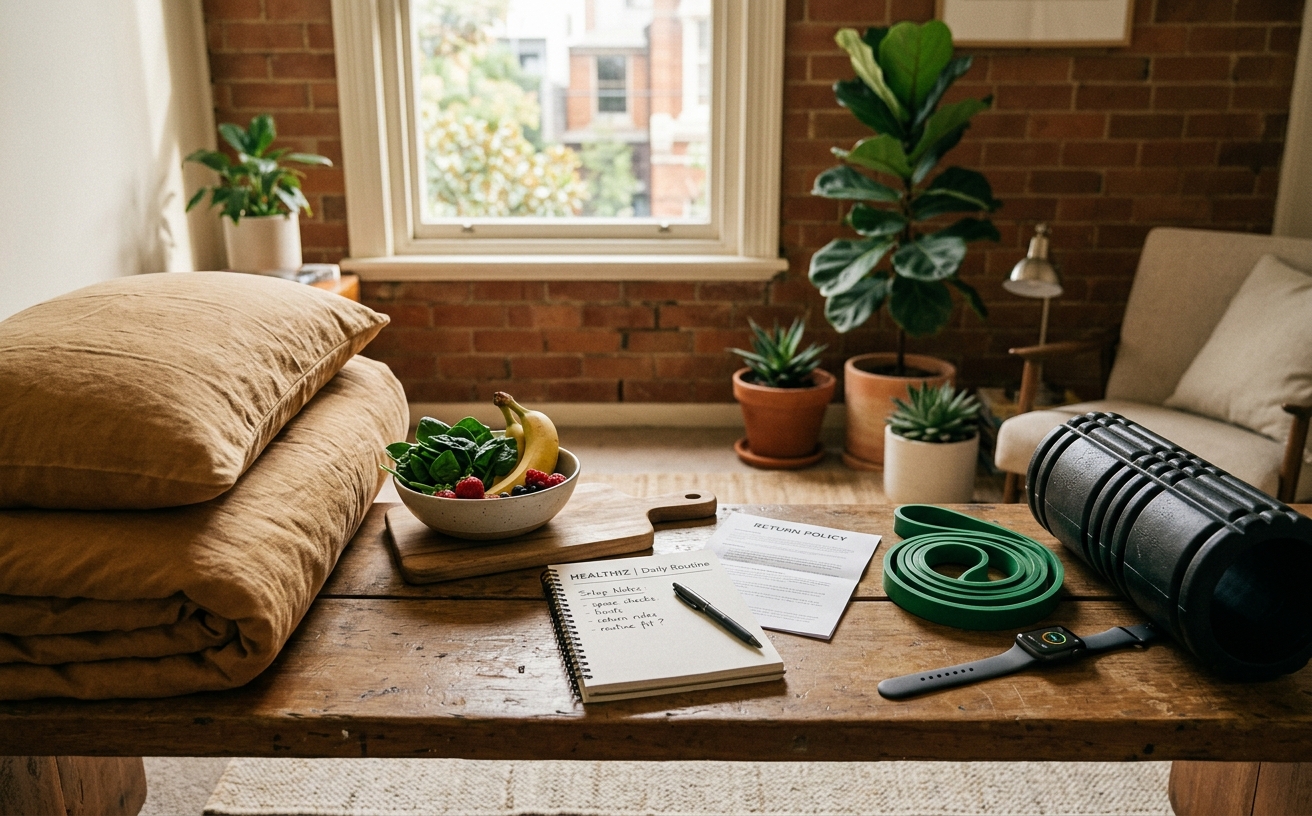
The life constraint comes first; the product claim stays on probation.
Setting up a daily health routine in a confined living space requires treating floor area as a strict budget. You do not need a dedicated home gym, a sprawling meditation room, or expensive hardware to support your physical and mental health. The practical goal is to create flexible zones for sleep, movement, and recovery that pack away quietly when you need the room for daily living. Living in inner-city apartments often means dealing with shared walls, strict strata rules, limited storage, and rooms that must serve three different purposes. This decision guide breaks down how to prioritize useful equipment, manage multi-purpose spaces, and avoid cluttering your home with single-use items.
Assessing Floor Space and Routine Priorities
Before purchasing any equipment or rearranging furniture, audit your actual daily habits rather than aspirational ones. If you currently stretch once a month, dedicating a permanent corner of your living room to a yoga mat is a poor use of space. Focus entirely on the activities you already do, or are highly motivated to begin doing, on a daily basis.
Small space optimization is about acknowledging concrete trade-offs. A walking pad might slide under a sofa, but it requires maneuvering every time you want to use it. Adjustable dumbbells save space but can be clunky to change during a fast-paced workout. Evaluate your apartment using a basic checklist approach:
- Storage capacity: Can the item slide under a bed, hang on the back of a door, or fit into a standard storage cube?
- Floor space clearance: Do you have a two-by-two meter clear zone to move safely without kicking a coffee table?
- Acoustic limits: Do you have downstairs neighbors or shared walls that make jumping or dropping weights inappropriate?
- Ventilation: Does the room have enough airflow to manage sweat and humidity during a workout?
Protecting Sleep in Multi-Purpose Rooms
When your bedroom is also your home office or living area, sleep hygiene becomes an architectural challenge. The brain relies on environmental cues to wind down, which is difficult when your bed is sixty centimeters from your work laptop. Creating physical and visual boundaries is essential for recovery.
If you cannot move your desk out of the bedroom, prioritize visual separation. This might mean using a folding room divider, or simply committing to closing your laptop and placing it in a drawer at the end of the day. Removing the visual reminder of work helps transition the space back to a rest zone.
Inner-city apartments often suffer from high levels of ambient light and street noise. Renters who cannot install permanent blockout blinds can use portable suction-cup blackout curtains or tension rods with heavy drapes to manage light pollution. For noise, especially in buildings with poor insulation, a basic white noise machine or a fan can help mask the sound of traffic or neighbors, providing a consistent auditory baseline for sleep. Temperature control is another common limitation; if you lack reliable air conditioning, focus on breathable linen or cotton bedding and consider a tower fan to maintain air circulation during warmer nights.
Movement Gear: What Earns Its Keep
Building a movement routine in a small apartment requires selecting high-utility, low-footprint equipment. You have to be ruthless about what enters the space. Bulky cardio machines, single-use stretching contraptions, and large racks of fixed weights rarely justify the floor space they consume.
High-Utility Equipment
- Resistance bands: Both loop and tube bands offer immense versatility for strength training and mobility work. They can replicate cable machine exercises and take up roughly the space of a pair of socks.
- Adjustable dumbbells or kettlebells: While more expensive upfront than fixed weights, a single adjustable kettlebell or a pair of adjustable dumbbells replaces an entire rack. They are heavy, so ensure you store them on the floor rather than on high, flimsy shelves.
- Thick, foldable exercise mats: Standard yoga mats are often too thin for hard apartment floors, especially if you are doing floor-based core work or mobility exercises. A thicker, foldable mat provides better joint protection and dampens sound for downstairs neighbors.
- Doorway pull-up bars: If your rental agreement allows and your doorframes are structurally sound, a tension pull-up bar is an excellent tool for upper body strength that requires zero floor space. Always check the frame for stability before use.
Equipment to Reconsider
Avoid purchasing large foam plyometric boxes, indoor cycling bikes (unless you are a dedicated cyclist), and cheap folding treadmills that often break down quickly and become permanent clothing racks. If an item serves only one highly specific movement, it is generally not suitable for a small apartment.
Recovery and Downtime Zones
Recovery is just as critical as movement, but it rarely requires large equipment. Creating a small, accessible kit for physical maintenance ensures you actually use it. A hollow foam roller is an excellent choice because you can store massage balls, resistance bands, or even a small towel inside the core of the roller when not in use.
Tennis balls or lacrosse balls are highly effective for targeted trigger point release and cost very little. Acupressure mats have become popular for winding down; they are thin, fold up easily, and can slide right under a sofa or bed. The key to a recovery setup in a small space is accessibility. If your foam roller is buried at the bottom of a closet behind a vacuum cleaner, you will likely skip using it. Keep your recovery tools in a decorative basket or an ottoman with hidden storage right in the living area.
Nutrition Basics in Compact Kitchens
Tiny apartment kitchens, often featuring minimal bench space and bar-sized refrigerators, force you to simplify your nutrition habits. Elaborate meal prep requiring multiple large appliances is usually unsustainable. The priority should be high-quality foundational tools rather than specialized gadgets.
Invest in one excellent chef's knife and a large, sturdy chopping board that can sit over the sink if bench space is severely lacking. Skip massive juicers, single-use egg cookers, and bulky air fryers if you only have one small counter. Instead, rely on a good quality non-stick pan and a versatile pot.
Hydration is a core component of daily wellness, but large water cooler jugs are impractical. If you dislike the taste of your tap water, a slimline water filter jug that fits into the door of a small fridge is a better investment than a countertop filtration system. Keep your pantry organized with stackable, clear containers to maximize vertical shelf space and prevent buying duplicate ingredients.
When to Reconsider a Home Setup
While optimizing your apartment for daily health routines is practical for many, there are strict limitations and safety boundaries to acknowledge. A cramped, unventilated space is not the appropriate environment for pushing physical limits or managing complex health conditions.
Consult a clinician or physiotherapist before beginning a home exercise routine if you are pregnant, managing a chronic illness, recovering from a severe injury, or taking medications that affect your balance or blood pressure. Exercising alone in a restricted space carries inherent trip hazards. If you have mobility issues, navigating around coffee tables and tight corners while holding weights increases the risk of falls. In these scenarios, supervised exercise in a properly equipped clinical or gym environment is strongly recommended.
Mental health is another critical boundary. Living, working, sleeping, and exercising in a single 40-square-meter footprint can lead to severe cabin fever and exacerbate feelings of isolation, anxiety, or depression. If you find that the lack of physical boundary between your workspace and your rest space is negatively impacting your mental health, do not force a home workout routine. Prioritize getting out of the apartment. A basic gym membership, joining a local run club, or simply walking in a nearby park provides necessary psychological separation and environmental variety.
Additionally, if you have a history of eating disorders or obsessive tracking behaviors, be cautious about turning your small kitchen into a hyper-controlled meal prep station. Focus on functional, intuitive living rather than rigid home tracking, and consult a qualified healthcare professional if your home routines begin to feel compulsive.
Frequently Asked Questions
How can I exercise without disturbing my downstairs neighbors?
Acoustic transfer is a major issue in apartment buildings. Avoid plyometrics (jumping), skipping ropes, and heavy deadlifts. Focus on low-impact, high-intensity movements like isometric holds, slow-tempo strength training, and mobility flows. Always use a thick, high-density exercise mat to absorb vibrations, and exercise during reasonable daytime hours.
Where is the safest place to store heavy adjustable weights?
Always store heavy items flat on the floor, preferably in a corner where they do not pose a tripping hazard. Never store heavy kettlebells or dumbbells on cheap particleboard shelves, high closet racks, or near glass balcony doors. A small, dedicated floor basket tucked under a sturdy desk or sofa is usually the best option.
What is the best way to manage air quality during indoor workouts?
If your apartment lacks good cross-ventilation, open any available windows before you begin moving. A small HEPA air purifier can help manage dust and allergens in confined spaces, while a standard oscillating fan is crucial for regulating your body temperature and evaporating sweat when air conditioning is not available.