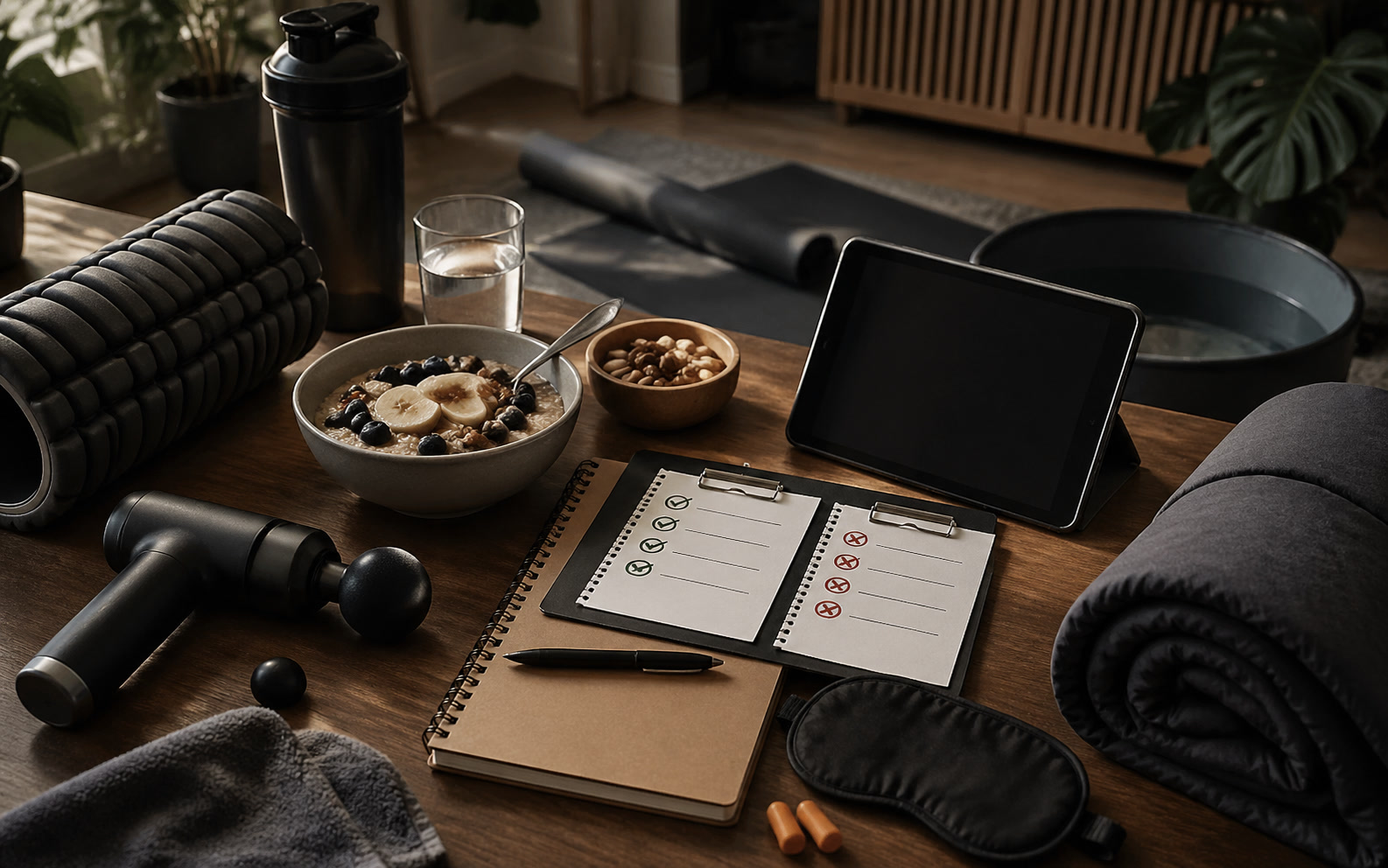
The life constraint comes first; the product claim stays on probation.
Waking up with stiff, heavy legs the morning after a new workout routine is a familiar sensation. Delayed onset muscle soreness, commonly known as DOMS, usually peaks between 24 and 72 hours after unfamiliar or intense exercise. When that stiffness hits, it is tempting to reach for any tool, supplement, or technique promising immediate relief. The wellness industry is built on this exact discomfort, offering an endless array of gadgets, specialized drinks, and extreme temperature therapies designed to fix your aching muscles.
However, the reality of physical recovery is far less glamorous than the marketing suggests. Most popular soreness interventions focus on perceptual recovery—tricking your nervous system into feeling better temporarily—rather than physiological recovery, which is the actual repair of muscle tissue. If you are spending significant time or money trying to erase soreness, you might be prioritizing the wrong variables. This guide examines the most common recovery myths, the concrete trade-offs of popular interventions, and how to build a practical, grounded approach to muscle repair that relies on basic human physiology rather than expensive shortcuts.
When to Seek Professional Advice (Who Should Skip This Guide)
This article discusses general recovery from standard exercise-induced muscle soreness. It is not medical advice. You should skip these general guidelines and consult a doctor, physiotherapist, or relevant clinician if you fall into any of the following categories:
- Acute injuries: If your pain is sharp, sudden, asymmetrical (only on one side), or localized to a joint or tendon, this is likely an injury, not DOMS. Do not attempt to push through or self-treat sharp pain.
- Severe symptoms: If your soreness is accompanied by extreme swelling, an inability to bend your limbs, or dark, tea-colored urine, seek emergency medical attention immediately. These are symptoms of rhabdomyolysis, a severe and potentially life-threatening condition where rapid muscle breakdown overwhelms the kidneys.
- Medication interactions: Certain medications, particularly statins used for cholesterol management, can cause muscle pain or myopathy. If you experience unexplained muscle aches while on prescription medication, consult your prescribing doctor.
- Pregnancy: Hormonal changes during pregnancy, specifically the release of relaxin, alter joint laxity and tissue recovery. Your movement and recovery routines should be guided by a qualified prenatal healthcare provider.
- Chronic illnesses: Individuals managing autoimmune conditions, chronic fatigue syndrome, fibromyalgia, or long COVID require highly individualized pacing and recovery strategies that fall outside general fitness advice.
- Mental health and eating disorders: If your relationship with exercise involves compulsion, an inability to take rest days despite severe soreness, or is intertwined with restrictive eating habits, please seek support from a mental health professional or an accredited sports dietitian. Recovery requires adequate fuel and rest, which can be challenging to navigate alone in these circumstances.
Myth 1: Stretching Flushes Out Lactic Acid
One of the most persistent misunderstandings in fitness is the belief that soreness is caused by lactic acid pooling in the muscles, and that stretching is required to wring it out like a sponge. Lactic acid, or lactate, is a metabolic byproduct of high-intensity exercise. It is responsible for the acute burning sensation you feel during a heavy set of squats or a fast sprint. However, your body clears lactate from your bloodstream within an hour of finishing your workout.
The soreness you feel two days later is DOMS, which is primarily caused by microscopic tears in the muscle fibers and the resulting inflammatory response as your body sends fluids and nutrients to repair the damage. Static stretching does not speed up this structural repair. In fact, aggressively stretching a muscle that is already dealing with micro-tears can sometimes exacerbate the tissue damage and prolong the soreness.
The practical takeaway: Gentle movement is beneficial, but forcing cold, sore muscles into deep static stretches is unnecessary and potentially counterproductive. If you enjoy stretching because it feels relaxing, do it gently. But do not view it as a mandatory chore for erasing muscle soreness.
Myth 2: Ice Baths Are Always the Best Recovery Tool
Cold water immersion has seen a massive surge in popularity, heavily promoted by wellness influencers and athletes. Plunging into an ice bath or a cold bay certainly provides an immediate, powerful psychological reset and temporary pain relief. The cold constricts blood vessels, which can reduce localized swelling and numb the nerve endings, making your sore legs feel significantly lighter.
The trade-off, however, is complex. The inflammation that cold exposure suppresses is the exact mechanism your body uses to signal muscle adaptation and growth. When you lift weights, your goal is to create a stimulus that tells your body to build stronger tissue. By aggressively blunting the post-workout inflammatory response with ice, you may actually be blunting muscle hypertrophy and strength gains. You are trading long-term adaptation for short-term comfort.
The practical takeaway: If you are a competitive athlete in the middle of a multi-day tournament who needs to perform again tomorrow, an ice bath makes sense to manage acute fatigue. If you are a recreational gym-goer aiming to build muscle or improve general fitness, routinely jumping into an ice bath immediately after strength training is likely counterproductive to your goals.
Myth 3: Expensive Massage Guns Accelerate Tissue Repair
Percussive therapy devices, commonly known as massage guns, are currently ubiquitous in gyms and living rooms. They are marketed as tools to break up scar tissue, increase blood flow, and accelerate recovery. The reality of what happens when you use a massage gun is much simpler: it provides a novel stimulus to your nervous system.
According to the gate control theory of pain, non-painful inputs close the nerve gates to painful inputs. The rapid vibration of a massage gun essentially distracts your brain from the sensation of soreness. It feels highly satisfying, and it can temporarily improve your range of motion by reducing neurological muscle guarding. However, there is no strong evidence that a massage gun physically repairs the micro-tears in your muscle fibers any faster than time and rest.
The practical takeaway: Massage guns are excellent tools for perceptual recovery. If spending five minutes using one helps you relax in the evening or helps your legs feel less stiff before a walk, they hold value. Just be aware of their limitations. You do not need a high-end, five-hundred-dollar model to achieve this neurological distraction; basic, affordable models perform the exact same function.
Myth 4: If You Are Not Sore, The Workout Was Wasted
Many people use DOMS as the sole metric for a successful workout. If they can walk normally down the stairs the next day, they assume they did not train hard enough. This is a fundamental misunderstanding of how the body adapts to physical stress.
Soreness is an indicator of novel stress, not an indicator of muscle growth or cardiovascular improvement. You will experience the most severe DOMS when you try a completely new exercise, change your rep ranges, or emphasize the eccentric (lowering) phase of a movement. As your body adapts to a consistent routine over a few weeks, the soreness will naturally decrease, even as you lift heavier weights or run further. Chasing soreness by constantly changing your routine prevents you from making measurable, progressive adaptations.
The practical takeaway: Track your progress using objective metrics: the amount of weight lifted, the distance covered, your resting heart rate, or simply how energetic you feel. Do not use pain as your primary compass for progress.
A Grounded Checklist for Genuine Recovery
If ice baths, heavy stretching, and massage guns are largely perceptual tools, what actually drives physiological recovery? True tissue repair relies on a few boring but highly effective fundamentals. Before investing in specialized recovery products, audit your habits against this checklist:
- Sleep volume and quality: This is the most potent recovery tool in human existence. During the deep, slow-wave stages of sleep, your body releases the majority of its human growth hormone, which is essential for tissue repair. Consistently getting seven to nine hours of sleep will outperform any recovery supplement on the market.
- Adequate energy and protein intake: Your muscles cannot rebuild without raw materials. Ensure you are consuming enough total energy (calories) to support your activity level, alongside adequate protein to facilitate muscle protein synthesis. Carbohydrates are equally important for replenishing the glycogen stores depleted during exercise.
- Active recovery: While static stretching has limitations, light active recovery is highly beneficial. A gentle walk, a slow cycle, or swimming at a very low intensity promotes blood circulation without adding mechanical stress to the tissues. This gentle circulation helps deliver nutrients to the repairing muscles.
- Time and patience: The human body operates on its own schedule. Severe DOMS simply requires time. Learning to tolerate a moderate amount of stiffness without panicking or over-intervening is a valuable skill in long-term physical training.
Frequently Asked Questions
Should I take painkillers like ibuprofen for muscle soreness?
Non-steroidal anti-inflammatory drugs (NSAIDs) like ibuprofen can reduce the pain of DOMS, but they carry significant trade-offs. Similar to ice baths, NSAIDs suppress the natural inflammatory response required for muscle adaptation. Frequent use can also irritate the gastrointestinal tract and place stress on the kidneys. For standard muscle soreness, it is generally better to avoid NSAIDs and rely on active recovery and time. If the pain is so severe that you cannot perform basic daily tasks, refer back to the clinician prompts above, as you may be dealing with an injury rather than standard soreness.
Can I exercise while I am still sore?
Yes, but you need to manage the intensity. If you have mild to moderate DOMS, participating in light exercise often makes the muscles feel better as they warm up and blood flow increases. However, if the soreness is severe, or alters your biomechanics (for example, you are limping or cannot achieve a full range of motion safely), you should prioritize rest or train a different muscle group. Forcing heavy loads on severely compromised muscles increases your risk of compensatory injuries.
How long is too long for muscle soreness to last?
Standard DOMS typically peaks around day two and begins to resolve by day three or four. If you are experiencing deep, persistent muscle pain that lasts longer than five to seven days without any sign of improvement, it is time to have the issue evaluated by a physiotherapist or general practitioner to rule out strains or other underlying issues.