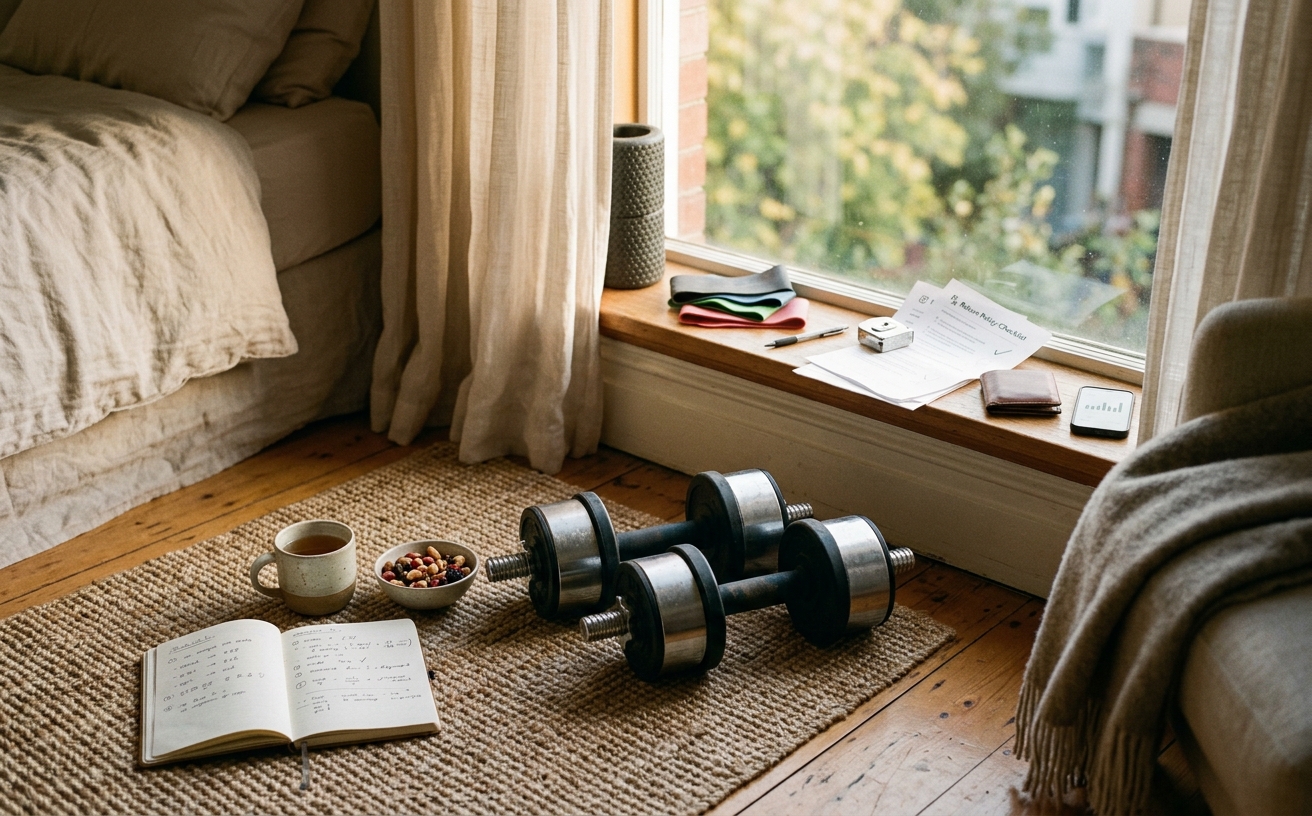
The life constraint comes first; the product claim stays on probation.
If you are moving your resistance training from a commercial gym to a spare room or a small apartment corner, space is usually the immediate constraint. Adjustable dumbbells consolidate an entire rack of weights into two handles and a base mechanism, saving both floor space and upfront costs. Choosing the right set requires balancing your budget against how quickly you need to change weights between sets, the maximum load you plan to lift, and the physical footprint of the equipment.
This document examines the mechanics of dial, pin-select, and traditional spinlock systems. We look at the concrete trade-offs of each design so you can assess which style fits your training habits, floor space, and joints. Buying fitness equipment for your home is an exercise in compromise; understanding how a dumbbell's shape changes as the weight increases, or how fragile its internal gears might be, will help you avoid overspending on features that do not match your routine.
Medical and Physical Boundaries: Who Should Skip This
The information provided here is for general educational purposes only and does not constitute medical advice. Before purchasing heavy resistance equipment or beginning a new training block, consider your physical baseline.
- Skip adjustable dumbbells if you have acute wrist, elbow, or shoulder injuries. The bulky nature of some adjustable blocks can alter your natural range of motion and place unintended torque on recovering joints.
- Consult a physiotherapist if you experience chronic lower back pain, pelvic floor dysfunction, or are recovering from abdominal surgery. Lifting heavy loads from the floor requires proper bracing mechanics.
- Seek medical clearance if you are pregnant, as hormonal changes can cause joint laxity, making the awkward handling of oversized dumbbells a potential injury risk.
- Speak with a clinician if you are managing a chronic illness that affects balance or grip strength, or if you have a history of an eating disorder where exercise compulsion is a risk factor.
- If you are currently taking medications that cause dizziness or affect bone density, get individualized advice from your healthcare provider before lifting weights at home.
Understanding the Three Main Adjustment Mechanisms
The core difference between adjustable dumbbell models lies in how they lock the weight plates to the handle. This mechanism dictates the price, durability, and speed of your workouts.
Dial Systems
Dial dumbbells feature a rotating gear at the end of the handle or within the grip itself. When the dumbbell sits in its cradle, turning the dial selects the desired weight, locking the necessary plates onto the handle and leaving the rest behind.
The primary advantage here is speed. If your routine relies heavily on supersets—moving immediately from a heavy chest press to a lighter bicep curl—dial systems allow you to transition in seconds. However, the internal locking mechanisms are often made of heavy-duty plastic. They are notoriously fragile if dropped. If you are someone who trains to mechanical failure and tends to drop weights on the floor, a dial system will likely break, rendering the entire unit unusable.
Pin-Select (Selectorized) Systems
Similar to the weight stacks on commercial gym cable machines, these dumbbells use a magnetic or steel pin inserted into a central core to select the load. The plates are usually square or rectangular.
Pin-select models are generally more durable than dial systems because they rely on solid metal rods rather than intricate plastic gears. They also tend to have a flatter profile, which makes them feel slightly more like a traditional dumbbell. The trade-off is the price, as these are typically the most expensive options on the market. Additionally, aligning the pin perfectly can sometimes take a few extra seconds compared to a dial.
Traditional Spinlock Handles
The oldest and most basic design consists of a threaded metal handle, loose cast-iron plates, and a star-shaped collar that spins down the threaded sleeve to secure the load.
Spinlocks are virtually indestructible and highly affordable. You can drop them, leave them in a cold garage, and they will easily survive. The downside is the extreme inconvenience. Changing weights takes considerable time, disrupting your resting periods. Furthermore, the threaded metal ends always protrude past the plates, which can be painful if you need to rest the dumbbells on your thighs before a lift.
Weight Ranges: Buying for Your Current and Future Baseline
Adjustable dumbbells usually come in two standard weight categories: lighter sets that max out around 20kg to 24kg per hand, and heavier sets that reach 32kg to 40kg per hand. Selecting the right capacity requires an honest assessment of your current strength and the types of movements you plan to perform.
If your home workouts focus primarily on upper body isolation movements—such as lateral raises, bicep curls, tricep extensions, and light shoulder presses—a 24kg set provides ample room for progressive overload over several years. These lighter sets are physically smaller, easier to maneuver, and significantly cheaper.
Conversely, if you intend to use dumbbells for heavy compound lower body movements like Bulgarian split squats, Romanian deadlifts, or goblet squats, you will likely outgrow a 24kg set relatively quickly. Lower body muscles adapt and require heavier loads to stimulate growth. In this scenario, investing in a 40kg set prevents you from needing to purchase a completely new system a year down the line. Keep in mind that 40kg adjustable sets are exceptionally bulky and require careful handling.
Handling Realities and Ergonomics
The physical shape of an adjustable dumbbell heavily influences the user experience. Unlike fixed dumbbells at a commercial gym, which grow proportionally larger as the weight increases, many adjustable dumbbells maintain a fixed length regardless of the selected weight.
For example, if you select 4kg on certain dial models, you are still maneuvering a handle that is long enough to hold 24kg. When performing exercises like overhead shoulder presses or chest flyes, these long empty ends can clash together at the top of the movement, forcing you to alter your natural lifting trajectory.
Another critical ergonomic factor is the knee rest test. When preparing for a heavy dumbbell bench press, standard practice involves resting the weights vertically on your thighs and using your legs to help kick them back into the starting position. Spinlock dumbbells have a sharp metal rod protruding from the end, making this maneuver incredibly painful. Some dial systems have plastic cages on the ends that can also dig into your legs. If heavy pressing is a core part of your routine, look for selectorized or flat-ended designs that provide a smooth, flat surface to rest against your thighs.
Finally, consider how you hold the weight for exercises like goblet squats or overhead tricep extensions, where you must cup the end of the dumbbell with both hands. Bulky dial mechanisms or square pin-select plates can make finding a secure, comfortable grip challenging.
Storage and Maintenance Constraints
While adjustable dumbbells save space compared to a full rack, they still require a dedicated footprint. Most systems must be kept in their specific molded cradles to function properly.
Lifting a heavy pair of 30kg dumbbells directly off the floor from their cradles repeatedly can place immense strain on your lower back, particularly when you are fatigued at the end of a workout. If budget and space allow, purchasing the matching elevated stand is highly recommended. A stand brings the weights up to waist height, allowing you to lift and return them with safe, upright biomechanics.
Regarding maintenance, dial and pin systems require a clean, dry environment. Storing them in a dusty shed or a damp garage can lead to debris clogging the internal gears or rust forming on the selector pins. They are best suited for indoor use, such as a spare bedroom, home office, or climate-controlled living area.
A Practical Pre-Purchase Checklist
Before committing to a specific model, run through this practical audit of your home training environment and habits.
- Assess your drop risk: Do you frequently push sets to absolute failure where you might involuntarily drop the weight? If yes, avoid dial systems entirely and opt for spinlocks or highly durable pin-select models.
- Evaluate your programming: Does your routine rely on rapid weight changes, such as drop sets or fast-paced circuits? If yes, spinlocks will cause too much frustration, making a dial or pin system necessary.
- Measure your floor space: Ensure you have enough room not just for the cradles, but for the optional stand if you plan to buy one. Measure the exact dimensions of your available corner.
- Check the handle grip: Some adjustable models have thick, contoured rubber grips, while others have straight, knurled metal handles. If you have smaller hands, carefully check the handle diameter specifications before buying, as a grip that is too thick will fatigue your forearms prematurely.
- Review the warranty terms: Because adjustable dumbbells contain moving parts, they are susceptible to mechanical failure. Check if the manufacturer offers a warranty that specifically covers the internal locking mechanisms, and read the fine print regarding drop damage.
Frequently Asked Questions
Are adjustable dumbbells safe to drop?
Generally, no. While fixed rubber hex dumbbells at a commercial gym are designed to be dropped, the internal gears, plastic dials, and selector pins of adjustable models can bend or shatter upon impact. Always return them to their cradles with control.
Can I use them for kettlebell swings?
It is highly discouraged. The dynamic, swinging nature of a kettlebell swing places unique centrifugal force on the weight. The locking mechanisms of adjustable dumbbells are designed for traditional, controlled lifting trajectories. The bulky shape also makes them dangerous to swing between your legs.
Do I really need the elevated stand?
It is not strictly mandatory, but it significantly improves safety and convenience. If you are lifting weights heavier than 15kg, picking them up from floor-level cradles while hunched over compromises your lower back. A stand is a worthwhile investment for long-term joint health and ease of use.