The life constraint comes first; the product claim stays on probation.
Most desk workers know they should move more throughout the day. You search for a solution, find a highly produced video, and quickly realize it requires lying on your office floor or changing into activewear. That simply does not happen in a real working environment. The intent here is to find movements that fit quietly into a Tuesday afternoon without drawing attention or requiring a change of clothes.
Finding a routine that actually sticks means abandoning the idea of a midday workout and focusing instead on micro-dosing movement. This review brief evaluates the mechanics of a successful desk mobility approach, looking at why popular programs fail and detailing a grounded, equipment-free routine designed specifically for the realities of modern desk work.
The Problem with Popular Office Mobility Programs
Many wellness platforms offer desk stretching routines that look impressive on a screen but fail completely in a practical office environment. When we review popular mobility apps, a common flaw emerges: they assume you have twenty uninterrupted minutes, a yoga mat, and a willingness to sweat in your work attire. If a routine requires you to get down on the carpet in a corporate setting, or leaves you feeling flustered before a team meeting, you will inevitably abandon it.
Another frequent issue with app-based mobility is notification fatigue. Being pinged to stretch while you are in the middle of deep, focused work is irritating. Instead of encouraging movement, these interruptions often lead users to delete the application entirely. A sustainable approach requires acknowledging the constraints of your workday. Movement needs to be low-barrier, require zero equipment, and focus strictly on the areas that bear the brunt of prolonged sitting: the neck, the thoracic spine, and the hips.
Understanding the Physiology of Desk Stiffness
To understand why we need to move, it helps to look at how human tissue adapts to its environment. When you sit in a chair for hours, your body actively adapts to that specific shape. The muscles on the front of your body, such as the hip flexors and chest muscles, remain in a shortened position. Over time, the nervous system accepts this shortened state as the new normal, which reduces your overall flexibility.
Conversely, the muscles on the back of your body, including the glutes, the rhomboids, and the lower back, are stretched out and largely disengaged. This combination of tight front muscles and weak back muscles is a primary driver of the heavy, aching sensation many people experience by mid-afternoon. A mobility routine acts as a regular physical reminder to your nervous system that you are capable of other postures. By gently lengthening the shortened tissues and briefly engaging the weakened ones, you interrupt the body's adaptation to the chair.
Core Principles for a Sustainable Habit
Instead of trying to replicate a gym session at your desk, the goal is simply to interrupt sustained postures. The human body tolerates sitting perfectly well; what it dislikes is remaining in the exact same position for eight hours straight.
- Frequency over duration: Moving for two minutes every hour is generally more effective for joint stiffness than sitting still all day and stretching for twenty minutes in the evening.
- Low intensity: You are not trying to build extreme flexibility or push your physical limits. The objective is simply to restore blood flow and reduce muscular tension.
- No special clothing required: If a movement cannot be done in standard office attire, it does not belong in your desk routine.
How to Build the Habit Without Relying on Motivation
Relying on motivation to stretch at three in the afternoon is a losing strategy. By that time, decision fatigue has set in, and the urge to simply push through your inbox usually overrides the desire to look after your joints. Habit stacking offers a more reliable framework.
Habit stacking involves attaching a new, desired behavior to an existing, ingrained daily action. Instead of setting an arbitrary alarm that you are likely to ignore, look for natural pauses in your workday.
- The coffee routine: While waiting for your morning coffee to brew or the office kettle to boil, perform standing stretches. The environment provides a natural two-minute window.
- The post-meeting reset: Immediately after finishing a video call, before you open a new browser tab or check your phone, complete three seated spinal movements.
- The commute transition: If you work from home, the lack of a physical commute removes a natural transition period. Create a buffer by doing a quick posture check before officially starting your workday and immediately after shutting down your laptop.
The Five-Minute Desk Routine
Here is a practical sequence you can perform in your chair or standing right next to your desk. These movements target the most common areas of office-related stiffness.
Seated Thoracic Extensions
Prolonged typing pulls the shoulders forward and rounds the upper back. To counter this, sit at the edge of your chair with your feet flat on the ground. Interlace your fingers behind your head, keeping your elbows wide. Gently lean back over the top edge of your chair, lifting your chest toward the ceiling. Hold for three deep breaths, then return to neutral. Repeat this three times. Avoid arching your lower back; the movement should come entirely from your mid-back.
The Seated Figure-Four
Sitting shortens the hip flexors and can leave the glutes feeling tight. While seated, cross your right ankle over your left knee, creating a figure-four shape. Sit up perfectly tall. If you feel a stretch in your right hip or glute, hold this position. If you need more tension, hinge forward slightly from the hips, keeping your spine completely straight. Hold for twenty seconds, then switch legs.
Standing Desk Lunges
This movement is ideal for when you stand up to grab a glass of water. Face your desk and place your hands on the edge for balance. Step your right foot back into a shallow lunge, keeping your right leg mostly straight and your right heel off the floor. Tuck your pelvis slightly under, imagining you are pointing your tailbone toward the ground, and gently sink down until you feel a stretch in the front of your right hip. Hold for twenty seconds per side.
Chin Retractions
Screen time inevitably leads to a forward head posture, placing immense strain on the muscles at the base of the skull. Sit tall and look straight ahead. Without tilting your head up or down, pull your chin straight back, as if you are trying to make a double chin. You should feel a gentle lengthening at the back of your neck. Hold for three seconds, release, and repeat five times.
Reviewing Low-Tech Mobility Tools
While you do not need equipment to reduce desk stiffness, a few inexpensive items can make a noticeable difference, particularly if you work from home or have a private office setup.
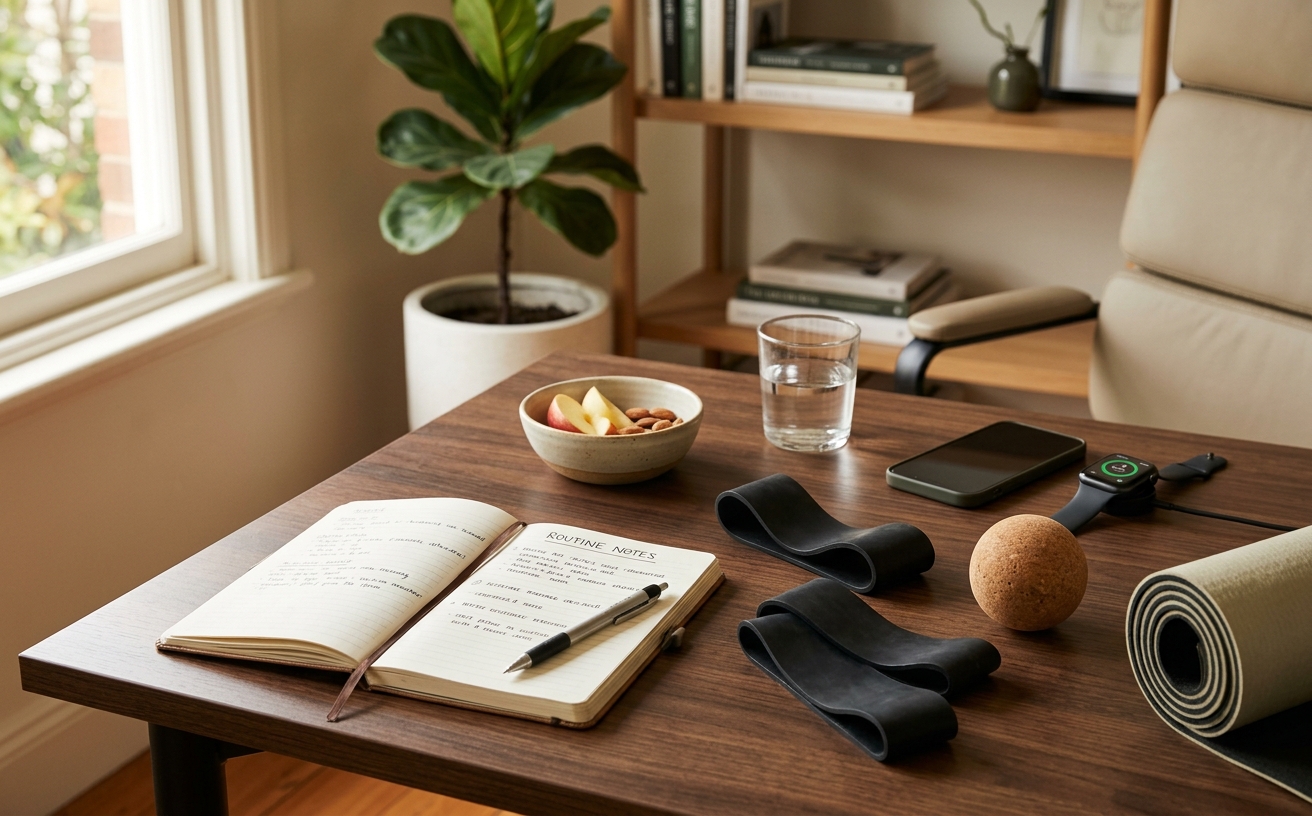
- The Lacrosse Ball: A dense massage ball is highly effective for targeting tight tissue in the feet. Rolling your foot over a lacrosse ball while reading emails is an excellent way to stimulate the plantar fascia. However, avoid rolling directly over the spine or any joints.
- Resistance Bands: Keeping a light resistance band in your drawer allows for quick posture resets. Holding the band in front of you and pulling it apart until it touches your chest engages the postural muscles of the upper back that weaken during prolonged sitting.
- Standing Desks: A standing desk is a valuable tool, but it is not a cure-all. Standing statically for four hours can cause as much lower back and foot fatigue as sitting. The true value of a sit-stand desk is the ability to transition. Aim to change positions regularly rather than standing all day.
- Under-Desk Footrests: If your chair height prevents your feet from resting flat on the floor, a footrest is essential. Dangling feet pull the pelvis out of alignment, making any mobility routine less effective because you immediately return to a compromised resting posture.
Who Should Skip This and When to Seek Help
General mobility routines are designed for everyday stiffness, not medical rehabilitation. Please observe these safety boundaries and consult a clinician if any of the following apply to you:
- Acute Pain or Injury: If you are experiencing sharp pain, numbness, tingling down your arms or legs, or have a recent injury like a disc herniation, do not attempt to stretch through it. Skip this routine entirely and consult a physiotherapist.
- Pregnancy: Hormonal changes during pregnancy, specifically the release of relaxin, increase joint laxity. Stretching can easily lead to overextension and pelvic instability. Pregnant individuals should seek tailored advice from a healthcare provider before adopting new mobility practices.
- Chronic Illness and Joint Conditions: If you have osteoarthritis, rheumatoid arthritis, osteoporosis, or a hypermobility spectrum disorder, standard stretching advice may be contraindicated. Always clear new movements with your specialist.
- Medication: Be cautious if you are taking strong pain relief or muscle relaxants. These medications can mask your body's natural stretch reflex, increasing the risk of overstretching and tissue damage.
- Mental Health and Compulsive Exercise: If tracking your movement or adhering to strict physical routines triggers anxiety, distress, or compulsive exercise behaviors, step away from structured mobility plans. Movement should relieve physical tension, not add to psychological burdens.
If your desk posture is causing severe headaches, chronic back spasms, or ongoing distress, a generic routine is insufficient. Seek a clinical assessment to address the root cause.
Routine Audit: Setting Up Your Environment
A routine only sticks if the physical environment supports it. Take ten minutes to audit your workspace. Good ergonomics will reduce the amount of stretching you actually need to do.
- Monitor Height: Is the top third of your screen at eye level? If you have to look down constantly, your neck muscles are working overtime to support the weight of your head.
- Chair Support: Does your chair support the natural curve of your lower back? If your chair lacks lumbar support, a small rolled-up towel placed behind your lower back can provide immediate relief.
- Armrest Position: Your armrests should allow your shoulders to drop naturally. If they push your shoulders up toward your ears, lower them or remove them entirely.
Frequently Asked Questions
How often should I do these movements?
Aim for brief interruptions rather than long sessions. Performing one or two stretches for sixty seconds every hour or two is highly effective. The goal is consistent, mild movement throughout the day to prevent stiffness from accumulating.
Is it normal for my joints to click when I stretch?
Painless clicking or popping is usually just the release of gas bubbles in the joint fluid and is generally harmless. However, if the clicking is accompanied by pain, swelling, or a feeling of instability, stop the movement immediately and consult a clinician.
Will this routine fix my posture completely?
No mobility routine can entirely counteract the effects of a poorly set up desk. Think of these movements as daily maintenance. Long-term postural health requires a combination of an ergonomic workstation setup, regular cardiovascular exercise, and targeted strength training.