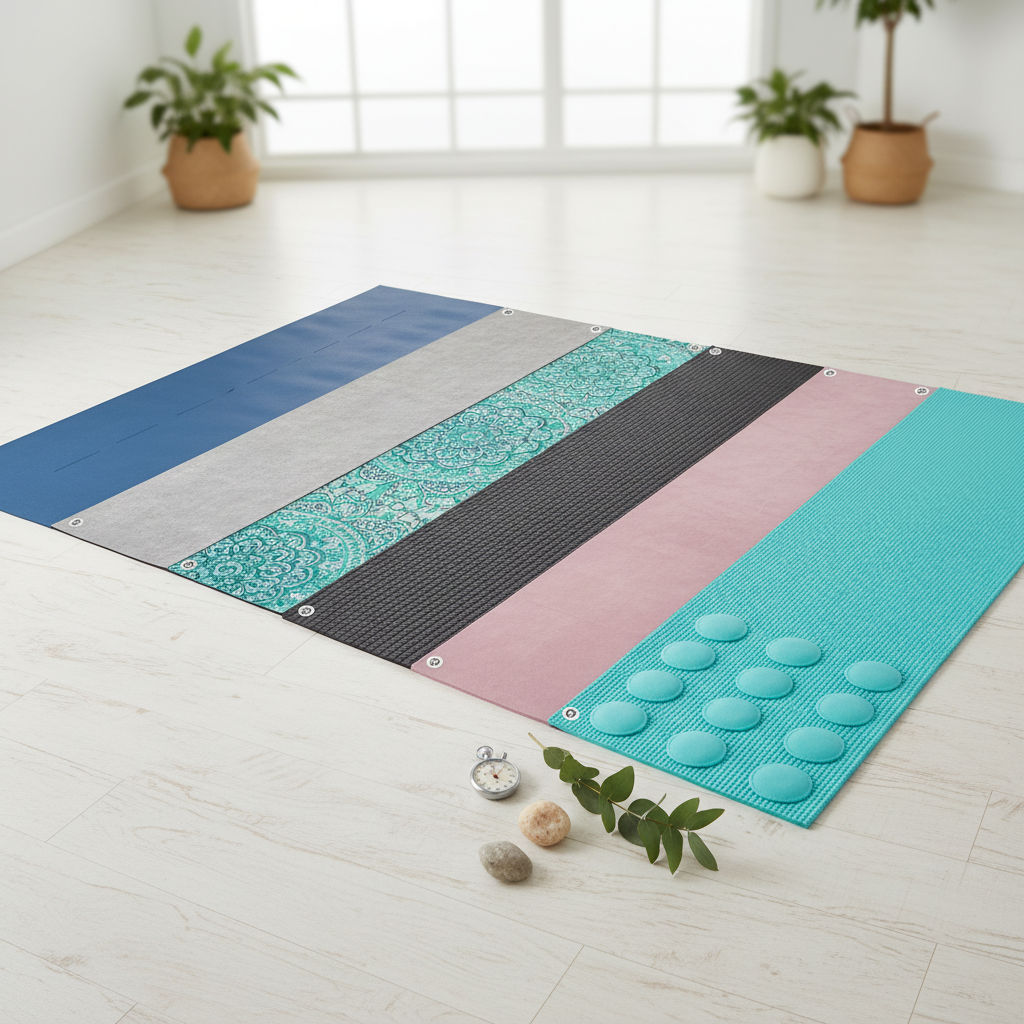
Best Yoga Mats UK: 7 Mats Tested for Grip, Comfort and Durability
Alright, fellow yogis and fitness enthusiasts, let's talk mats. Because let's be honest, your yoga mat is more than just a piece of rubber or foam you unroll twice a week. It’s your sanctuary, your foundation, the silent witness to your wobbly warrior poses and triumphant inversions. A good mat can make or break your practice, offering the stability to hold a tricky balance, the cushioning to protect your joints, and the durability to withstand years of downward dogs. A bad one? Well, that's a recipe for slipping, discomfort, and general frustration – trust me, I've been there. For us here in the UK, with our wonderfully varied climate and equally varied yoga studios (or living room floors!), choosing the right mat can feel a bit like navigating the M25 at rush hour. There are so many options out there, each promising the moon and the stars. That's why I've put seven of the most popular and promising mats through their paces, subjecting them to everything from sweaty Vinyasa flows and challenging Ashtanga sequences to calming Hatha sessions and restorative stretches. We’re talking grip, comfort, durability, and a sprinkle of environmental impact thrown in for good measure. So, if you’re looking to upgrade your current mat, embarking on your yoga journey for the first time, or just curious about what’s out there, settle in, get comfy, and let’s dive into the nitty-gritty of what makes a yoga mat truly brilliant.Why Your Yoga Mat Matters More Than You Think
Before we get into the individual reviews, it’s worth a moment to reflect on why investing in a quality mat is actually a brilliant idea. Beyond the obvious fact that it stops you from sliding across the floor like Bambi on ice, a good mat offers crucial support. Think about the impact on your wrists, knees, and hips during certain poses. Proper cushioning can significantly reduce discomfort and potential strain, something that becomes even more important as we get older or if we have pre-existing joint issues. Studies, for example, often highlight the importance of proper joint protection in exercise to prevent long-term damage and improve overall musculoskeletal health. A mat that’s too thin or too firm just won’t cut it. Then there's the grip. Oh, the grip! If you've ever felt your hands or feet inching away from where you placed them in Downward Dog, you know the struggle. A non-slip surface isn't just about preventing embarrassing tumbles; it allows you to fully engage your muscles, trust your foundation, and focus on your alignment and breath, rather than constantly adjusting and worrying about slipping. This focus, as many yoga practitioners and even sports psychologists will attest, is key to unlocking the deeper benefits of yoga, improving proprioception and body awareness. Finally, there’s the psychological aspect. Having a dedicated, comfortable, and reliable space sets the tone for your practice. It signals to your mind and body that it’s time to focus, to connect, and to move. It’s an investment in your well-being, both physical and mental.How We Tested These Mats
To give you the most honest and comprehensive review possible, I put these seven mats through a rigorous testing process over several weeks. Here’s what that involved:- Varied Yoga Styles: Each mat was tested across a range of yoga disciplines: dynamic Vinyasa, intense Ashtanga, slower Hatha, precise Iyengar, and gentle Restorative yoga. This helped assess grip under different sweat levels and the need for cushioning in various poses.
- Different Environments: Testing took place on hardwood floors, carpet, and even outdoors on a slightly uneven patio to simulate various real-world practice conditions.
- Multiple Users: While I was the primary tester, I also enlisted the help of fellow yogis with different body types and experience levels to gather a broader range of feedback on comfort and grip.
- Durability Checks: I paid close attention to how each mat held up to repeated rolling, unrolling, cleaning, and general wear and tear, looking for signs of fraying, peeling, or loss of resilience.
- Sweat Test: This was crucial for grip. I specifically focused on mats during hotter, more intense sessions to see how well they maintained their grip when things got a bit… clammy.
- Portability Assessment: For those who commute to classes, how easy was the mat to roll, unroll, carry, and store?
Key Factors We Considered for Each Mat
When evaluating each mat, I focused on these critical attributes:- Grip: The absolute king of criteria. How well did hands and feet stay put, both dry and sweaty?
- Comfort & Cushioning: Was there enough padding to protect joints (knees, wrists, spine) without feeling too squishy or unstable?
- Durability: How solid did the mat feel? Would it stand the test of time and regular use?
- Material & Eco-Friendliness: What was it made of? Was it sustainable, non-toxic, and easy to clean?
- Weight & Portability: How heavy was it to carry? Did it roll up easily without curling?
- Price: Was it good value for money considering its features and performance?
The Mats Under the Microscope
1. The Everyday Yogi PVC Mat
Let's kick things off with a classic. The Everyday Yogi PVC Mat is, as the name suggests, a ubiquitous presence in homes and studios across the UK. It's often one of the first mats people buy due to its accessibility and attractive price point. Made from PVC (Polyvinyl Chloride), it's a closed-cell foam, meaning it doesn't absorb moisture, which has its pros and cons.
Specifications:
- Material: PVC (Phthalate-free)
- Thickness: 4mm
- Dimensions: 183cm x 61cm
- Weight: Approx. 1.2kg
- Price: £15-£25
Testing Experience:
Upon unrolling, there was a faint, plasticky smell, which largely dissipated after a day or two of airing out. The initial grip was decent for dry practices like Hatha or gentle Vinyasa. However, as soon as sweat entered the equation during a more dynamic Ashtanga session, I found myself slipping, particularly my hands. The closed-cell nature means sweat pools on the surface rather than being absorbed. This required using a towel for anything intense, which, while fine, adds another layer of faff.
Cushioning at 4mm was adequate for my knees and wrists on a wooden floor, but just barely. Anyone with sensitive joints might find it a little thin for sustained kneeling poses. Durability-wise, it felt sturdy enough for regular light use, but I could envision the surface wearing down over time with intense friction, and it did show some minor indentations from prolonged pressure. It's lightweight and rolls up easily, making it reasonably portable for carrying to local classes.
Pros:
- Very affordable, excellent entry-level option.
- Lightweight and easy to transport.
- Closed-cell structure makes it easy to wipe clean and hygienic.
- Good initial dry grip for less strenuous practices.
Cons:
- Poor grip when wet/sweaty, requiring a towel for dynamic practices.
- Can feel a bit thin for sensitive joints.
- Not the most eco-friendly material (though many are now phthalate-free).
- Takes time to break in and lose the initial "new mat" smell.
Best For: Beginners, those on a tight budget, gentle yoga styles, or as a spare mat.
2. The ZenFlow Pro Natural Rubber Mat
This mat immediately signals premium quality. Made from sustainably sourced natural tree rubber, The ZenFlow Pro is designed for serious practitioners who demand uncompromising grip and support. It's often compared to some of the most famous high-end mats on the market, promising a practice without distractions.
For more on this topic, check out our Best Foam Rollers UK: 6 Options for Recovery and Mobility.
Specifications:
- Material: Natural Tree Rubber (biodegradable, non-toxic)
- Thickness: 5mm
- Dimensions: 180cm x 66cm
- Weight: Approx. 2.8kg
- Price: £80-£110
Testing Experience:
From the moment I unrolled it, I was impressed. There's a distinct, earthy rubber smell, which is natural and reassuring, rather than chemical. The grip is phenomenal, right out of the box. Whether my hands and feet were dry or slick with sweat during a hot Vinyasa flow, they stayed exactly where I put them. The open-cell surface of the rubber seemed to wick away moisture effectively, maintaining traction throughout. This is where the scientific understanding of material properties comes in – the inherent stickiness and texture of natural rubber, combined with its cellular structure, creates superior friction.
The 5mm thickness provided excellent cushioning. My knees felt fully supported in kneeling poses, and there was a satisfying density that offered stability without feeling too soft. It's a heavy mat, though. At 2.8kg, it's not one you'd want to lug across London every day, but for studio use or home practice, its weight contributes to its unshakeable stability on the floor. Durability-wise, it felt incredibly solid; I anticipate this mat lasting for many years, even with daily practice. It lies perfectly flat from the first unroll.
Pros:
- Exceptional, consistent grip, even when sweaty.
- Excellent cushioning and stability for joint protection.
- Made from eco-friendly, biodegradable natural rubber.
- Very durable and built to last.
- Lays perfectly flat.
Cons:
- Expensive upfront investment.
- Heavy, making it less portable for daily commutes.
- Natural rubber scent can be strong initially for some (though it fades).
- Requires specific cleaning care (avoid harsh chemicals).
Best For: Dedicated yogis, those with joint sensitivity, hot yoga practitioners, and anyone seeking a high-performance, eco-conscious mat for home or studio use.
3. The EcoWarrior TPE Mat
TPE (Thermoplastic Elastomer) mats are a popular choice for their balance of performance and environmental consciousness. The EcoWarrior TPE Mat aims to provide a good middle-ground option for those looking to step up from a basic PVC mat without breaking the bank for a natural rubber alternative.
Specifications:
For more on this topic, check out our Sauna Blanket vs Traditional Sauna: Which Is Better for Recovery?.
- Material: TPE (recyclable, non-toxic, PVC and latex-free)
- Thickness: 6mm
- Dimensions: 183cm x 61cm
- Weight: Approx. 1.0kg
- Price: £25-£40
Testing Experience:
The first thing I noticed was how incredibly light this mat was – a pleasant surprise given its 6mm thickness. There was virtually no odour upon unrolling. The grip was quite good for dry practice, providing a reliable surface for Hatha and Vinyasa flows where I wasn't sweating excessively. However, similar to the PVC mat, but to a lesser extent, I found my hands starting to slip during more intense, sweat-inducing sequences. It performed better than PVC in damp conditions, but still not perfectly.
The 6mm thickness was a definite highlight. It provided ample cushioning for my knees and spine, making seated poses and floor work much more comfortable. This is a great thickness for those who need a bit more padding but don't want a super heavy mat. The material felt soft and pleasant to the touch. Durability-wise, it seemed decent, but perhaps not as solid as natural rubber. I noticed very minor impressions after holding a plank for a long time, but they bounced back quickly. Its lightness makes it incredibly portable, a huge plus for those who cycle or walk to classes.
Pros:
- Excellent cushioning due to 6mm thickness.
- Very lightweight and highly portable.
- Eco-friendly and recyclable TPE material, non-toxic.
- Good dry