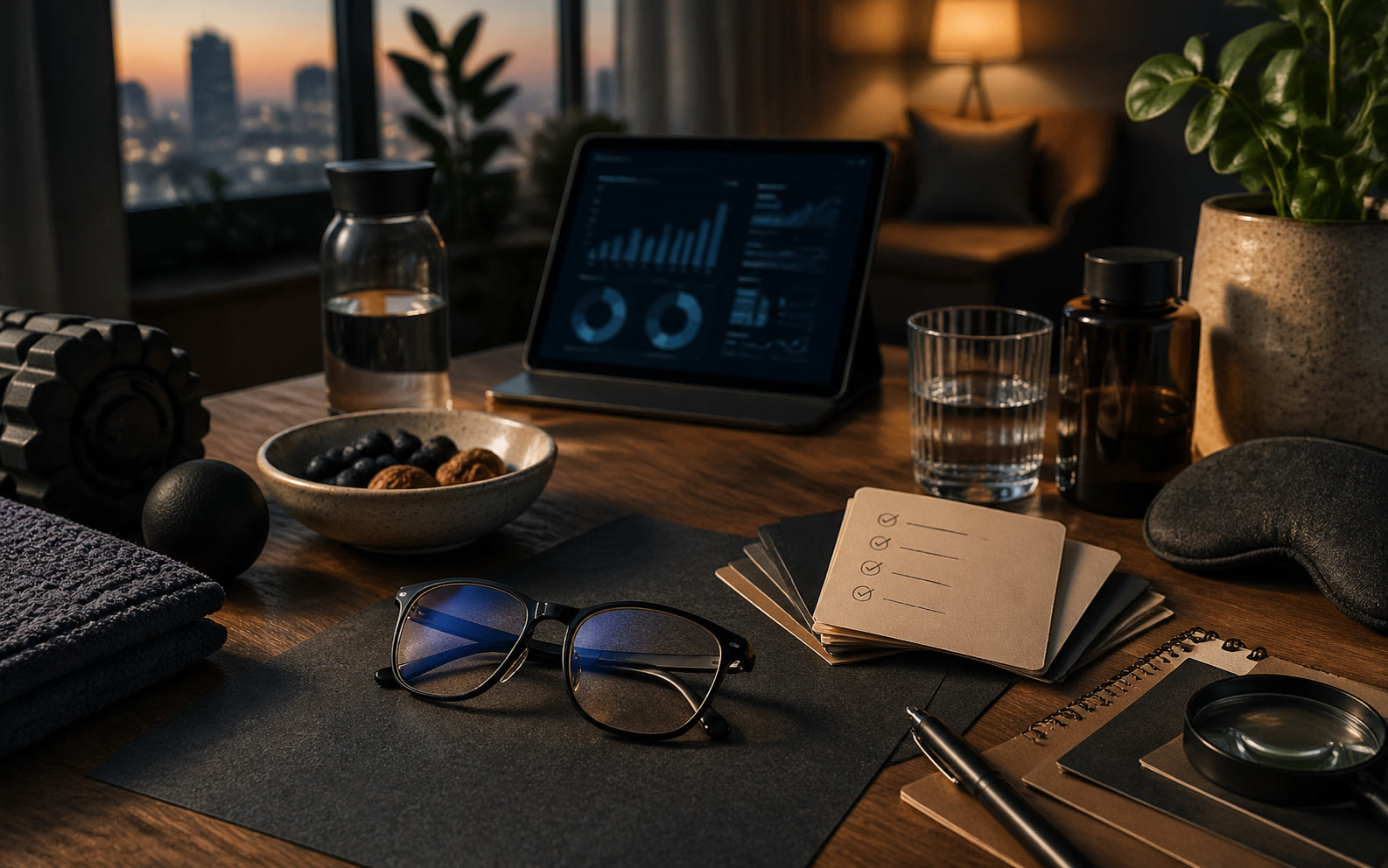
The life constraint comes first; the product claim stays on probation.
Most of us spend our days staring at screens, leading to tired, gritty eyes and delayed sleep. Blue light glasses are heavily marketed as the primary fix for these modern discomforts. However, if you are looking for the current scientific consensus, the verdict is quite clear: blue light from digital screens is not the primary cause of digital eye strain, and blue light blocking glasses are not a necessary purchase for most people.
The fatigue you experience at your desk is entirely real, but it is largely caused by a significant reduction in how often you blink and the sustained muscular effort of focusing on a fixed, close object for hours. Regarding sleep, wearing amber-tinted lenses might offer minor benefits by preventing melatonin suppression before bed, but free software settings on your devices can do the exact same job. At Healthiz, we prefer to look closely at the mechanics of why our bodies react the way they do, rather than relying on heavily marketed accessories. This evidence check breaks down what the current clinical data actually says about blue light, eye strain, and your circadian rhythm.
The Claim vs. The Evidence on Digital Eye Strain
The most common reason people purchase blue light glasses is to combat digital eye strain, clinically referred to as Computer Vision Syndrome. Symptoms include dry eyes, blurred vision, headaches, and a general feeling of ocular fatigue after a long workday. Retailers often suggest that the specific blue wavelengths of light emitted by laptops and smartphones are damaging your eyes and causing this discomfort.
The current consensus from major optometry and ophthalmology bodies indicates that the blue light from your screen is not causing your eye strain. In fact, the amount of blue light emitted by digital devices is a fraction of what you are exposed to simply by stepping outside on a cloudy day. There is no reliable clinical evidence that the low-level blue light from screens causes physical damage to the structures of the eye or leads to macular degeneration.
So, why do your eyes hurt? The answer lies in the physical mechanics of screen use. When humans engage in intensive, close-up visual tasks, our blink rate plummets. A normal resting blink rate is around fifteen times per minute. When staring at a digital screen, that rate drops to roughly five to seven times per minute. Furthermore, many of these are partial blinks, where the eyelid does not fully close. This lack of blinking causes the tear film on the surface of your eye to evaporate rapidly, leading to the dry, burning sensation we associate with screen fatigue.
Additionally, focusing on a screen requires continuous effort from the ciliary muscles inside your eyes. Holding that focus at a fixed distance for hours is akin to holding a light dumbbell at arm's length; eventually, the muscle fatigues. Blue light glasses do not change your blink rate, nor do they relax your ciliary muscles. If you find relief while wearing them, it is highly likely due to the anti-reflective coating applied to the lenses, which reduces screen glare, rather than the blue light filter itself.
Do They Help With Sleep and Circadian Rhythms?
The secondary claim surrounding blue light glasses is that they improve sleep quality. Here, the evidence is slightly more nuanced, though still heavily overstated by manufacturers.
Our circadian rhythms—the internal clocks that dictate our sleep-wake cycles—are highly sensitive to light. Historically, the setting of the sun and the resulting darkness signaled to the brain that it was time to release melatonin, the hormone that facilitates sleep. Blue light, specifically, is a strong suppressor of melatonin. Exposure to bright, blue-rich light in the morning is excellent for waking you up and setting your daily rhythm. However, exposure to blue light from screens late in the evening can trick your brain into thinking the sun is still up, delaying melatonin production and making it harder to fall asleep.
Studies show that blocking blue light in the two hours before bed can help maintain natural melatonin levels. However, the type of glasses matters immensely. The clear lenses typically sold for daytime office use only block about ten to twenty percent of blue light, which is largely ineffective for sleep purposes. To meaningfully block blue light, lenses must be tinted dark amber, orange, or red. These heavily tinted glasses do work to block the specific wavelengths that suppress melatonin.
The practical reality is that you do not need to buy amber glasses to achieve this effect. Simply putting away devices an hour before bed, dimming your overhead lights, or using built-in software filters that warm the color temperature of your screen will provide a similar benefit without the need for a physical product.
Red Flags: When to Skip Blue Light Glasses (and See a Clinician)
It is important to recognize when a heavily marketed wellness product is masking a condition that requires actual medical attention. Blue light glasses are a consumer accessory, not a medical intervention. You should skip purchasing these glasses and consult a healthcare professional—such as an optometrist, ophthalmologist, or general practitioner—if you experience any of the following:
- Severe or Chronic Dry Eye: If your eyes are consistently red, painful, or gritty even when you are not using screens, you may have Dry Eye Disease, which requires specific medical management, prescription drops, or tear duct interventions.
- Sudden Vision Changes: Any sudden blurring, double vision, flashes of light, or an increase in floaters requires immediate medical evaluation, as these can be signs of serious ocular conditions.
- Chronic Headaches or Migraines: If screen use consistently triggers severe headaches or migraines, you need a proper neurological or optometric assessment. You may need a specific prescription for astigmatism or a convergence issue, not just a blue light filter.
- Diagnosed Sleep Disorders: If you suffer from chronic insomnia, sleep apnea, or other diagnosed sleep disorders, blue light glasses will not cure your condition. Relying on them instead of seeking evidence-based treatments like Cognitive Behavioral Therapy for Insomnia (CBT-I) can delay meaningful recovery.
- Mental Health Risks: If severe sleep deprivation is exacerbating anxiety, depression, or other mental health conditions, please consult a clinician immediately rather than attempting to self-manage with wellness accessories.
- Existing Eye Conditions or Injuries: If you have glaucoma, cataracts, a history of eye surgery, or a recent eye injury, always follow your specialist's advice regarding eyewear and screen habits.
A Practical Audit: Free Alternatives to Try First
Before spending money on blue light glasses, we recommend conducting a simple audit of your workspace and daily habits. These free, evidence-based adjustments directly address the root causes of digital eye strain and sleep disruption.
The 20-20-20 Rule
This is the most effective defense against ciliary muscle fatigue. Every twenty minutes, look away from your screen and focus on an object at least twenty feet away for a full twenty seconds. This brief pause allows the focusing muscles in your eyes to relax and reset. You can use a free timer app on your phone or computer to remind you until it becomes a habit.
Workspace Ergonomics
The position of your monitor significantly impacts your eyes. Your screen should be roughly an arm's length away, with the top of the monitor at or slightly below eye level. When you look slightly downward at a screen, your eyelids naturally cover more of your eye's surface, reducing the area exposed to the air and slowing down tear evaporation.
Software Filters
Instead of wearing glasses to filter the screen, filter the screen itself. Most modern operating systems have built-in features like Night Shift (Apple), Night Light (Windows), or third-party applications like f.lux. These programs automatically reduce the blue light emitted by your screen as the sun goes down, shifting the display to a warmer, amber tone. This is highly effective for evening computer work.
Manage Ambient Lighting
Eye strain is often exacerbated by the contrast between a bright screen and a dark room, or by harsh overhead lighting reflecting off your monitor. Ensure your workspace is evenly lit. Position your monitor so that windows are to the side of you, rather than directly in front of or behind the screen, to minimize glare.
Conscious Blinking and Hydration
Because screen use suppresses your blink rate, you have to consciously remind yourself to blink fully and frequently. If you work in an air-conditioned or heated environment, the air is likely very dry. Using a small desk humidifier can add moisture back into your immediate environment, which helps stabilize your tear film. Over-the-counter lubricating eye drops (artificial tears) can also provide temporary relief, but avoid drops marketed specifically for reducing redness, as these can cause rebound redness with frequent use.
If You Still Want to Buy Them: What to Look For
We recognize that some people simply like the physical boundary of wearing glasses. For remote workers, putting on a pair of glasses can serve as a psychological cue that the workday has started, and taking them off signals that work is over. If you have decided to purchase a pair, here is how to navigate the options.
First, prioritize an anti-reflective or anti-glare coating. As mentioned earlier, reducing the glare from your screen and overhead lights is the most helpful feature these glasses can offer. Check the product specifications to ensure this coating is included, as cheap plastic lenses without it will actually increase reflections and worsen eye strain.
Second, decide whether you need them for daytime focus or evening sleep preparation. If you want them for daytime use in an office, opt for clear lenses with an anti-reflective coating. Accept that they are mostly serving as glare-reducers and a psychological tool. If your primary goal is to protect your evening melatonin production, you must look for lenses with a dark amber or red tint that specify they block over ninety percent of blue light in the 400 to 500-nanometer range. Be aware that these will heavily distort colors, making them unsuitable for design work or watching visually detailed media.
Finally, if you already wear prescription glasses, do not buy non-prescription blue light glasses to wear over your contacts. Book an appointment with your optometrist. Your eye strain might be due to an outdated prescription. When you order new glasses, you can choose to add an anti-reflective coating, which will serve you much better than a generic blue light filter.
Frequently Asked Questions
Can I wear blue light glasses all day?
While wearing clear blue light glasses all day is generally harmless, it is not strictly necessary. However, you should avoid wearing dark amber or orange melatonin-blocking glasses during the day. Your body needs exposure to bright blue light during daylight hours to maintain alertness, regulate mood, and set a healthy circadian rhythm. Blocking daytime blue light can leave you feeling lethargic.
Do blue light glasses protect against UV rays?
Most high-quality polycarbonate lenses, including those sold as blue light blockers, do offer some level of UV protection. However, they are not a substitute for proper sunglasses. If you are going outside, you need dedicated sunglasses that offer one hundred percent UVA and UVB protection to safeguard your eyes from the sun, which is vastly more powerful than any digital screen.
Are blue light glasses bad for your eyes?
They are not physically harmful to your eyes. The primary risk associated with blue light glasses is that they create a false sense of security. People often assume that because they are wearing protective glasses, they can stare at a screen for ten hours straight without taking breaks. The glasses will not prevent the dry eye and muscle fatigue that comes from prolonged, uninterrupted screen time.