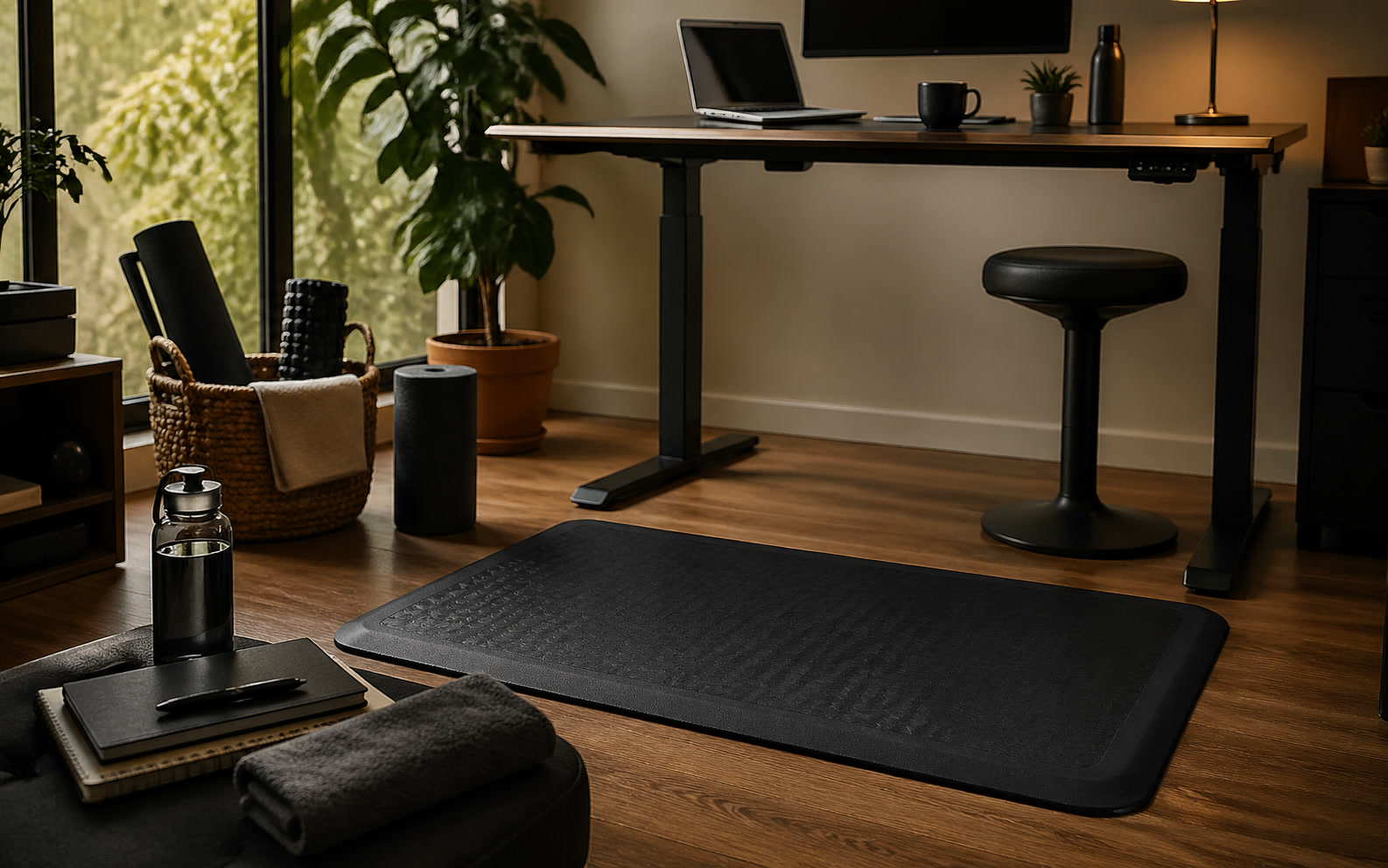
The life constraint comes first; the product claim stays on probation.
When you transition to a standing desk, the initial enthusiasm often gives way to a very grounded reality: standing on a hard floor for extended periods is uncomfortable. A home office floor, whether it is hardwood, tile, or thin carpet over a concrete slab, offers zero shock absorption. This static loading quickly leads to aching heels, stiff calves, and lower back fatigue.
A standing mat, often called an anti-fatigue mat, is designed to provide a supportive buffer between your feet and the floor. The primary benefit of these mats is not just softness, but the way they encourage micro-movements. By standing on a surface that yields slightly, your leg muscles constantly make tiny adjustments to maintain balance. This subtle, continuous muscle engagement helps promote blood flow and delays the onset of fatigue. However, a mat is a tool to make standing intervals more comfortable, not a medical treatment for joint pain or a reason to stand stationary for eight hours a day.
How Anti-Fatigue Mats Actually Work
The human body is built for movement, not for standing perfectly still. When you stand on a rigid surface, your leg muscles lock into place to keep you upright. Blood pools in the lower extremities, and the pressure on your joints and connective tissues remains constant. Over an hour or two, this static posture signals discomfort to your brain, prompting you to shift your weight or sit down.
An anti-fatigue mat disrupts this static loading. The slight instability of the mat's surface forces the calf muscles to act as a pump. As these muscles contract and release in tiny increments, they assist the venous return of blood back up to the heart. This reduction in pooling is why your legs feel noticeably less heavy after standing on a proper mat compared to bare floorboards.
It is important to manage expectations. A high-quality mat will extend the time you can comfortably stand by perhaps twenty to forty minutes per session. It will not eliminate the need to alternate between sitting, standing, and walking throughout your workday.
Material Trade-Offs: Polyurethane vs. Foam
The interior material of a standing mat dictates its lifespan, support level, and overall value. The market is saturated with cheap options that look identical online but perform very differently under body weight.
Polyurethane (PU)
High-density polyurethane is the gold standard for standing mats. It provides a firm, buoyant support that does not compress entirely to the floor, even after hours of use. Polyurethane is highly resilient, meaning it bounces back to its original shape immediately. It resists punctures, does not curl at the edges, and generally lasts for years without degrading. While these mats are typically more expensive upfront, they offer the most reliable support for daily home office use.
Memory Foam and Gel
Mats made primarily of memory foam or gel often feel incredibly plush for the first five minutes. However, they are generally poorly suited for prolonged standing. Under sustained body weight, memory foam bottoms out, creating a crater. Instead of encouraging micro-movements, the crater effectively locks your feet into one position, increasing static strain on your ankles and knees. Gel mats can suffer from similar compression issues and are prone to leaking if punctured.
PVC (Polyvinyl Chloride)
Often found in budget mats, PVC is lightweight and inexpensive. Unfortunately, PVC mats tend to lack sufficient density for proper support. More concerning for a home office environment is that PVC is notorious for off-gassing strong chemical odors when new, and the edges frequently curl upwards over time, creating a significant tripping hazard.
Flat vs. Topographical Designs
Standing mats generally fall into two design categories. Choosing between them depends on your footwear habits and how much space you have around your desk.
Flat Mats
A standard flat mat is exactly what it sounds like: a level, cushioned rectangle.
- Pros: They are unobtrusive, easy to slide out of the way when you want to pull your chair in, and provide a stable surface if you prefer to wear shoes while working.
- Cons: They do not actively prompt you to stretch or change your stance, relying solely on the cushioning to provide relief.
Topographical (Active) Mats
Topographical mats feature 3D terrain. They might include raised ridges, sloped edges, massage mounds in the center, or textured tracks.
- Pros: These mats are excellent for fidgeters. The varied terrain encourages you to stretch your calves on the slopes, massage your arches on the raised bumps, and constantly shift your stance. They make standing an active, engaging process.
- Cons: They are almost exclusively designed to be used barefoot or in socks; shoes negate the benefits of the terrain and can damage the features. They also have a larger physical footprint and are much harder to kick out of the way when you lower your desk to sit.
Who Should Skip a Standing Mat
While anti-fatigue mats are helpful for the average home worker, they are not appropriate for everyone. Certain medical conditions and physical limitations require a different approach to workplace ergonomics.
Neuropathy and Balance Disorders: If you experience reduced sensation in your feet (such as from diabetic neuropathy), vertigo, or general balance instability, the yielding surface of a standing mat can increase the risk of falls. A firm, predictable floor is safer.
Acute Plantar Fasciitis or Achilles Tendinopathy: If you are currently managing severe, diagnosed foot or heel conditions, standing barefoot or in socks on a soft mat may exacerbate your symptoms. Soft surfaces allow the foot to pronate and the arch to drop, which can strain an inflamed plantar fascia. In these cases, wearing supportive indoor footwear with custom or prescribed orthotics on a firm surface is often required. Always consult your physiotherapist or podiatrist before altering your daily standing routine.
Pregnancy-Related Pelvic Pain: For those experiencing Symphysis Pubis Dysfunction (SPD) or general pelvic girdle pain during pregnancy, prolonged standing—even on a mat—can aggravate the joints. Frequent movement and supported sitting are usually prioritized over standing intervals. Discuss your work setup with your healthcare provider.
Mobility Aid Users: If your home office routine involves a wheelchair, a rolling walker, or crutches, a standing mat introduces an unnecessary obstacle and a severe tripping hazard. Mats should be entirely avoided in these setups.
A Checklist for Your Home Office Setup
Before adding a mat to your workspace, evaluate the practical logistics of your room. A mat that works perfectly in a commercial office might be frustrating in a cramped spare bedroom.
- The Chair Shuffle: You cannot roll an office chair over a standing mat. Doing so will permanently dent the mat, ruin the chair casters, and void the mat's warranty. Consider how easily you can move the mat aside. If you have limited floor space behind you, a large, heavy topographical mat might become a daily annoyance.
- Beveled Edges: This is a non-negotiable safety feature. The edges of the mat must taper gradually to the floor. Abrupt, thick edges are a constant tripping hazard, especially if you step away from your desk frequently to grab coffee or answer the door.
- Floor Traction: The underside of the mat needs to grip your specific floor type. If you have polished floorboards, ensure the mat has a high-friction base so it does not slide away when you lean forward.
- Pets: If you share your home office with cats or dogs, be aware that polyurethane and foam mats are very attractive scratching posts and chew toys. You may need to store the mat upright in a closet when not in use.
Maintenance and Hygiene
A home office mat will inevitably collect dust, dropped food, and foot oils, particularly if you use it barefoot. Regular cleaning extends the life of the material and keeps your workspace hygienic.
Polyurethane mats are generally water-resistant and easy to maintain. A weekly wipe-down with a damp cloth and a mild dish soap solution is usually sufficient. Avoid harsh chemical cleaners, bleach, or abrasive scrubbing brushes, as these can strip the protective outer layer of the mat, causing it to dry out and crack.
If you opt for a topographical mat with deep grooves and massage balls, be prepared to vacuum it regularly. Dust and pet hair accumulate rapidly in the crevices, making them slightly more tedious to clean than a standard flat mat.
Frequently Asked Questions
How long should I stand at my desk?
Ergonomic guidelines generally suggest alternating postures frequently rather than standing for hours on end. A common approach is 20 to 30 minutes of standing per hour, followed by sitting, and taking short walks. Listen to your body; if your lower back aches or your knees lock, it is time to sit down, regardless of whether you are using a mat.
Can I wear shoes on a standing mat?
Yes, on flat, high-density polyurethane mats, flat-soled indoor shoes work perfectly well. However, avoid high heels or shoes with sharp treads, as they can puncture the surface. If you use a topographical mat, socks or bare feet are recommended to actually feel and utilize the terrain.
Do standing mats work on carpet?
Most standing mats can be used on low-pile, commercial-style carpet. However, if your home office has thick, plush carpet, adding a soft mat on top creates a highly unstable, overly squishy surface. This double-layering forces your ankles to work too hard to maintain balance, which can lead to joint strain. If you have thick carpet, you may not need a standing mat at all, or you might benefit more from a firm chair mat designed for standing.