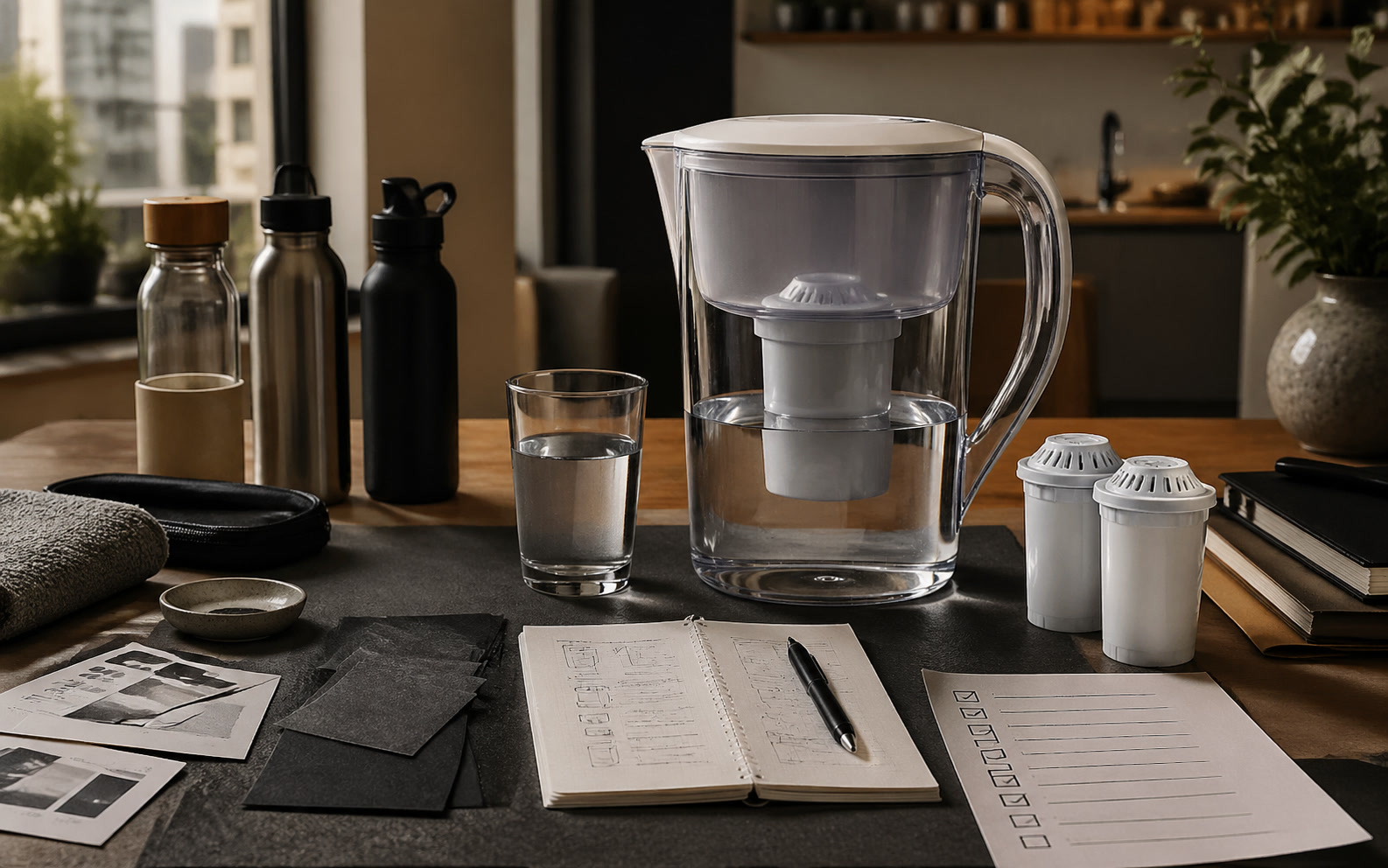
The life constraint comes first; the product claim stays on probation.
Most water filter pitcher purchases are driven by a sudden distaste for local tap water or a desire to stop buying single-use plastic bottles. But when you purchase a water filter pitcher, you are not just buying a kitchen accessory; you are subscribing to a new household routine. A pitcher requires regular filter replacements, weekly cleaning, and a permanent footprint in your refrigerator. Understanding these ongoing commitments is essential before deciding which model to bring into your home.
To find the right option, you need to look past the marketing claims on the box and focus on independent certifications, the physical dimensions of your kitchen space, and the specific contaminants you actually need to remove. Whether you are dealing with heavily chlorinated municipal water, older pipes that might leach trace metals, or simply a preference for chilled, crisp-tasting hydration, identifying your primary goal will dictate the type of filtration technology you require.
Evaluating Your Baseline Tap Water
Before evaluating pitchers, it is helpful to understand the baseline quality of your local water supply. In areas like Melbourne, municipal tap water is sourced from protected catchments, heavily regulated, and generally safe to drink straight from the tap. It is naturally soft, meaning it contains very low levels of dissolved minerals like calcium and magnesium. For residents in such areas, the primary reason to filter water is purely aesthetic: removing the distinct taste and smell of chlorine or chloramine used during the municipal disinfection process.
However, the journey from the municipal treatment plant to your kitchen sink involves miles of infrastructure. Older homes, particularly those built before the late twentieth century, may still have plumbing fixtures or solder containing trace amounts of lead or copper. If you live in an older building or notice a metallic taste, your filtration needs shift from simple aesthetics to basic safety. Testing your tap water through an independent laboratory can provide a clear picture of what you are actually dealing with, preventing you from overspending on heavy-duty filters you do not need, or underspending on basic filters that leave problematic contaminants behind.
Understanding NSF Certifications
The most critical detail to check on any water filter packaging is its independent certification. The gold standard for water filtration testing is NSF International, often listed alongside ANSI (American National Standards Institute). Without these specific certifications, a brand's claims about contaminant removal are largely unregulated promises.
NSF/ANSI Standard 42: Aesthetic Effects
This is the most common and basic certification. A filter with Standard 42 certification is proven to reduce non-health-related impurities, primarily chlorine, taste, odor, and visible particulate matter. If your only complaint about your tap water is that it smells faintly of a swimming pool, a Standard 42 filter is entirely sufficient.
NSF/ANSI Standard 53: Health Effects
If you are concerned about older plumbing or specific local agricultural runoff, you need a filter certified to Standard 53. This certification means the filter has been tested and verified to reduce contaminants that pose a known health risk. This list includes lead, copper, volatile organic compounds (VOCs), and certain parasitic cysts like Cryptosporidium. Filters with this rating typically use denser carbon blocks or incorporate ion-exchange resins, making them slightly more expensive and often slower to process water.
NSF/ANSI Standard 401: Emerging Compounds
Standard 401 is a newer certification designed to address emerging contaminants that are not yet heavily regulated but are increasingly found in municipal water supplies. This includes certain prescription drugs, over-the-counter medications, herbicides, pesticides, and chemical compounds like BPA. Some high-end pitchers now carry this certification, offering peace of mind for those concerned about trace pharmaceuticals or microplastics.
The Hidden Costs and Daily Trade-Offs
A common pitfall when choosing a water filter pitcher is focusing solely on the upfront purchase price. The physical plastic or glass jug is cheap; the proprietary filter cartridges are where manufacturers make their money. When comparing models, calculate the estimated annual cost of replacement filters based on your household's daily water consumption.
Filtration speed is another practical trade-off. Gravity-fed carbon filters take time to pull water through their media. Basic Standard 42 filters might process a full reservoir in a few minutes, while denser Standard 53 filters can take significantly longer. If you have a large family or cook with filtered water, a slow-filtering pitcher can become a daily frustration, leading people to impatiently use unfiltered tap water instead of waiting.
Capacity and physical footprint must also be balanced. A high-capacity ten-cup pitcher means fewer trips to the sink, but it also requires a substantial amount of vertical space in your refrigerator. Many people buy large pitchers only to discover they do not fit on their fridge shelves or are too heavy to comfortably lift with one hand when fully loaded. If space or wrist strength is a concern, a smaller five-cup model or a slimline design meant for the refrigerator door is a more practical choice.
Material Choices and Maintenance Routines
Water filter pitchers are typically constructed from either BPA-free plastic or borosilicate glass. Plastic models are lightweight, durable, and generally less expensive. However, plastic can develop micro-scratches over time from cleaning sponges, which can harbor bacteria. Glass pitchers are heavier and carry a risk of shattering if dropped, but they do not absorb odors, will not scratch easily, and often look more presentable on a dining table.
Regardless of the material, hygiene is a critical and often neglected aspect of owning a water filter pitcher. Because these pitchers remove chlorine—the chemical that prevents bacterial growth in municipal water—the filtered water sitting in your jug is vulnerable to contamination. If left on a sunny kitchen counter, algae can quickly develop in the reservoir.
To maintain a safe and functional pitcher, the entire unit must be disassembled and washed with warm water and mild dish soap at least once a week. The filter cartridge itself should never be washed with soap; it should be temporarily set aside on a clean plate while the jug is cleaned. Furthermore, filter replacement schedules are not optional. An expired carbon filter does not simply stop working; it can become saturated and begin releasing trapped contaminants and accumulated bacteria back into your drinking water.
Who Should Skip a Pitcher Filter
While water filter pitchers are excellent for improving taste and reducing specific trace contaminants, they have strict limitations regarding biological safety and severe contamination.
Individuals who are severely immunocompromised, undergoing chemotherapy, managing advanced chronic illnesses, or facing high-risk pregnancies should consult their primary clinical care team before relying on a standard pitcher filter. Standard carbon pitchers do not purify water; they do not remove bacteria, viruses, or all harmful pathogens. If your local health authority issues a boil water advisory, a pitcher filter will not make the water safe to drink. In cases where sterile water is medically required, boiling, distillation, or clinical-grade purification systems are necessary.
Furthermore, if you know your home has severe heavy metal contamination—such as highly elevated lead levels that exceed what a standard filter can handle—a countertop pitcher is inadequate. In these scenarios, you should look into certified under-sink reverse osmosis systems or whole-house filtration units, and work with a licensed plumber to address the root cause of the plumbing issue.
Finally, skip the pitcher filter if you know you will not adhere to the maintenance schedule. If you are prone to ignoring replacement indicator lights for months at a time, you are better off drinking directly from the tap. An unmaintained, expired filter is unhygienic and defeats the purpose of filtering your water in the first place.
A Practical Buyer Checklist
Before making a final decision, run through this practical checklist to ensure the pitcher aligns with your kitchen and habits:
- Measure your fridge space: Measure the height between your refrigerator shelves and the width of your door compartments. Compare these numbers against the product dimensions.
- Verify the certifications: Look for the NSF/ANSI logo and check exactly which standards (42, 53, or 401) the filter meets.
- Calculate the running cost: Check the price of replacement filters and their expected lifespan (usually 40 to 120 gallons). Calculate what one year of filters will cost.
- Check filter availability: Ensure the replacement cartridges are easy to purchase at your local supermarket or through reliable domestic shipping. Buying a niche pitcher is frustrating if you cannot source the filters six months later.
- Assess the lid mechanism: Look for a pitcher with a secure lid that does not fall off when pouring, and preferably a flap over the spout to prevent refrigerator odors from entering the filtered water.
Frequently Asked Questions
Do water filter pitchers remove fluoride?
Most standard activated carbon pitchers do not remove fluoride. Fluoride is a naturally occurring mineral often added to municipal water supplies to support dental health, and standard carbon media is not designed to capture it. If you specifically need to remove fluoride, you must seek out specialized filters that use activated alumina or reverse osmosis technology, though these are rarely found in basic pitcher formats.
Can I run hot water through my pitcher filter?
No. You should only ever filter cold or room-temperature water. Running hot water through an activated carbon filter can damage the carbon block and actually cause the filter to release previously trapped contaminants back into the water stream.
How do I dispose of old filters?
Because they contain trapped contaminants and mixed materials (plastic casing, carbon, resin), standard filter cartridges cannot be thrown into your household recycling bin. Check with the manufacturer; many major brands run dedicated mail-in recycling programs or have drop-off bins at designated hardware or retail stores to properly process the spent cartridges.