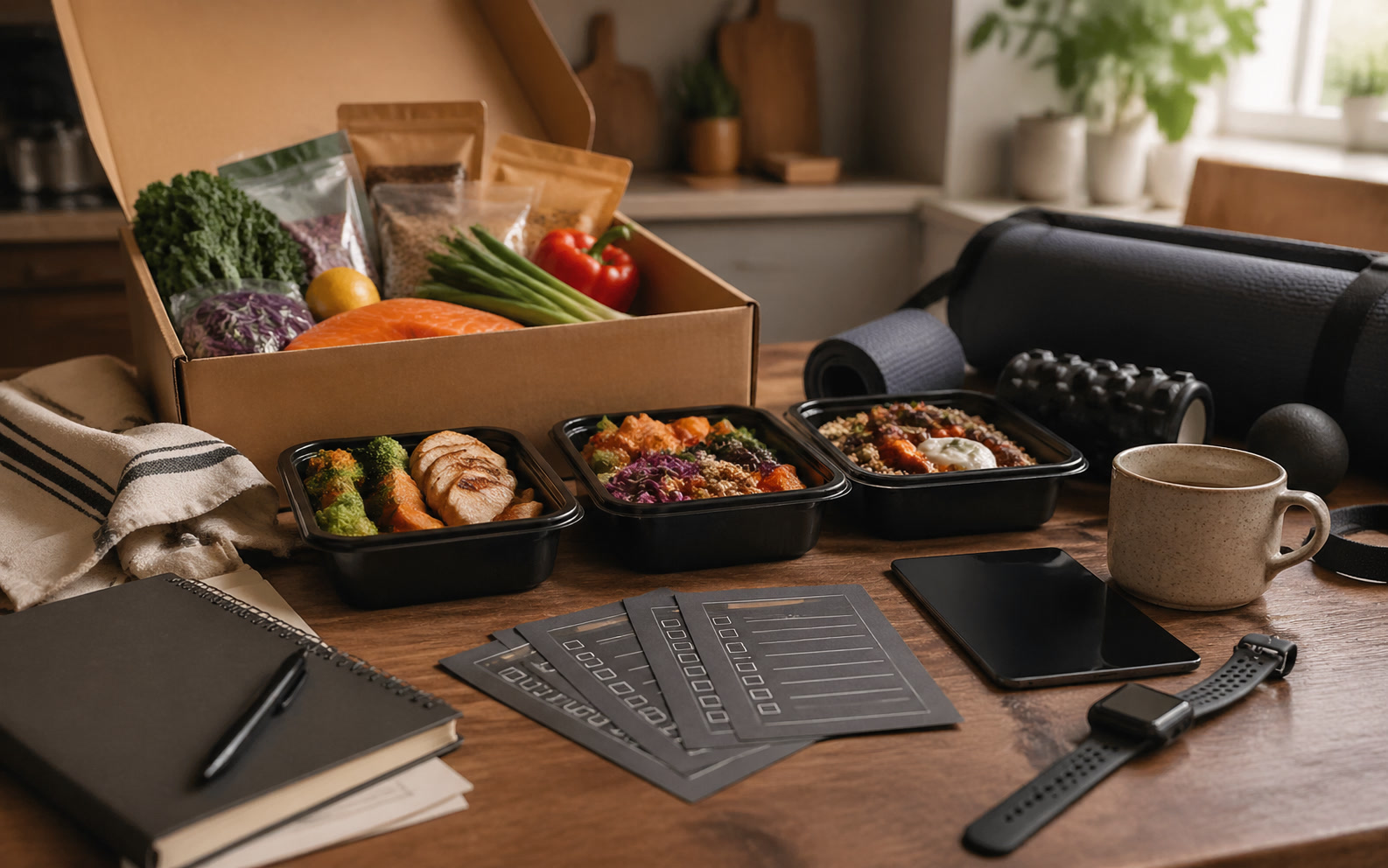
The life constraint comes first; the product claim stays on probation.
Meal delivery kits have become a standard feature of the Australian domestic routine. Originally marketed purely as a convenience tool to save time on grocery shopping and evening meal preparation, the industry has heavily pivoted toward health and wellness. Today, subscription boxes frequently arrive with bold marketing copy promising to boost metabolism, heal the gut, support immunity, or provide a clean eating reset.
The appeal is highly understandable. When balancing work, family, and personal administration, the idea that a single cardboard box can resolve both your evening schedule and your nutritional goals is incredibly attractive. However, the gap between wellness marketing and nutritional reality is often significant. Evaluating these services requires looking past the glossy recipe cards to understand the basic macronutrients, hidden additives, and actual physiological impact of relying on pre-packaged meal systems.
This review examines the most common health claims made by meal kit providers against grounded nutritional basics, outlining what these services actually deliver, where they fall short, and how to audit your own subscription for practical utility rather than marketing hype.
Decoding Meal Kit Wellness Marketing
To understand the current landscape of meal delivery services, it helps to categorise the claims they make. Most major providers now offer specific pathways or menus labelled with wellness terminology. While the food itself may be perfectly adequate, the language used to sell it often implies clinical outcomes that a standard dinner cannot achieve.
The "Gut-Healing" Claim
Many plant-focused or health-oriented meal kits advertise gut-healing properties. In nutritional terms, supporting the gut microbiome generally requires a high intake of diverse dietary fibre, ideally spanning 30 different plant types across a week. While meal kits do include vegetables, the variety is often highly repetitive to keep supply chain costs low. You will frequently see the same carrots, green beans, and zucchini rotated through different spice profiles. A meal kit can contribute to your daily fibre intake, but claiming it will actively heal your gut overstates the capacity of a standard commercial recipe, especially when many kits strip the skins from vegetables or rely heavily on refined white rice and pasta as cheap base carbohydrates.
The "Metabolism-Boosting" Claim
Kits marketed toward fitness or weight management frequently use terms like metabolism-boosting or fat-burning. These claims usually rest on the inclusion of specific ingredients like chilli, green tea extract, or high-protein components. The physiological reality is that no single ingredient significantly alters your basal metabolic rate in a meaningful, long-term way. Weight management relies on overall energy balance and consistent movement. A meal kit might help you manage your total kilojoule intake by providing strictly portioned meals, which can support weight goals, but the food itself does not possess unique metabolic properties.
The "Clean Eating" and "Detox" Claims
The concept of clean eating is a marketing construct rather than a scientific one. Meal kits that advertise detoxifying properties usually mean they have omitted highly processed foods, refined sugars, or specific allergens. While reducing ultra-processed food is a standard nutritional recommendation, your body does not require a specific meal kit to detoxify. The liver and kidneys manage waste filtration continuously. Purchasing a meal kit for its detoxifying claims is an expensive way to achieve what basic, whole-food grocery shopping accomplishes.
The Real Utility of Meal Kits
Discarding the exaggerated wellness claims does not mean meal kits lack value. Their true utility lies in behavioural psychology and routine management rather than miraculous nutritional properties. When used appropriately, they offer highly practical benefits for general wellbeing.
The primary advantage is the reduction of cognitive load. Decision fatigue surrounding evening meals is a common barrier to consistent nutrition. By removing the need to plan a menu, compile a shopping list, and navigate a supermarket after a long workday, meal kits preserve mental energy. This structural support makes it easier to maintain a baseline of home-cooked meals and reduces the likelihood of ordering high-kilojoule takeaway out of sheer exhaustion.
Furthermore, meal kits provide excellent portion awareness. For individuals who struggle with portion control, physically seeing a standard serving size prepared and plated can help recalibrate expectations. They also introduce basic cooking skills and flavour combinations to people who might otherwise lack the confidence to prepare raw ingredients, serving as a practical educational tool for culinary basics.
Hidden Trade-Offs in Pre-Packaged Nutrition
While meal kits offer structural benefits, relying on them for the majority of your weekly nutrition introduces several trade-offs that are rarely mentioned in the promotional material. Analysing the nutritional panels of major Australian meal kit providers reveals a few consistent patterns.
High Sodium Content
To ensure that meals taste restaurant-quality and to preserve certain ingredients during transit, meal kits frequently rely on high levels of sodium. The provided spice blends, stock concentrates, and pre-mixed sauces are often heavy in salt. Even meals advertised as healthy or low-calorie can contain upwards of 1000mg of sodium per serving, which is nearly half the recommended daily upper limit for adults. Over time, this can quietly elevate your overall sodium intake if you are not monitoring the rest of your diet.
Macronutrient Imbalances
Commercial meal kits must balance nutritional value with profit margins. Protein is expensive, while carbohydrates are cheap. Consequently, many standard kits skew heavily toward simple carbohydrates. The protein portions provided are often adequate for a sedentary individual but may fall short for those who are highly active, engaged in resistance training, or recovering from an injury where elevated protein intake is necessary for tissue repair. Additionally, the default carbohydrate is rarely a whole grain, meaning you miss out on complex, slow-releasing energy.
Shelf-Life and Freshness
Despite the promise of farm-fresh produce, the reality of logistics means ingredients spend significant time in transit and distribution centres. To survive this journey, produce is sometimes treated, or hardier, less nutrient-dense varieties are selected. The nutritional degradation of vegetables begins the moment they are harvested, and the cold-chain delivery process cannot entirely halt this. You are often paying a premium for produce that is older than what you might select at a local greengrocer.
Who Should Skip Meal Kits
Meal delivery services are designed for the general, healthy adult population. They are not appropriate for everyone, and their rigid structures can present specific risks in certain contexts. Consider alternatives or seek medical guidance if any of the following apply to you.
- Pregnancy: Food safety is paramount during pregnancy. Pre-cut vegetables, washed leafy greens, and cold-chain deliveries that may sit on a porch for hours carry a higher risk of listeria and other foodborne illnesses. Pregnant individuals should manage their own produce preparation to ensure strict hygiene standards.
- Eating Disorders and Mental Health Risks: Meal kits place a heavy emphasis on exact kilojoule counts, macro tracking, and strict portioning. For individuals with a history of disordered eating or orthorexia, having nutrition reduced to a mathematical equation on a recipe card can be highly triggering and detrimental to mental health recovery.
- Chronic Illnesses: Individuals managing conditions like hypertension, kidney disease, or severe type 2 diabetes require specific, carefully monitored diets. The hidden sodium in meal kit sauces and the reliance on simple carbohydrates make them unsuitable for strict clinical management. Always consult a GP or clinical dietitian before introducing a subscription service to a medical diet.
- Severe Allergies: Most large-scale meal kit providers explicitly state they cannot guarantee against cross-contamination. If you have anaphylactic allergies to nuts, dairy, soy, or gluten, the shared packing facilities present an unacceptable safety risk.
- Medication Interactions: Certain medications require consistent dietary habits or the avoidance of specific ingredients (such as vitamin K interactions with blood thinners, or grapefruit with statins). Because meal kits often bundle ingredients into generic spice mixes or proprietary sauces, tracking these specific interactions becomes dangerously difficult.
How to Audit a Meal Kit Subscription
If you decide that the convenience of a meal kit outweighs the trade-offs, you can take practical steps to optimise the nutritional outcome. Treat the delivery as a base ingredient package rather than an absolute rulebook.
First, audit the sauces and seasonings. You do not need to use the entire packet of provided stock concentrate or dressing. Using half the provided sauce and substituting the rest with a squeeze of fresh lemon juice, olive oil, or your own dried herbs will drastically reduce the sodium content of the final meal.
Next, evaluate the vegetable-to-carbohydrate ratio. If a meal relies heavily on white rice, consider serving only half the rice and adding a handful of your own frozen peas, spinach, or broccoli to the pan. Keeping a stock of frozen vegetables in your freezer is a highly cost-effective way to boost the fibre and micronutrient profile of a commercial meal kit without adding significant preparation time.
Finally, assess the protein portions. If you are highly active or recovering from an injury, the provided chicken breast or tofu block may be insufficient. You can easily augment the meal by adding a tin of legumes, an extra egg, or a small portion of your own cooked protein to meet your specific recovery needs.
Frequently Asked Questions
Are meal kits cheaper than grocery shopping?
Generally, no. You are paying a premium for the logistical service of portioning, packaging, and delivery, as well as the recipe development. While they can reduce food waste by providing exact quantities, a well-planned grocery shop using seasonal produce and bulk pantry staples will almost always be more cost-effective.
Can meal kits help with weight loss?
They can assist by providing strict portion control and clear kilojoule estimates, which helps create the energy deficit required for weight loss. However, there is nothing inherently fat-burning about the meals themselves. Success depends entirely on how the kit fits into your overall daily intake and movement habits.
Are the nutritional panels accurate?
The nutritional information provided on recipe cards is an estimate. The actual kilojoules and macronutrients will vary based on the natural size variations of the produce supplied, and crucially, how much cooking oil or butter you add from your own pantry during the preparation process. Those tracking intake strictly should treat the numbers as a baseline guide rather than an exact science.